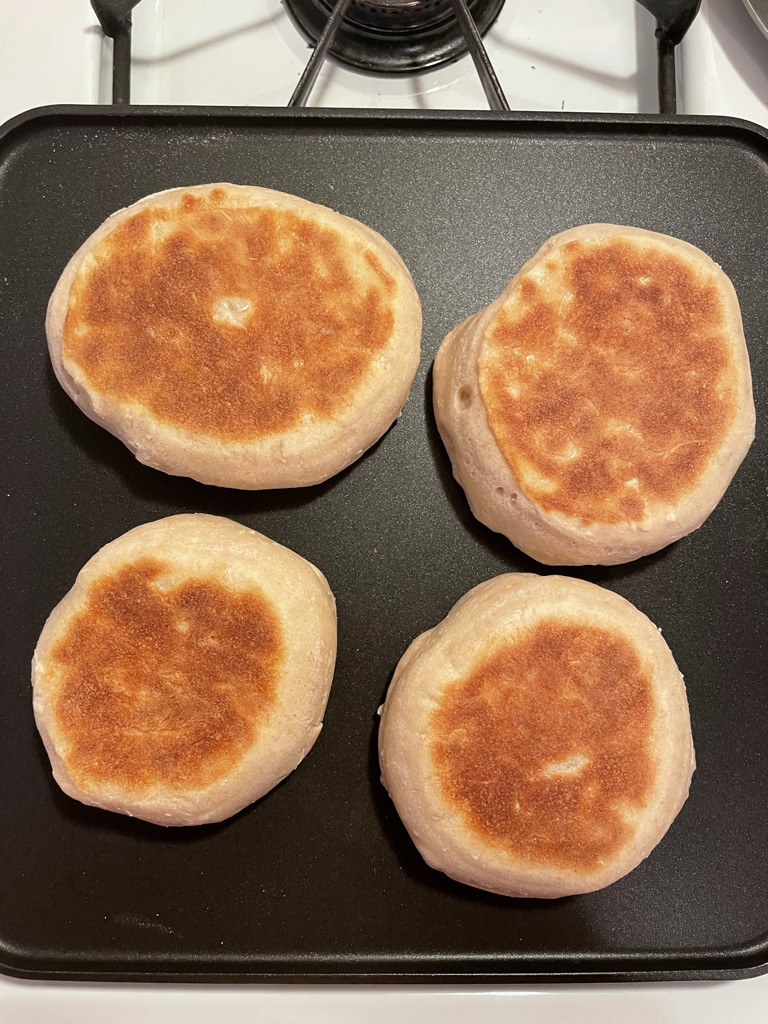
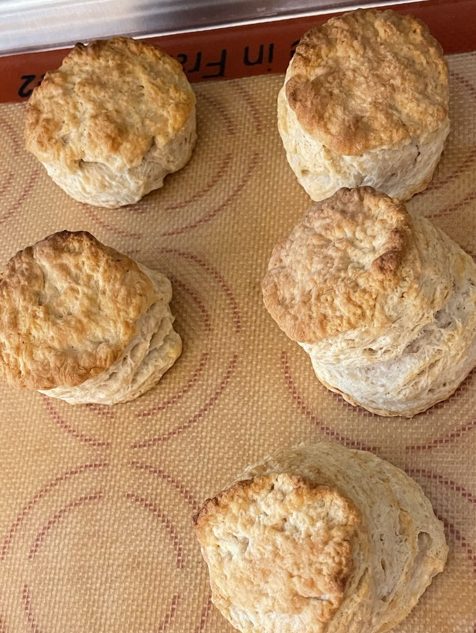
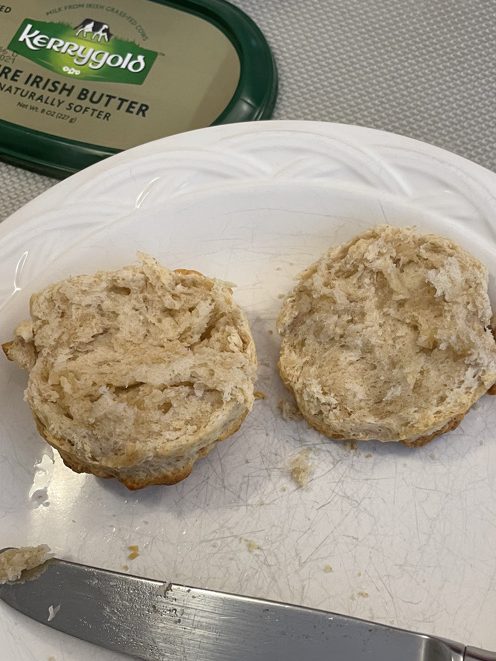
There was a time at the beginning of my Tartine bread project when I had too much sourdough discard and I was determined not to just throw it out. I found the Leavenly website to be an excellent source of positive support and wonderful discard recipes. Here are my results from their Sourdough English Muffin recipe and their Sourdough Biscuits recipe. So. Much. Yumminess. — BUT: No. More. Room. In. My. Freezer.
I eventually got better at planning my sourdough remains such that I had just the amount I needed to keep the starter going. I also don’t feed my starter every day anymore. I did for a while at the beginning, and this did train my starter into rising more quickly, but it doesn’t seem absolutely necessary, and it’s a big time (and materials) sink.
But, I have to say, these discard recipes make me miss having the discards!
In 2015, my dear friend, Ken, gave me a sourdough starter that he and his wife, Peggy, received on the occasion of their wedding, nearly 60 years prior. There was one time, during Ken’s medical residency, that he let the sourdough die out, but he was able to re-acquire it from his original source. The actual lineage of the starter can be traced back to Alaska.
Ken also gave me some recipes and an article from the New York Times about making sourdough in a dutch oven. I wasn’t at all experienced with bread-baking, so I just followed the recipes as best as I could. The results were delicious and made me very happy, but then I tasted what sourdough bread could really be like, and that set me off in pursuit of the magic.
The culprit was a piece of bread that came with a pandemic take-out order from Cambridge’s Giulia Restaurant. I didn’t know bread could be like this! It was crusty on the outside, but tender and airy on the inside. The interior was light, but not at all squishy; it had lovely, big holes. Of course, the rest of the meal was incredible, but I couldn’t stop thinking about the bread.
For this particular quest, it doesn’t take much time on google to find oneself at the altar of Chad Robertson of Tartine Bakery and his wonderful book, Tartine Bread. I drank up every bit of wisdom, lore, and poetry that Chad had to offer, bought some stuff (flour, for starters), and got to work.
Coincidentally, my other habit (binge streaming anything and everything) happened to merge with the baking one when I watched Jon Favreau’s charming movie “Chef” and his related documentary series “Chef Show“. Amazingly, one of the Chef Show episodes features Chad Robertson, and he gives Jon a lesson about how to form the loaves. I’ve watched those few minutes of that episode many, many times.
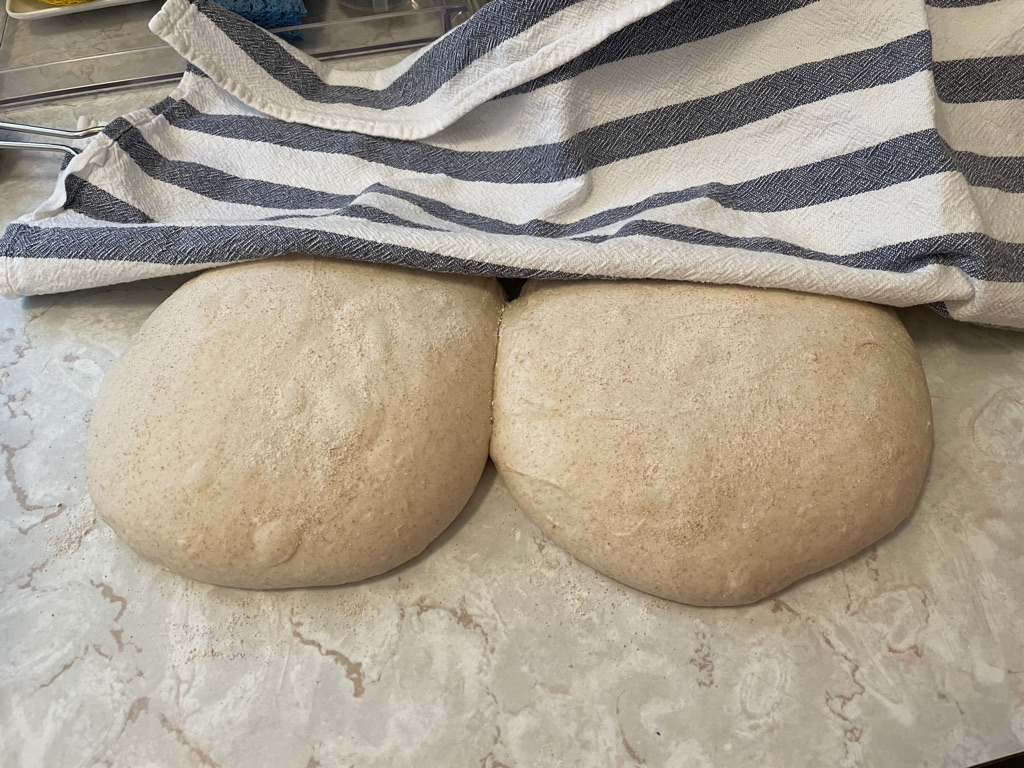
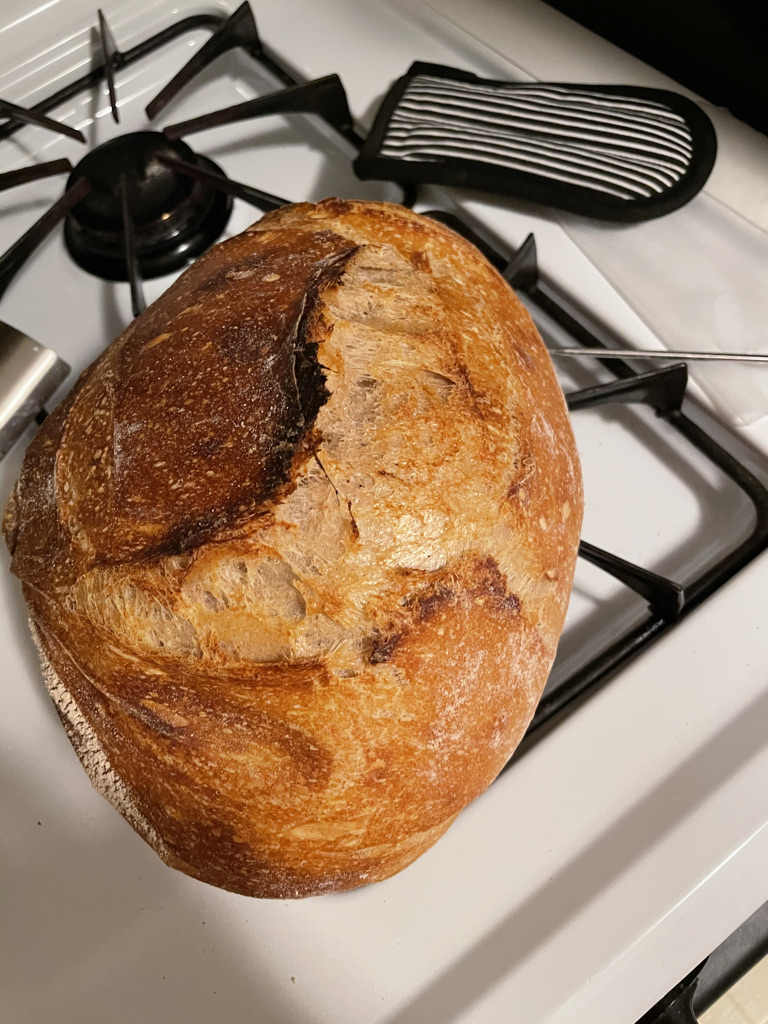
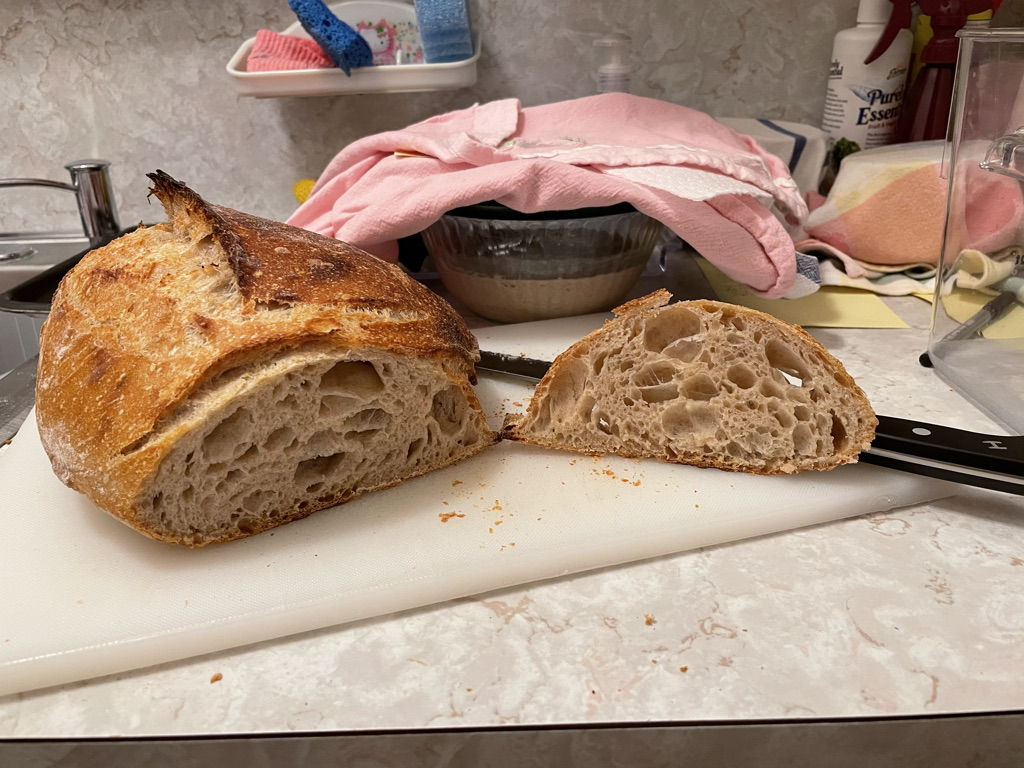
I think, in hindsight, that I was quite lucky in my first attempt (photos above). To some extent, I feel that I have never quite obtained the same openness that I got in that first loaf, but I’m getting there. Weirdly, that very first loaf experienced what I thought was a catastrophic problem when it stuck like crazy to the bowl it was proofed in. When I went to turn it onto the baking dish the loaf basically got pulled apart into a stringy mess. I had to rip it off of the proofing bowl and stuff it into the dutch oven. It was a massacre. But, look at the sharp and dramatic ear! Look at the air holes! It’s otherwise a tremendous success. I don’t know what this teaches me, but it has hovered over me for the past year.
The number of variables and the extent to which hands-on familiarity and knowledge make or break the results, made the sourdough quest exactly the kind of obsession, er, project that I needed. I surfed many internet resources and tried many different ideas and techniques. I successfully started two different sourdoughs – but my favorite is still the Alaskan one from Ken.
For anyone looking for Chad Robertson’s Tartine Bread recipe and method, I highly recommend reading his book. It’s completely worth it (and would be even if it weren’t relatively inexpensive and short!). The New York Times did an article about Chad, Tartine, and this bread (including the recipe), but I think it’s best coming directly from the source. As a “believer”, I would say that, wouldn’t I?
Some hundred loaves later, here’s where I’m at:
The varying advice and “sure thing” blogs and videos all seem somewhat oversimplified regarding the variable of the behavior of your particular sourdough organism. Different sourdoughs, in my opinion, will behave differently, and one sourdough will behave differently in different circumstances (weather, mostly).
So, this means – as Chad writes – that one needs to become experienced and expert in knowing when a dough is ready for the next stage of the process. Simple timings and steps won’t really tell you when to stop proofing or when you’ve developed enough gluten. It seems that true experts know how the dough looks, smells, and feels when it’s “right”. For myself, I’m getting better, but I don’t feel confident.
I still consider Chad’s recipe and instructions to be ideal. I see no need to vary from them, and all my attempts to follow other recipes were all definite downgrades. I am a believer.
I have been convinced (by trailrunner on the excellent FreshLoaf blog community) that the baking vessel does not have to be a super-heavy cast iron dutch oven. Dealing with a pre-heated, heavy, cast iron pan is perilous. It turns out that using much-lighter (and much cheaper!) GraniteWare produces the same results as cast iron! I also tried a plain aluminum lidded pan and got really bad results, so this doesn’t seem to work with just any old covered pan.
Doing too much streching-and-folding yields a loaf with a dense, gummier inside – I think regardless of the proving duration or readiness. There was a time when I thought that building more gluten would help generate more airiness, but I think this was exactly the wrong idea. There needs to be enough gluten to support the air bubbles, but it’s the proofing (and the sourdough critters) that make the air bubbles.
Every single time I tried to chill the dough immediately before baking, I had just terribly tough and gummy results. I honestly don’t understand how this works for anyone. If I refrigerate during the final proof, I have to let the dough come completely to room temperature and continue proofing at room temp before baking.
Some people seem to prefer bread that has fewer air holes, so I did end up giving away several loaves once my enthusiasm for the research exceeded my eating and freezer capacities. There was a point early on in this project when my freezer door couldn’t be opened without loaves of sourdough falling on me.
Eating fresh-from-the-oven sourdough bread is heavenly. A thin swipe of Kerrygold butter and a light layer of Bonne Maman raspberry preserves (not too much to mask the flavor of the bread)… mmmmmmm
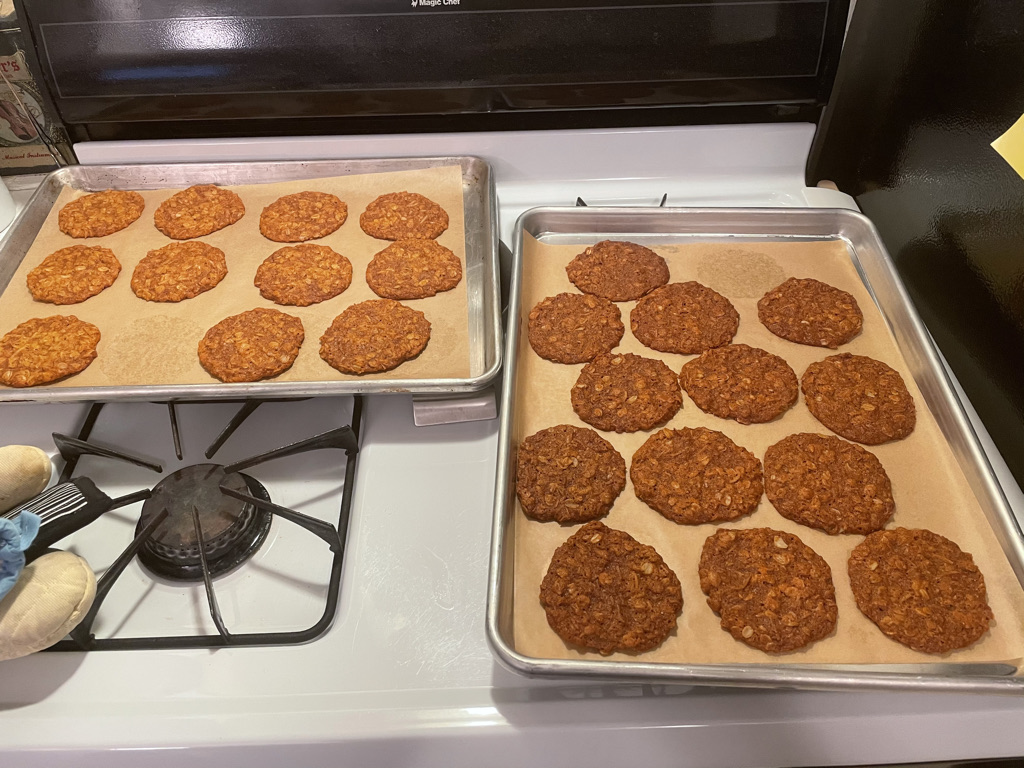
I salivated over this Cook’s Illustrated article and recipe for weeks before I was able to gather the necessary ingredients (was there a pandemic run on coconut for some reason??). I had a very hard time stopping myself from just chain-eating these. They are very, very addictive!
You can see in the photo that the two trays baked for different lengths of time. The left-hand tray (12 minutes) is more blonde and the cookies were more chewy. The right-hand tray (14 minutes) is more caramelized and the cookies were more crunchy and “toothsome”. I think the mouth feel of the chewy cookie was much better, so for me it’s important not to overbake these.
It’s safe to say that I have a tendency to “strongly” bake things (I just learned that there’s a French pastry term for this: “bein cuit”). I like deep brown pastry, for example. But, there are cases where this is not a helpful inclination, and I think this cookie is an example. I mean, I don’t apply “bien cuit” to the Ikeda Christmas Cookies, though I do let them get brown on the edges where some recipes might call for taking them out prior to any browning (to preserve the color of the Candy Canes, for example).
Anyway, the goal of deep browning definitely does not apply to everything, and cookies are probably a categorical example.
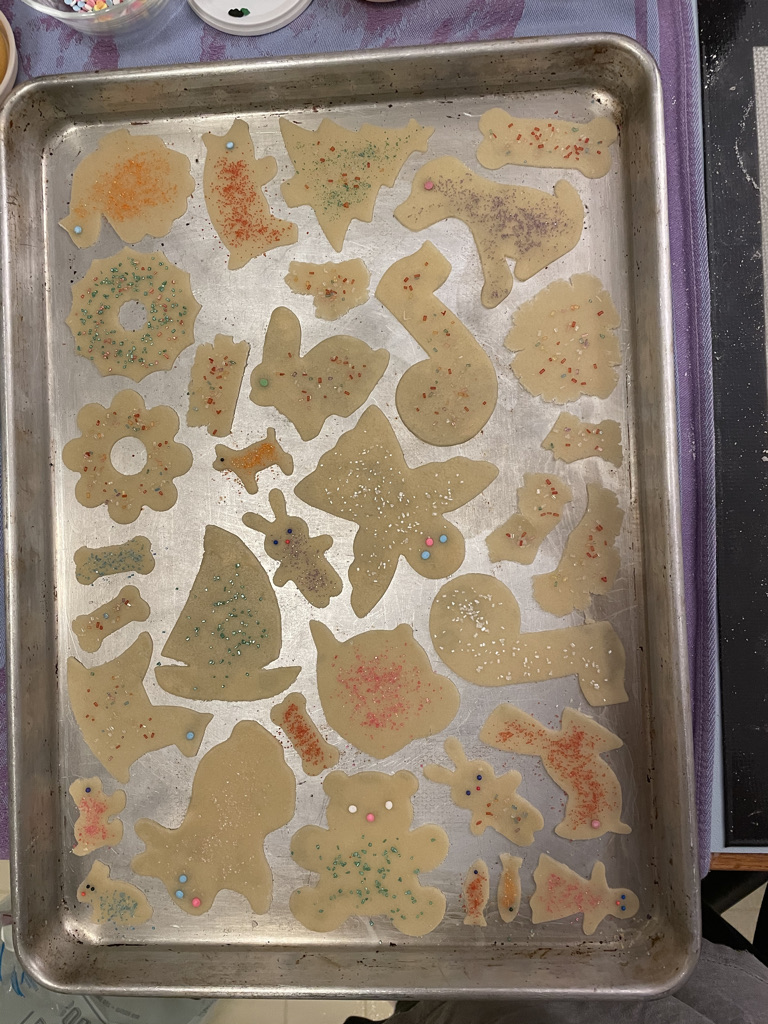
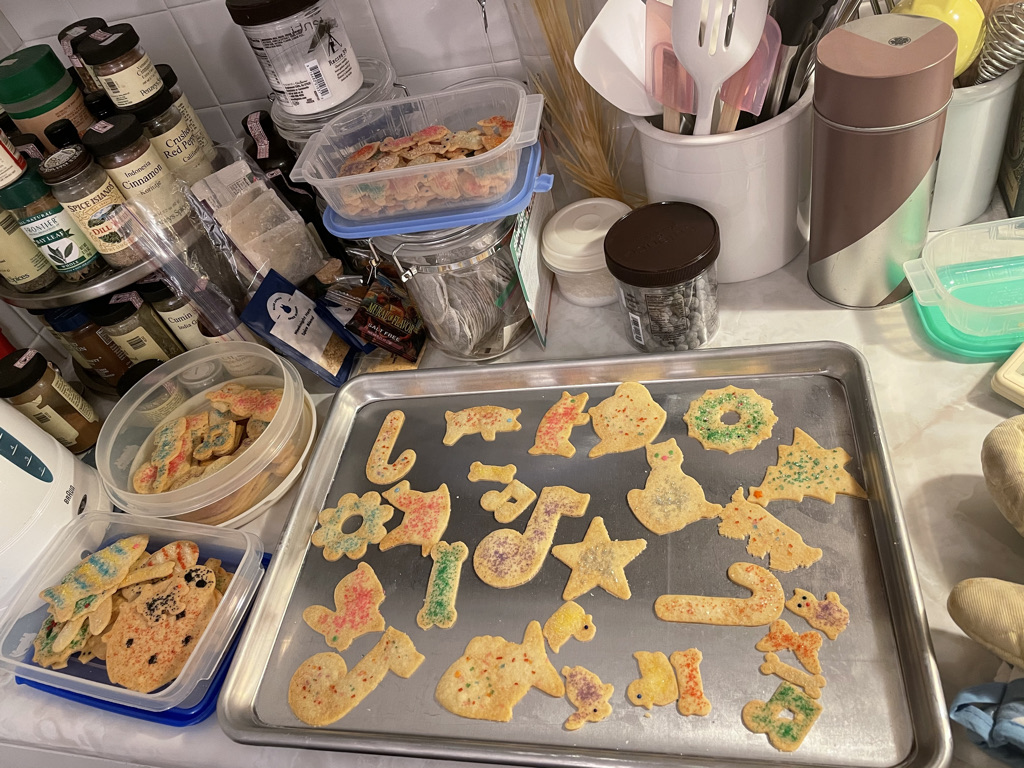
The pandemic has afforded me the possibility of making the Ikeda Christmas Cookies two years in a row! Here are some thoughts:
I baked the Sugar Cookies without any kind of pan liner, using my very thin, metal spatulas. I suspect this is best for clean, even browning of these very thin cookies.
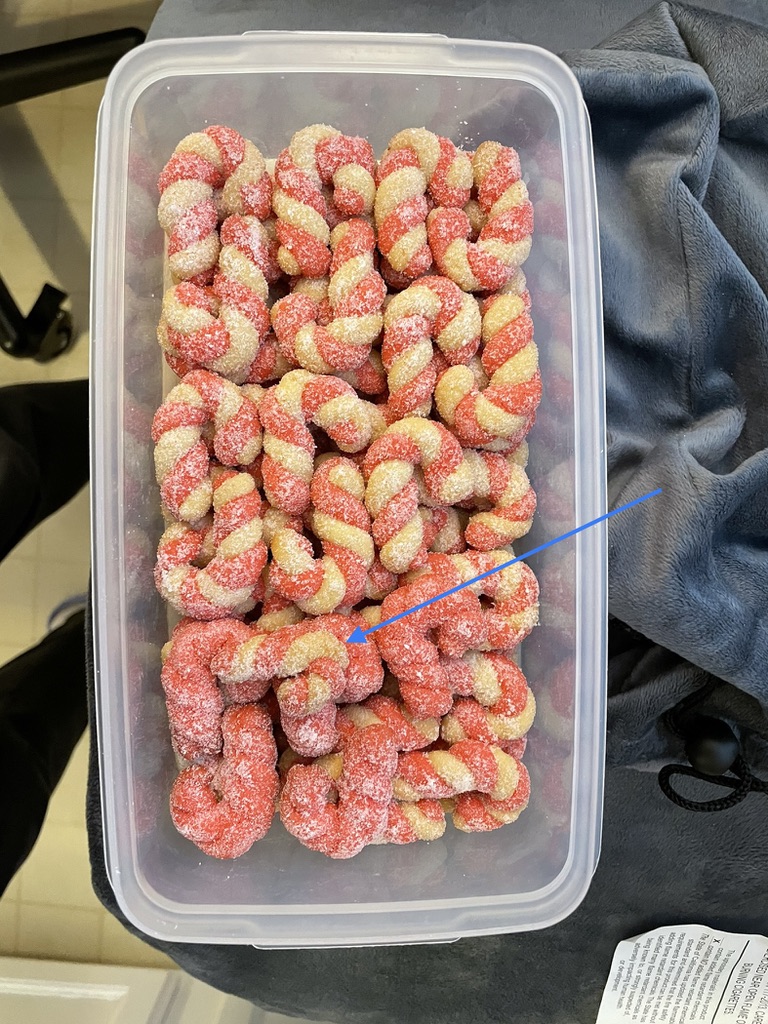
When making the Candy Cane Cookies, why do I always end up with more red dough than white dough? I’m reasonably sure there is some optical trick that makes me roll the red thinner than the white. You can see in the box of finished cookies where there’s a tiny red & white Candy Cane (blue arrow) and several all-red Candy Canes. I’m hoping that my new analytical balance will settle this matter next year!
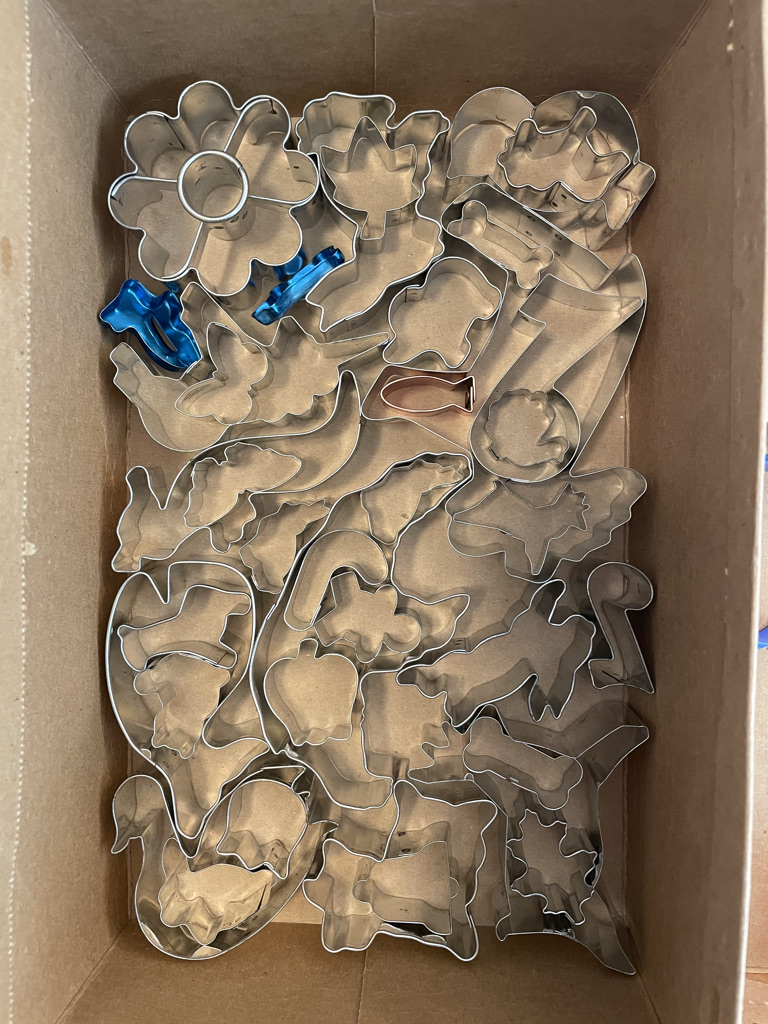
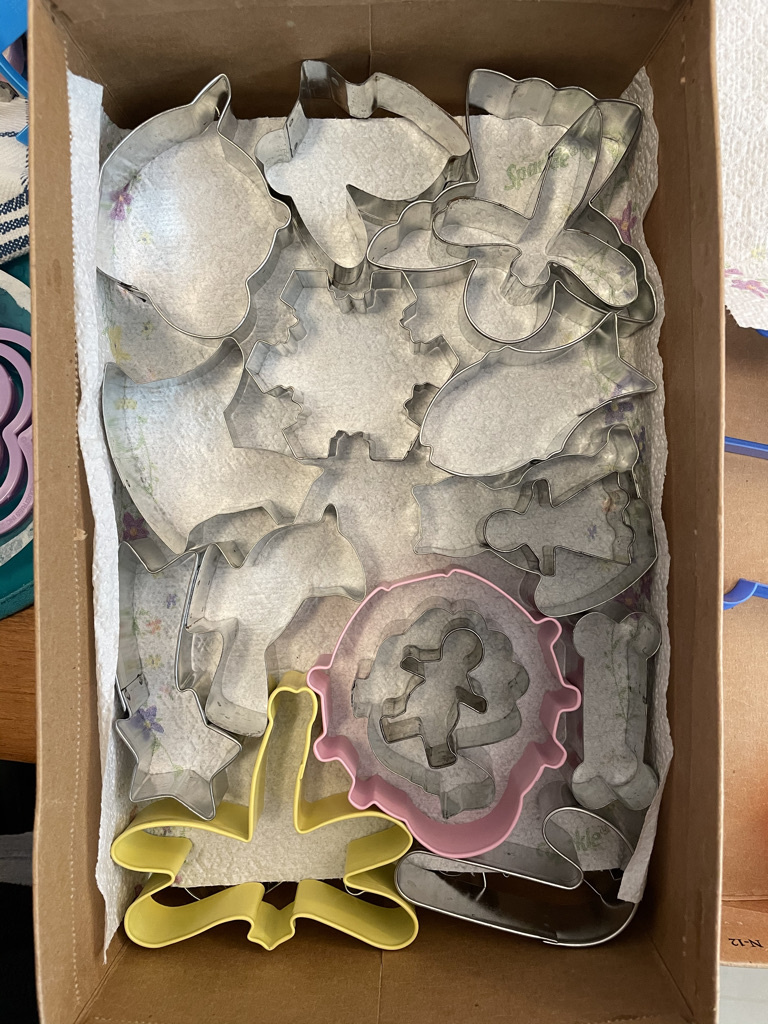
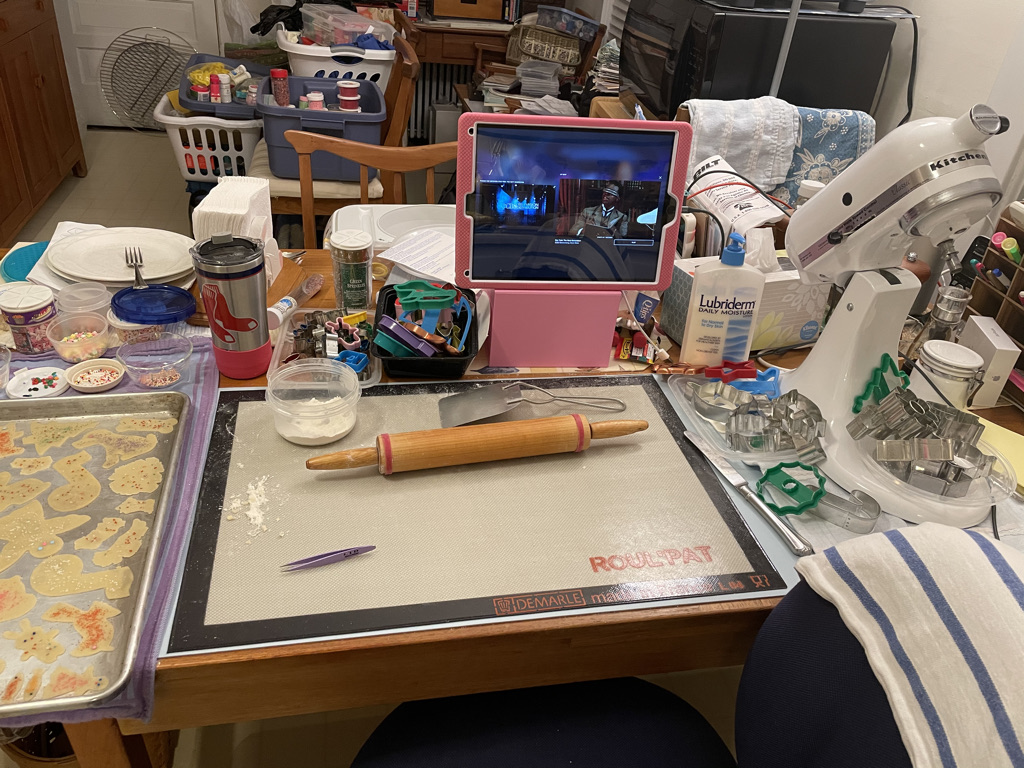
Look at all these wonderful cutters that I’ve accumulated over the decades! Many are thoughtful gifts from kind friends and family members, and some are inherited from my mom. The Ikeda sisters worked on these cookies at mom’s elbow for many years as little kids, and after we finished baking we would deliver them around the neighborhood.
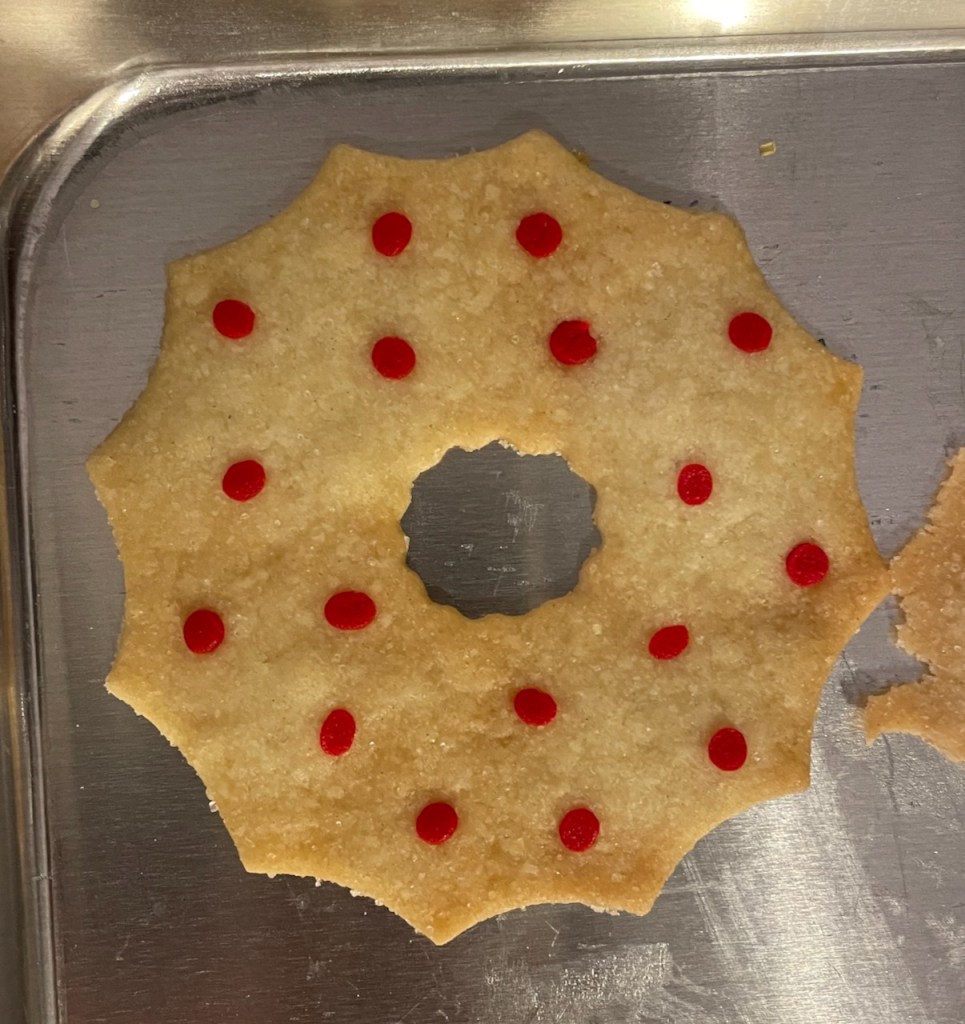
Finally: This was my attempt at making a coronavirus cookie… [sigh] And, this is a view of my Sugar Cookie workstation, offering a glimpse of my pandemic work environment and this year’s cookie-making binge-streaming fodder.
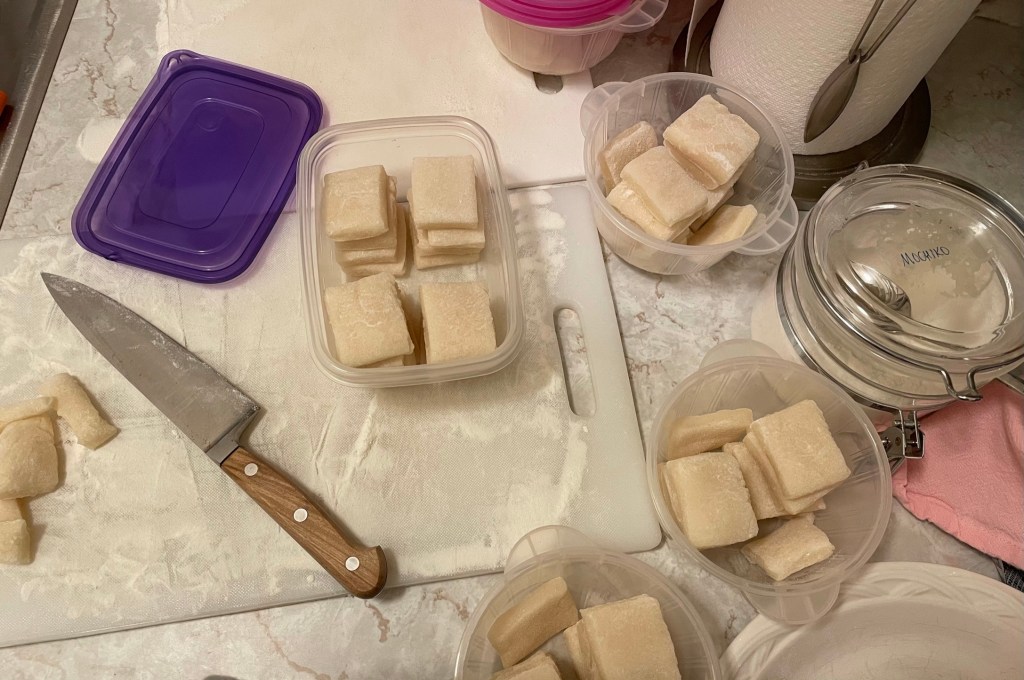
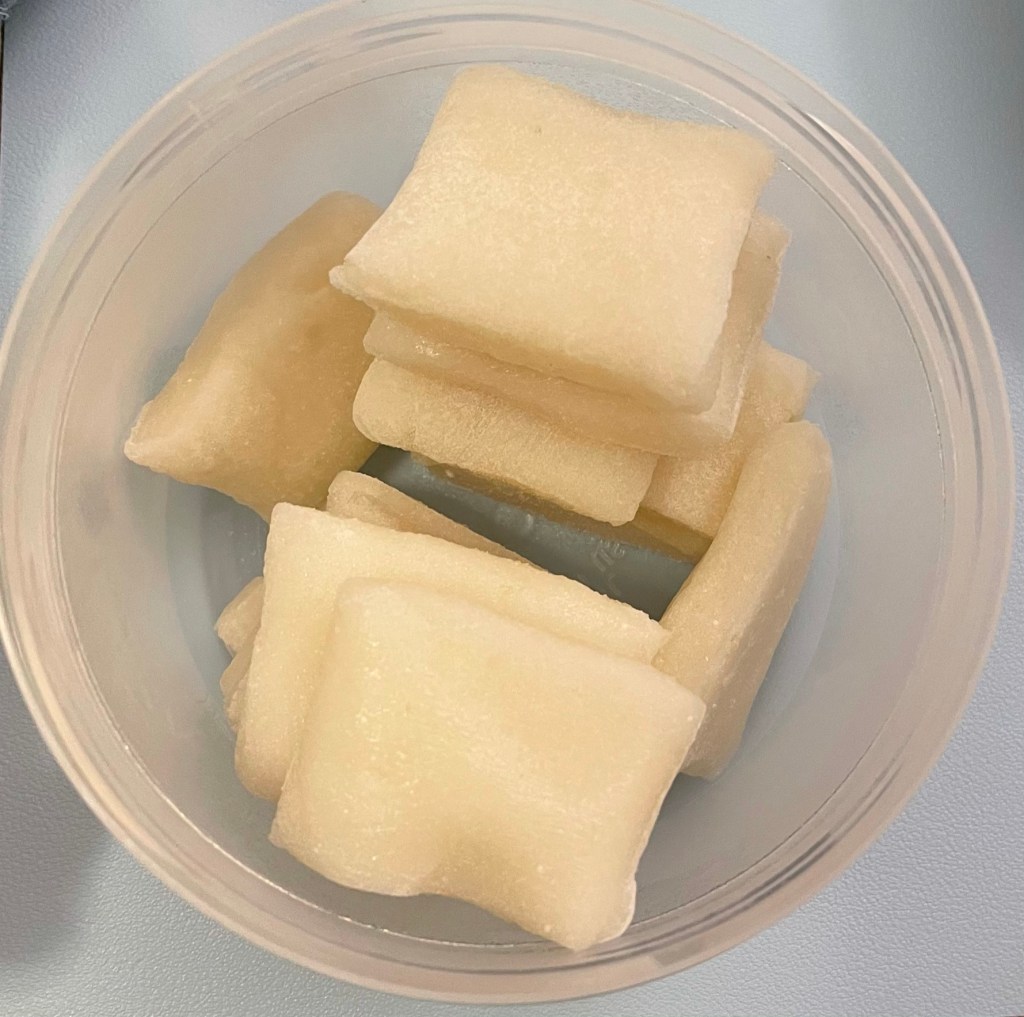
Fresh mochi is a Japanese New Year’s tradition, and since there aren’t any good local sources for it here in the Boston area, I now make it myself. The mochi machine is really fun to watch, and I made this video of a key moment in the process… It’s a short (30 seconds) video, and if you watch with the sound on you will hear that things got even more exciting right at the end!



 FlayRah