Bev & Ray’s Caramels

Bev and Ray generously sent me a tin of their amazing handmade caramels, and were additionally generous in sharing the recipe with me. I haven’t tried anything in the candy-making arena in over 15 years, since before I had a gas stove. In my prior residence, I did try to make caramel frosting on an electric stove and was constantly frustrated by the temperature bouncing up and down with the electric stove coil cycling on and off. These caramels were a good incentive to try again with the gas stove (and the amazing ChefAlarm thermometer, which Bev also uses and recommends!)

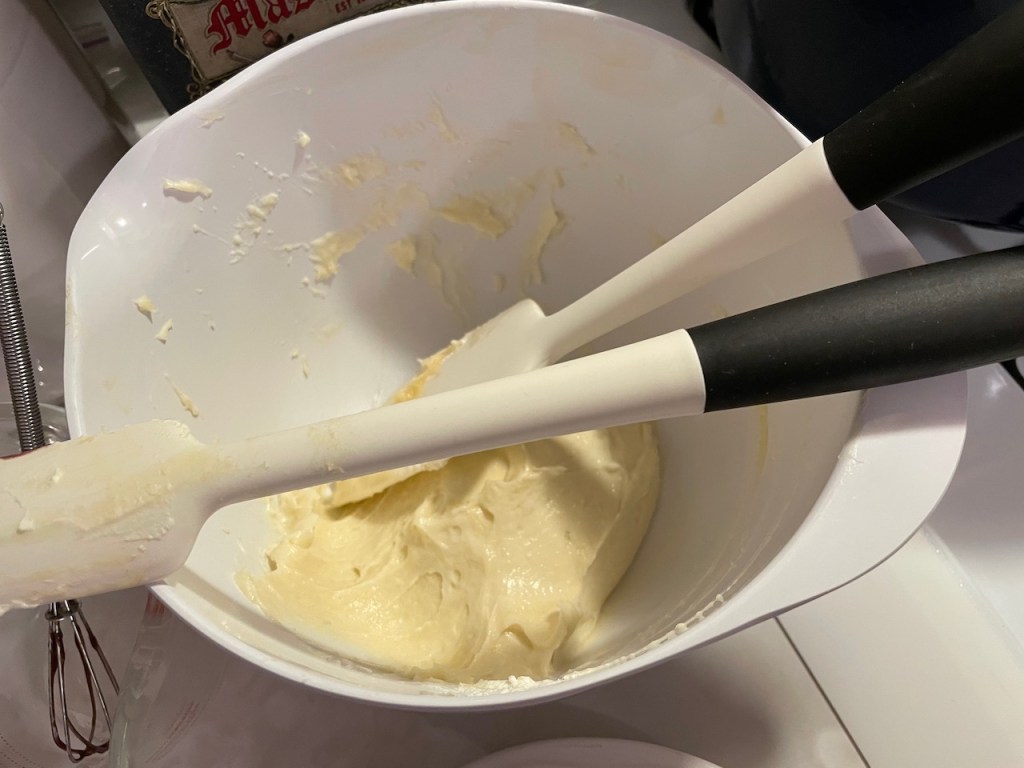
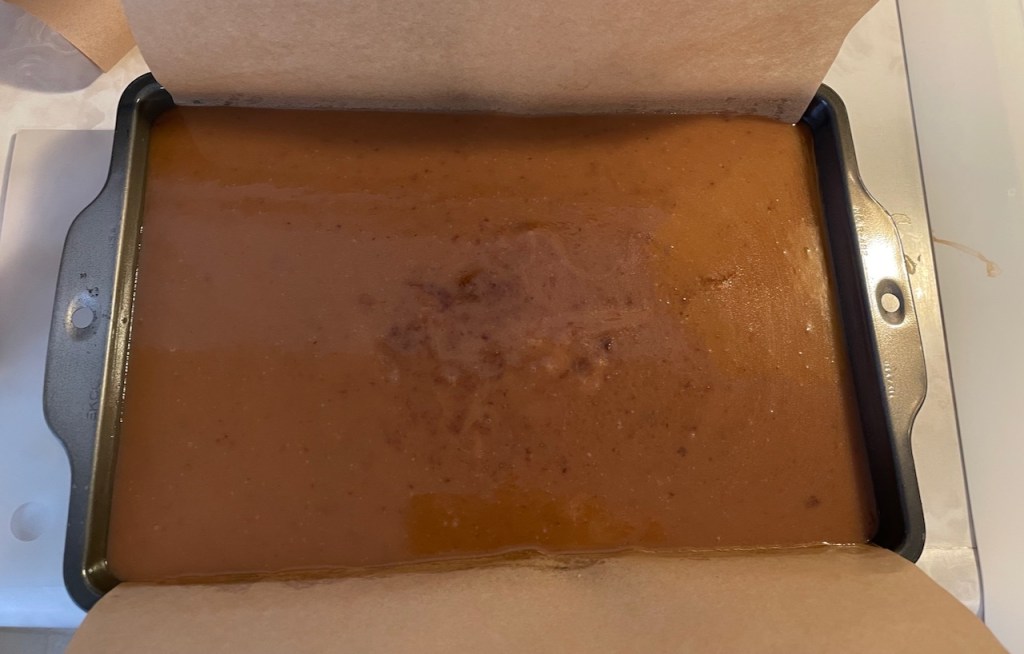
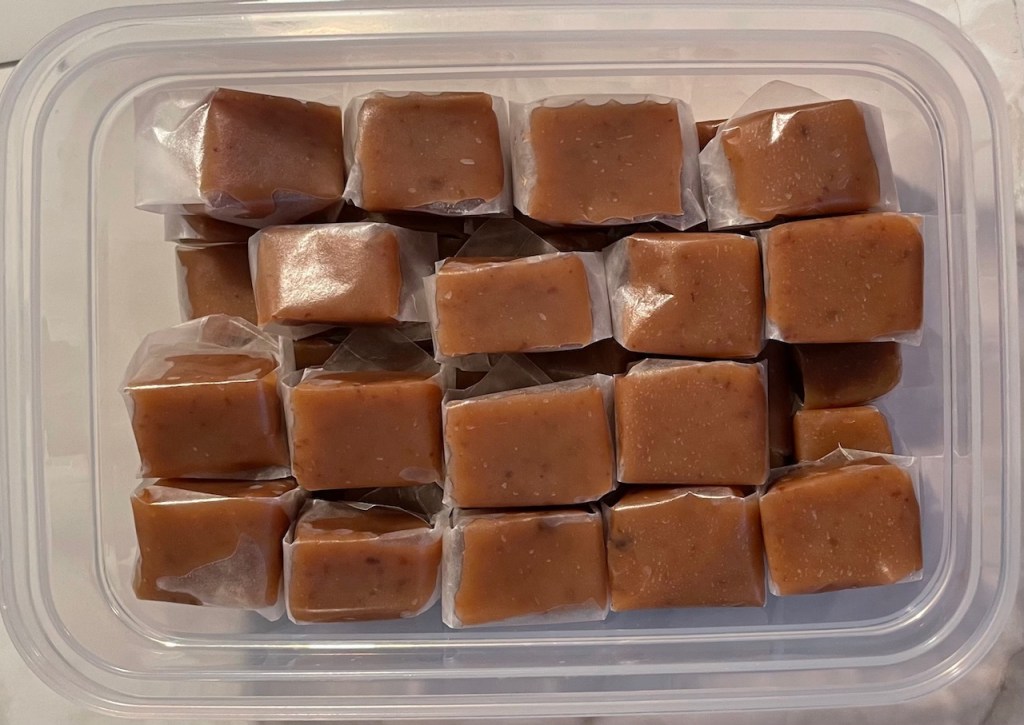
First observation is that this recipe calls for many, many, forms of sugar (and why shouldn’t it?). Second observation is that absolutely no-one will be surprised to hear that I somehow managed to overcook these. There was a little bit of burnt caramel on the bottom of the pan and I mistakenly scraped that up and it got mixed in. You can see the patch of dark stuff in the middle of the pan. I actually liked the addition of the burnt caramel flavor, but the issue is that the burnt part was also a bit harder, so the texture was off. I managed to contain the burnt part to one area of the finished product, so there were many caramels that were fine.

So, in my mental list of things that really don’t work with my tendency towards “bien cuit”, caramels are now included.

Sourdough Pan Pizza

Inspired by several things, notably: Cook’s Illustrated article/recipe about Cast Iron Pan Pizza, and Dan’s adventures with “South Shore Bar Pizza” (and his amazing Facebook photos!), I decided to wing it and try to make a sourdough version.

I started with a one-loaf batch of Tartine bread, but increased the proportion of bread flour slightly (+25g), then divided it into two parts to make two pan pizzas.

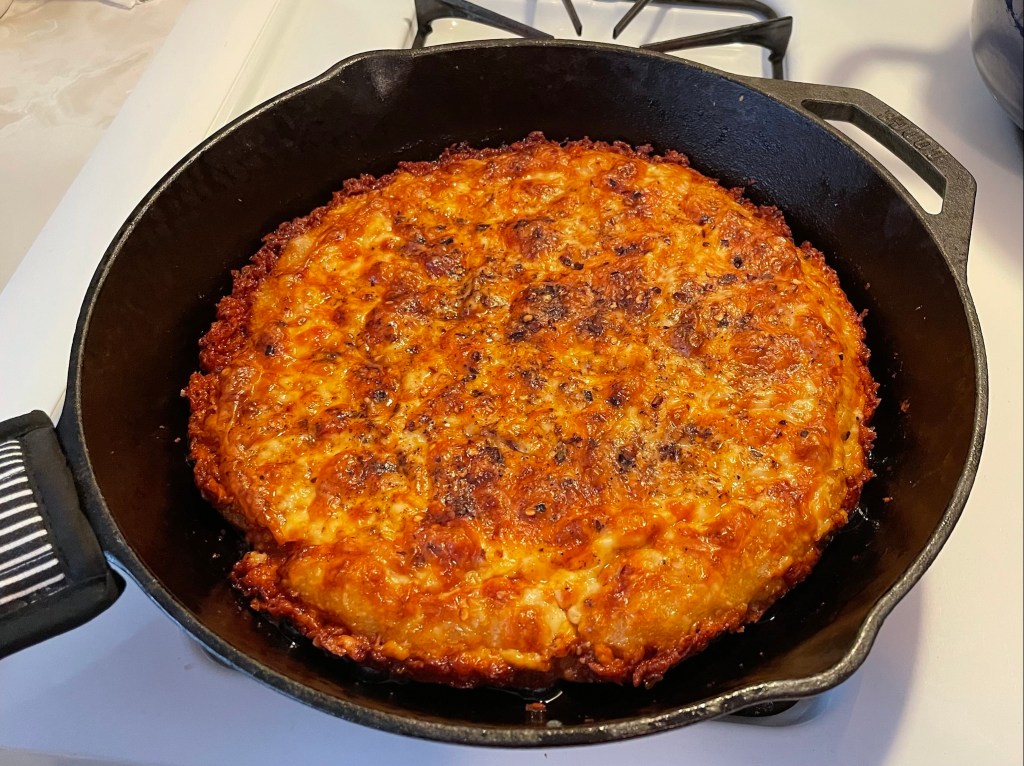
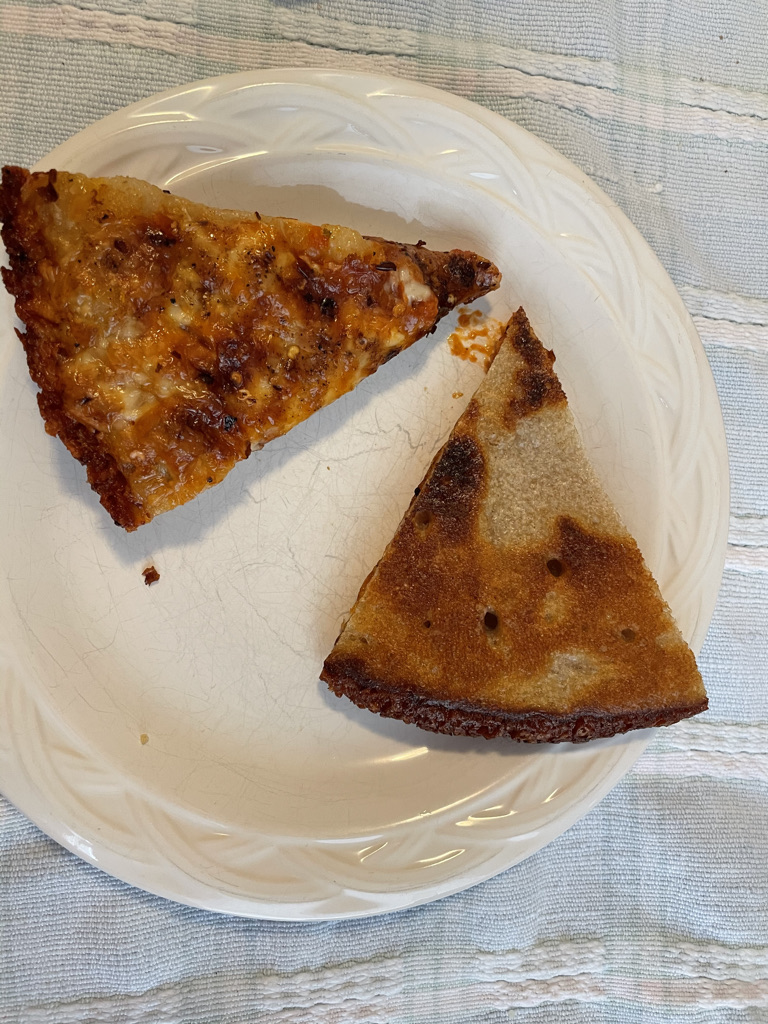
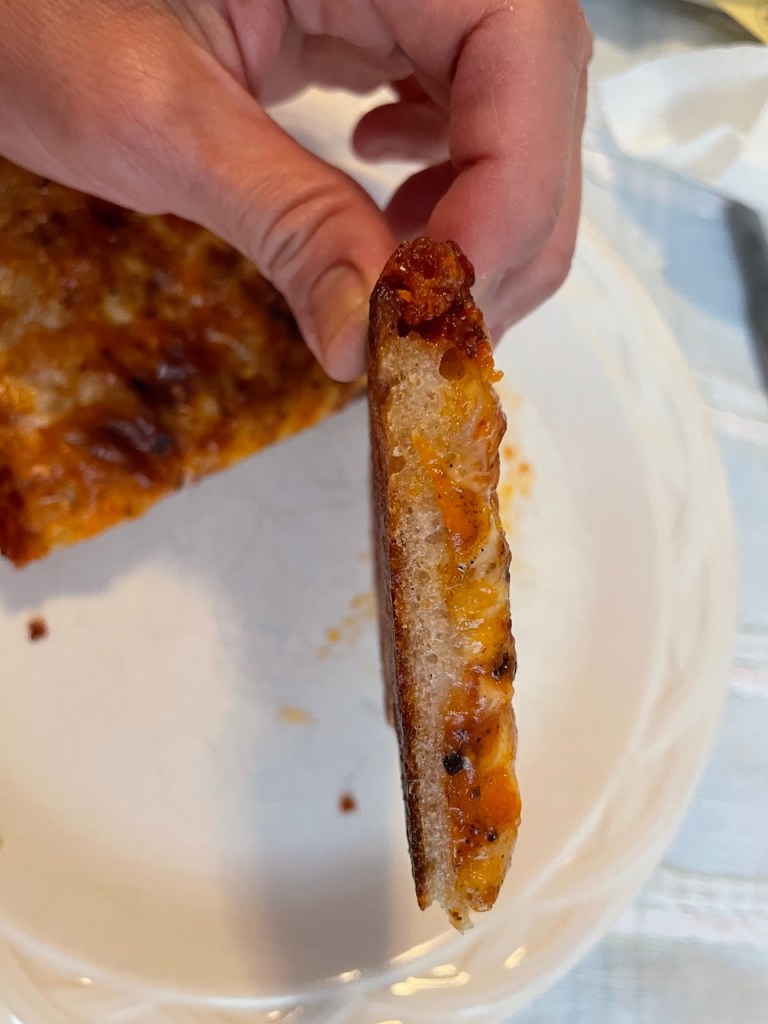
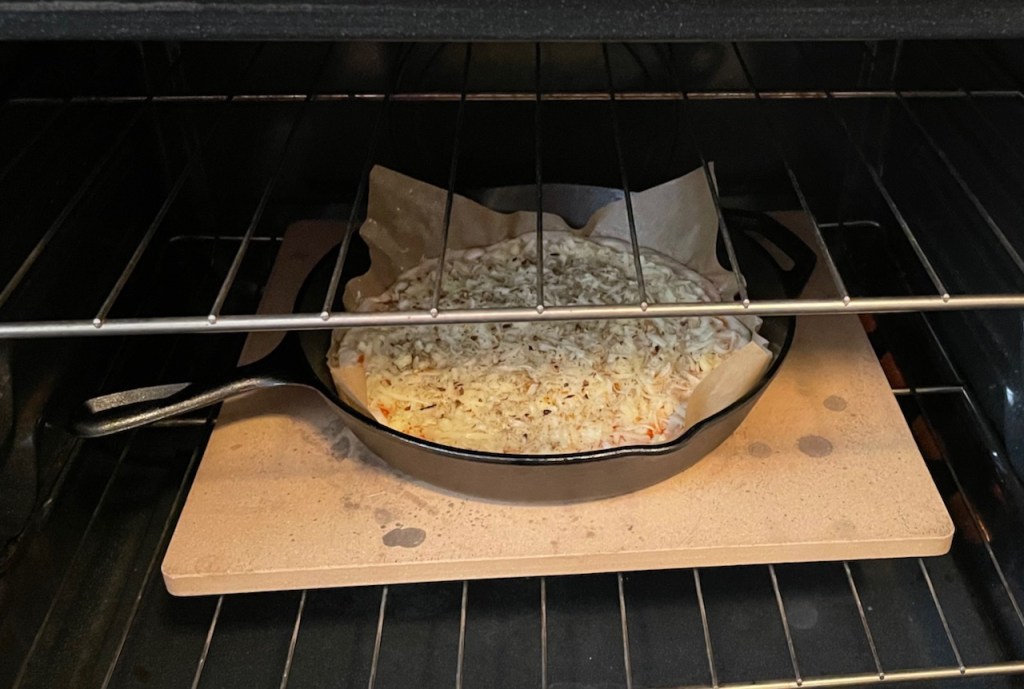
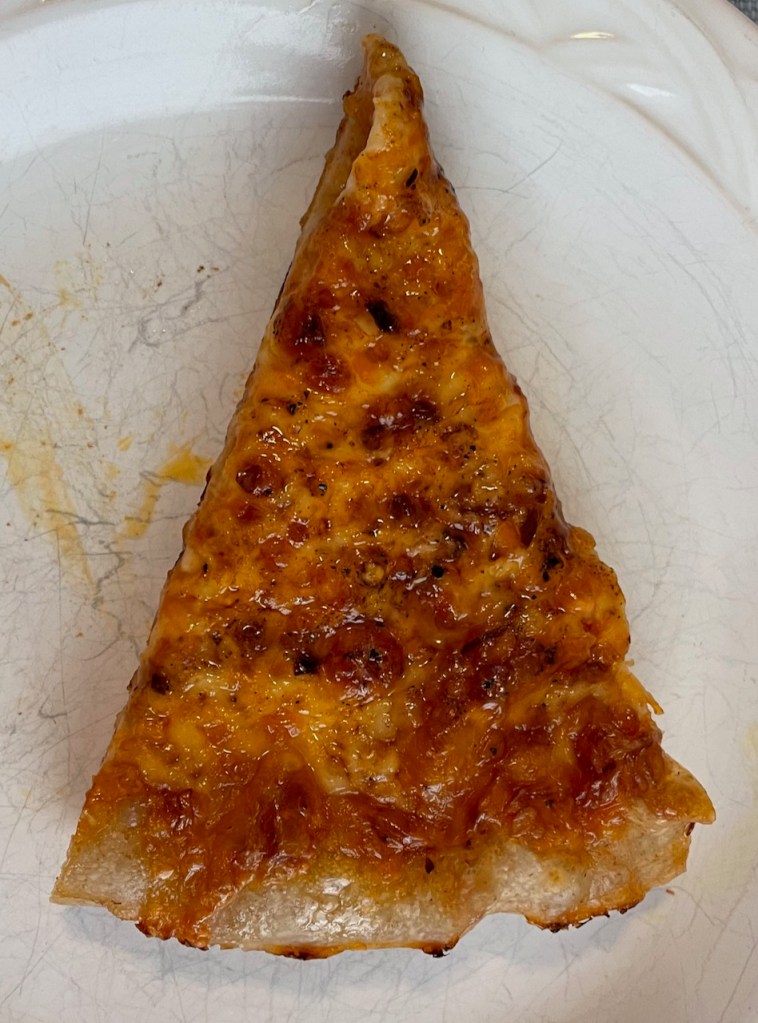
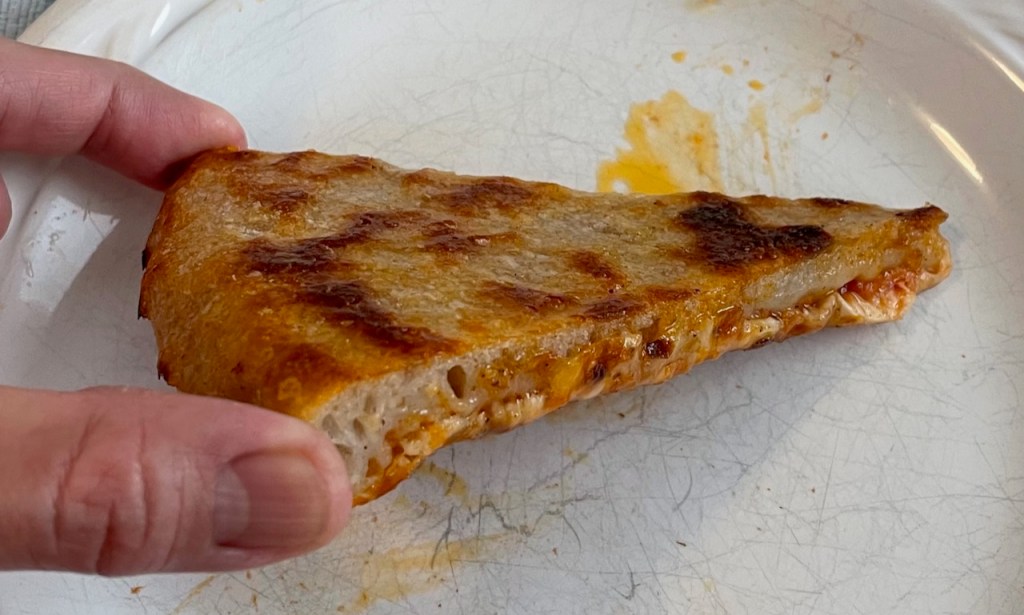
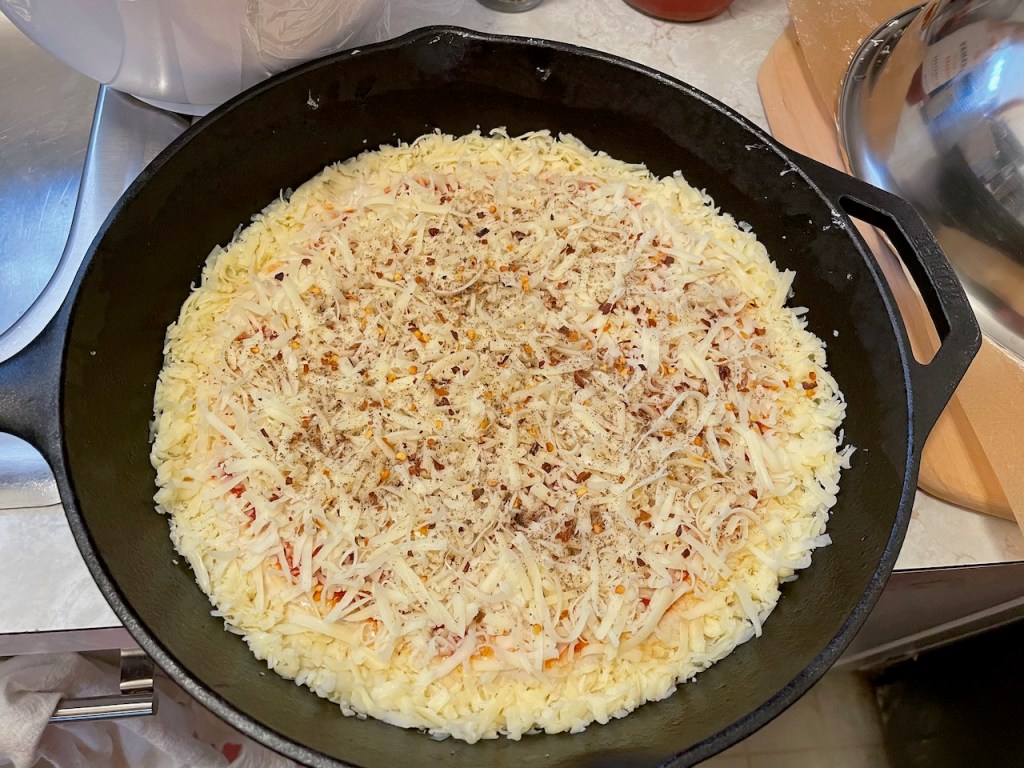
I was interested in Cook’s Illustrated’s suggestion to build the pizza in an unheated cast iron skillet and had received conflicting advice from a friend that the pan should be preheated, so I handled the two pizzas differently to see what would happen. Here’s the first one, built in an unheated pan then baked with the pan placed directly on the preheated baking stone. For both pizzas, I followed the Cook’s advice to finish the bottom of the pizza by placing the pan (with pizza in it, of course) on the stovetop for 1-2 minutes. Note the frico cheese edge, which was excellent, but I overbaked this by about 5 minutes (anyone else sensing that this is a theme for me??) so the frico got a little crunchier than would be ideal.

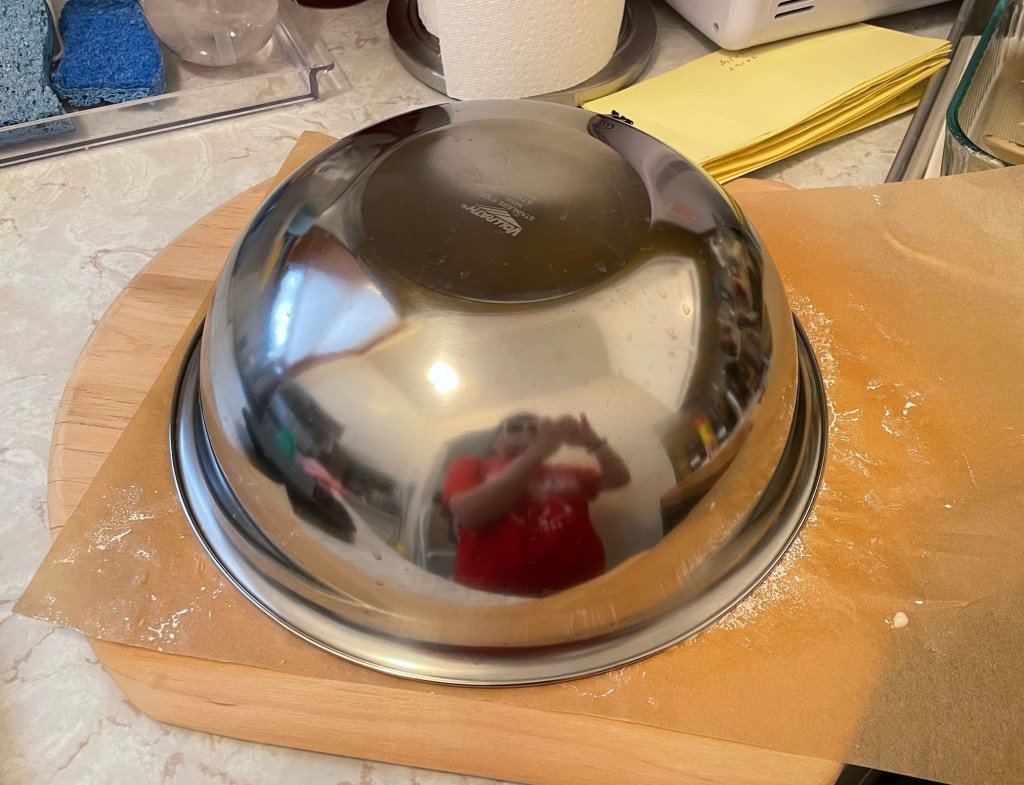
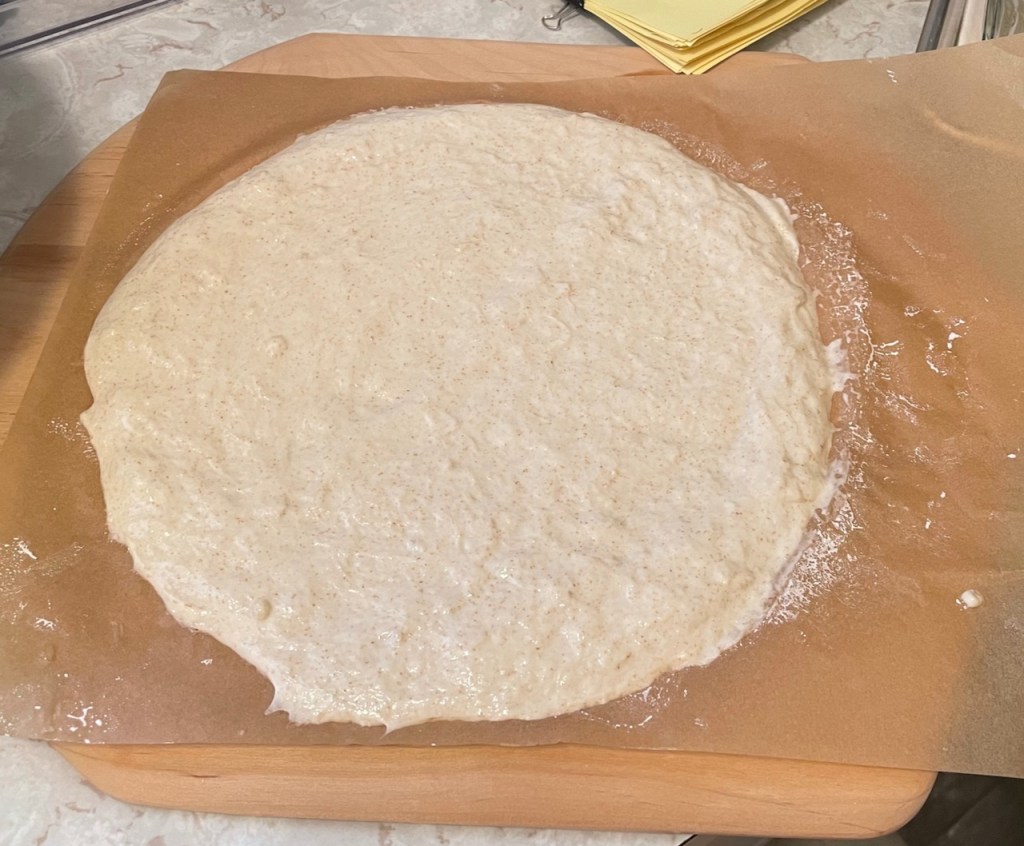
And here’s the second pizza. I built it on a piece of parchment on a pizza peel. I was just barely able to fit it under my largest bowl for the rest, and this was the exact size of the cast iron pan. The high-hydration dough definitely adheres to the parchment, but since the whole thing (including parchment) will get transferred to the cast iron skillet, the sticking doesn’t matter at this point. The parchment was easy to remove before putting the pizza on the stovetop for finishing. I decided not to make the frico on this one, but I guess I could have. It might be a little perilous to put the cheese around the edge with the pan already really hot, but it should be possible.

So the bottom line is that both methods worked! And, making two pizzas kinda dictates that a mixed method is necessary (since the cast iron pan will be cool for the first one and already hot for the second one).

Throughout my Tartine Sourdough Bread adventure it has proven consistently true that whenever I start to get confident that I might know what I’m doing, something happens to remind me that I really don’t. Winging it on pizza made with sourdough but without a recipe was pretty bold, but it seems I got away with it this time!

Choux Buns, Eclairs

It’s really just not possible to watch the Great British Baking Show at any length and not want to make choux buns. Especially in the earlier seasons, one could easily conclude that choux pastry held the keys to the kingdom. On TV, the stuff really does look magical. It goes into the oven looking like little kiss-shaped things, but it come out looking like big, puffy balloons. Pastry magic!

Also, Cook’s Illustrated ran an article about Choux au Craquelin that pushed me over the edge. Choux had to happen.

I’ve made choux before, and have even taken a one-day pastry class from the queen herself (Joanne Chang) which included choux. It never struck me as that difficult, but it seems that the GBBS contestants are often asked to make choux without the benefit of an actual recipe. For me, and for pretty much any typical home cook, this would not be possible.

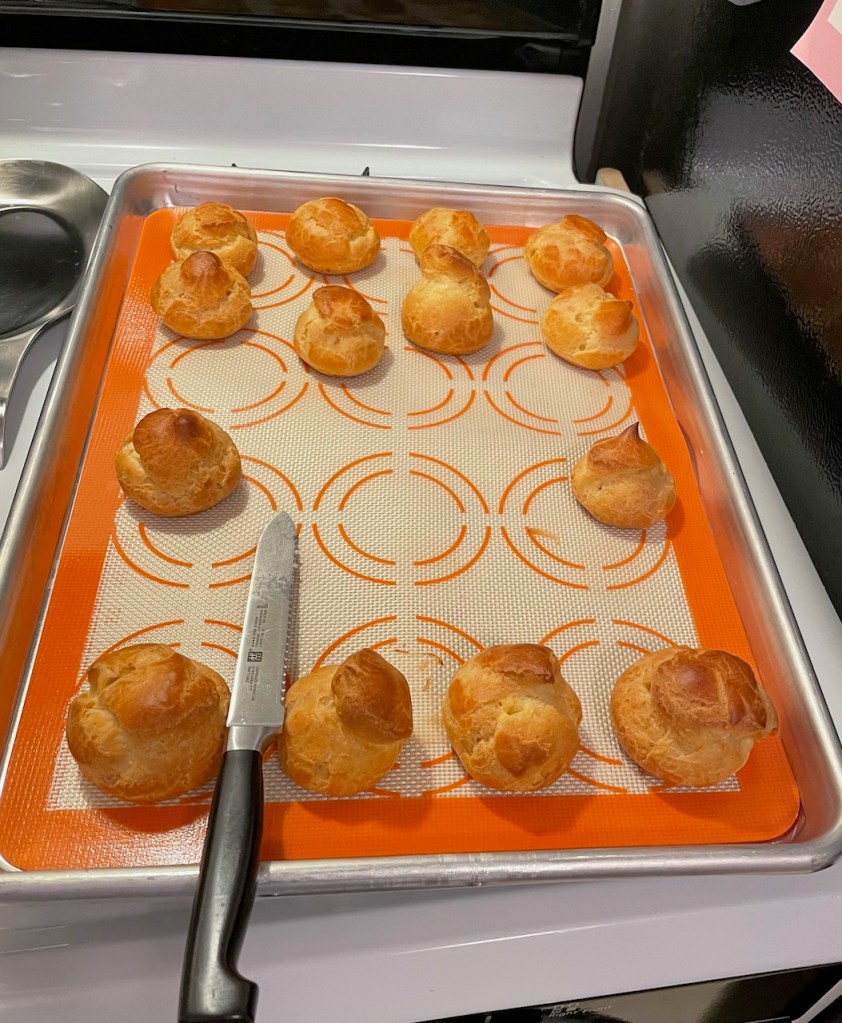
I forgot to take notes on these, but I did take pictures (not usually this careless!). I hazily recall being irked that whatever recipe I used called for a 1″ piping tip, but I found that there really is no such thing for the home baker. I have since managed to find one, but it can’t be used with most couplers. This launched a whole piping tip buying project that I won’t bore you with. Another project that I wouldn’t normally have time for.

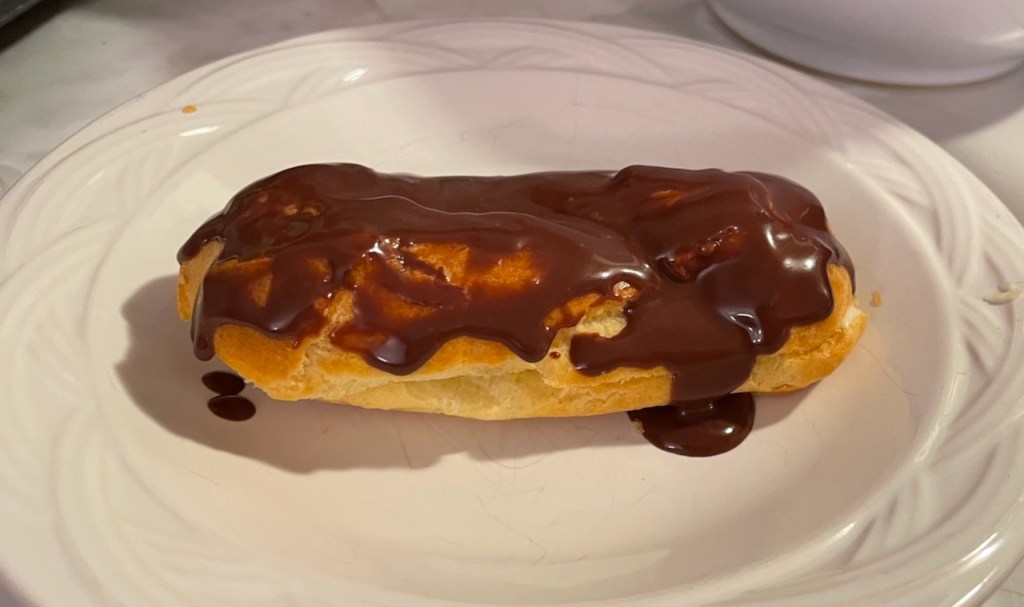
I note that my eclair looks “informal”, as Prue Leith might say. Paul Hollywood would say that it looks like it’s been dropped on the floor. Nonetheless, I do remember that it was very satisfying to eat.

Tattie Scones (Scottish Potato Scones)

Though this is a post about Tattie Scones, I’m first going to write about mashed potatoes. Credit must be given to Food52 and The Daily Spud for pointing me towards the experts and the method. The recipe mostly came from Shirley Corriher’s Cookwise, in which she credits Jeffrey Steingarten.

Who knew that there was science to this seemingly simple food (mashed potatoes), but there it is. And I’m a believer. The process is fussy and takes a while, but the results are wonderful. A perfect pandemic cooking project! And, I can report that the leftovers (nuked with another ¼ T of butter) are just as good as the original result. Really nummy.

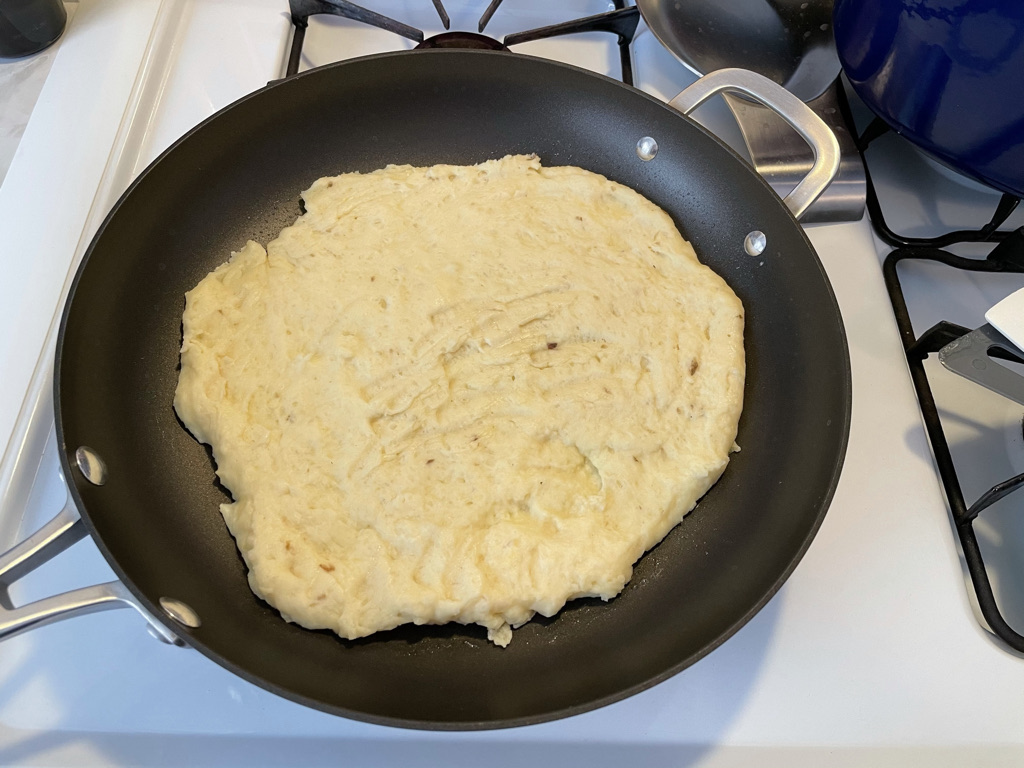
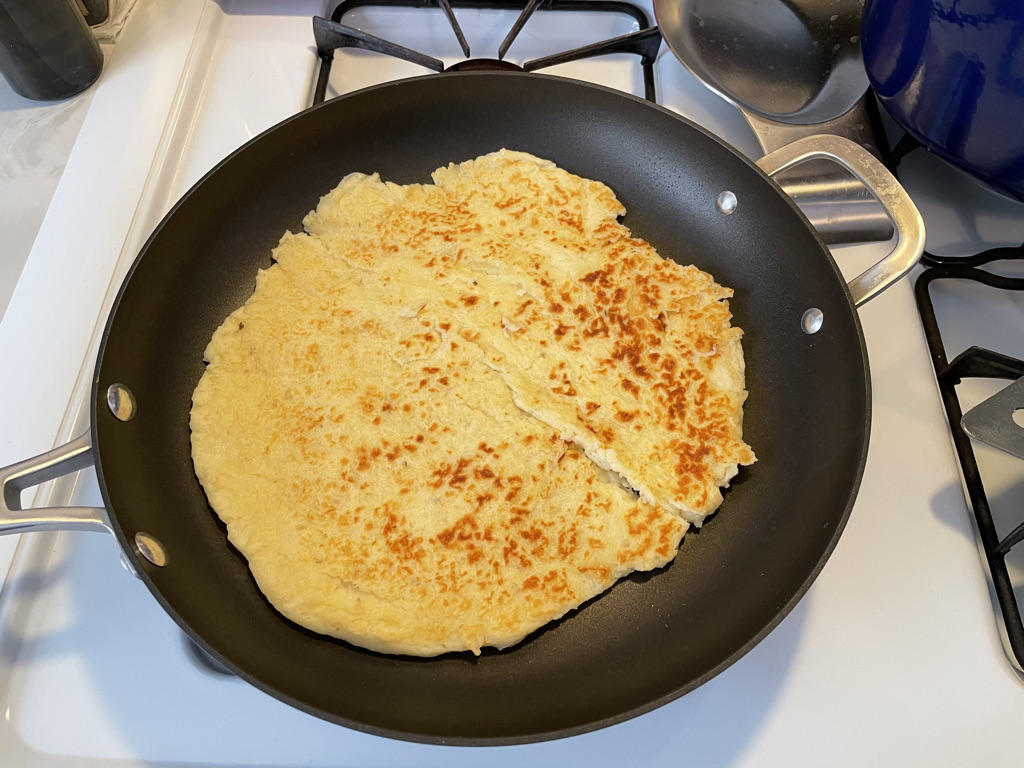
So, then there were leftover mashed potatoes and a timely watching of an old episode of the Great British Baking Show in which James Morton (the Scot) made Tattie Scones during Bread Week. I gave it a whirl, using the SpruceEats recipe, but I already had butter and dairy in the mashed potatoes so I tweaked it accordingly. They came out beautifully, even with a marginally successful (read = “unsuccessful”) pan flip. I had them with some Easter ham (thank you, Mike and Chris!) and was verrrrry happy.

Bunny Cakes for Easter

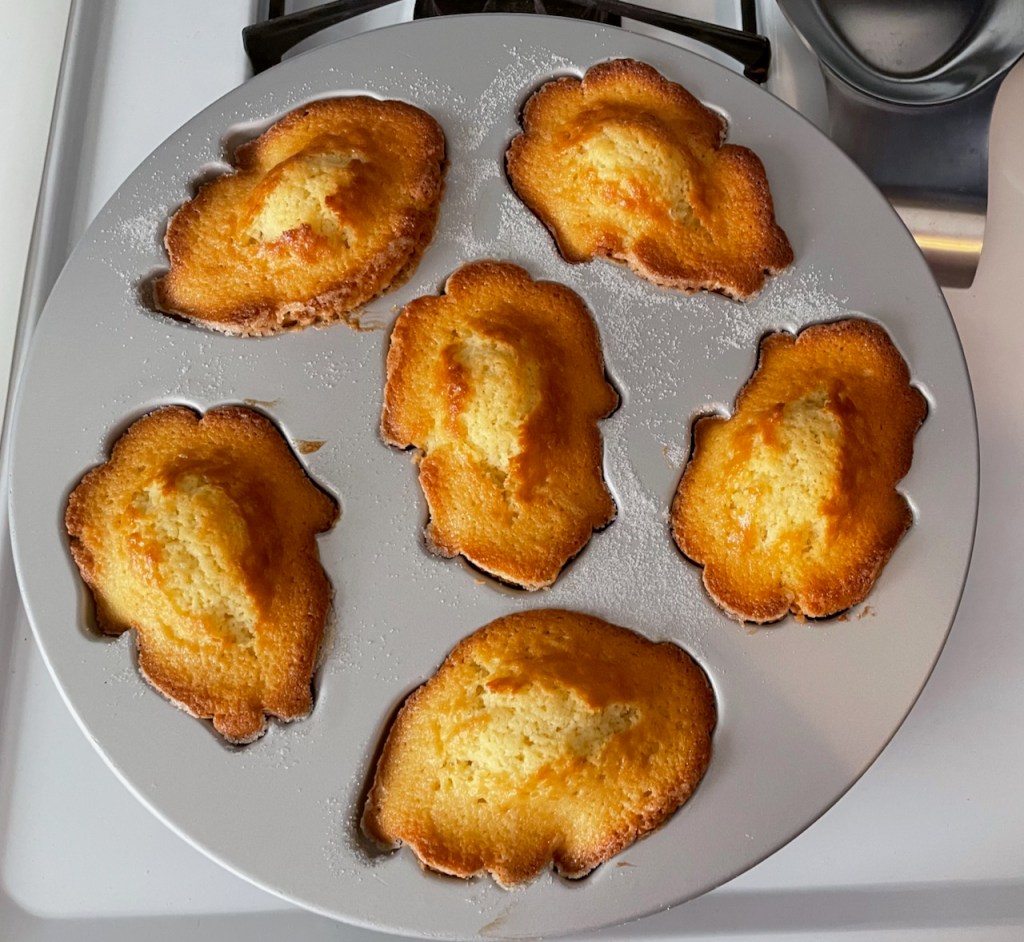
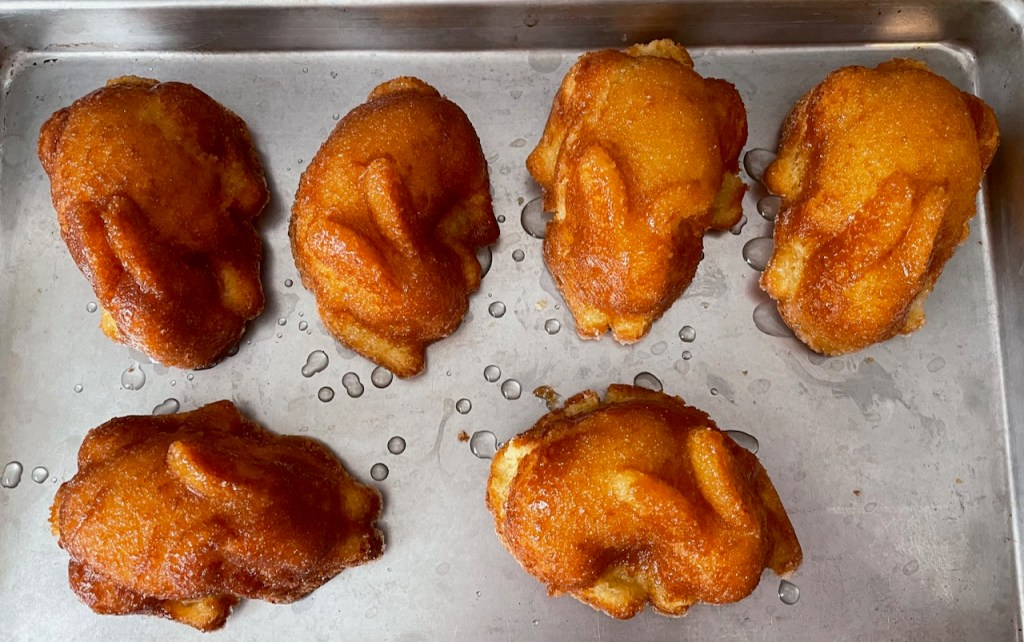
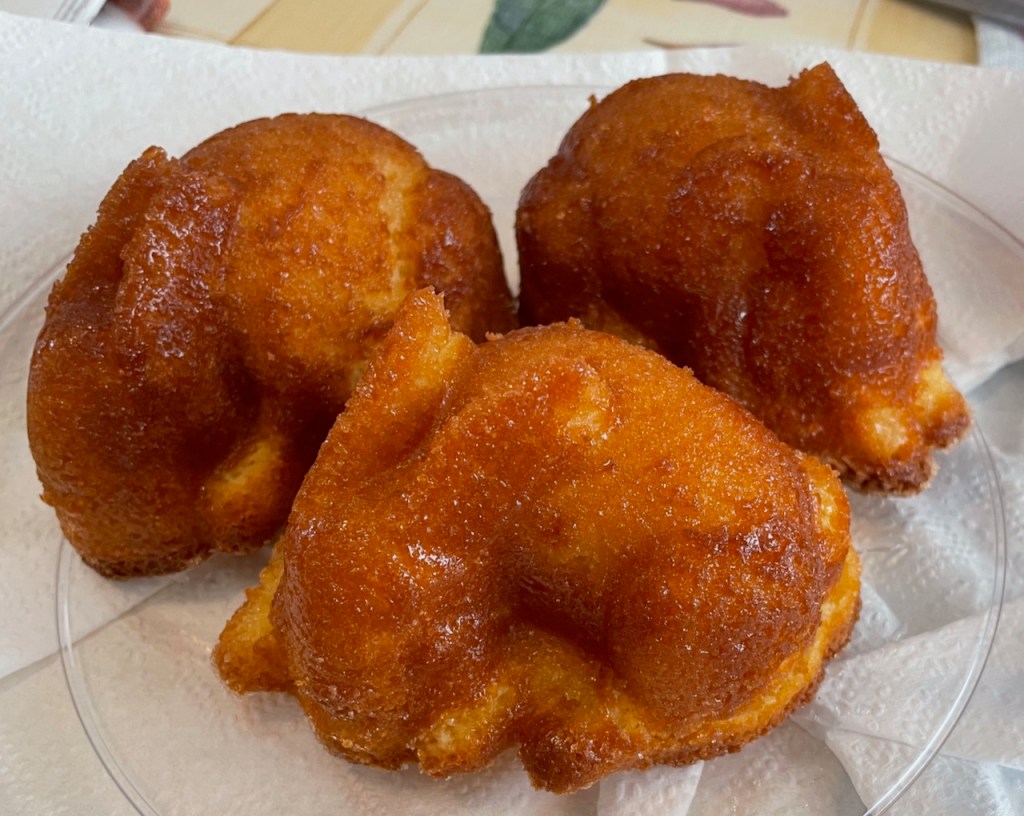
Buying this cake pan was something of a pandemic-depression-induced shopping whim. But that said, it’s also incredibly cute, and I am glad to have had the right occasion for using it. It was a significant headache getting the cakes out of the pan. A light layer of Crisco and fine sugar wasn’t enough, so I either need to buy baking spray or use more Crisco next time.

I haven’t written yet about Maida Heatter, so it’s high time. Christine got me into Maida Heatter’s cookbooks. Maida writes ever so clearly and reassuringly. It’s not uncommon for her to include the words “this is OK” in the recipe, lest you panic upon seeing a crack develop or some other such phenomenon. She’s a real home baker (she produced desserts for her husband’s restaurant from her home); she writes as a home baker and she writes to the home baker. She’s a goddess. I own all of her cookbooks, even ones that have been out of print for years. They all are littered with post-it notes flagging recipes I want to try.

One year, Chris and I baked our way through one of Maida’s cake chapters, alternating who made which recipe and then getting together to “share bakery”. It was delightful.

These bunny cakes used Maida’s “East 62nd Street Lemon Cake” from her Book of Great Desserts. There is a New York Times article about how this cake was part of making her famous, and there’s a link to the recipe in the article.