Those who know me well know that I’m not a big vegetable eater. I’ve at least evolved to the point where I do happily eat some vegetables, but they’re still not the most-coveted items on my grocery list. One illustration: I recently signed up for a local meat share, but don’t imagine that I’d ever enroll in a farm/vegetable share. I suppose if there were such a thing as a flour share I might consider that, but I’ve been happily buying King Arthur all-purpose flour in 25-pound sacks at Costco and storing it in an 18-quart bin.
So, I had a very small taste of what I imagine it must be like for people who are in a CSA: A couple of weeks ago I did a curbside-pickup order from a nearby supermarket (for Bonne Maman preserves, Hershey’s milk chocolate bars, and Jet-Puffed marshmallows — yes, s’mores were part of the plan, and yes, this was a ridiculous grocery order) and the person who picked my order mixed up mine with someone else’s order. They had loaded the bags in the back of my car and I drove off, so I didn’t figure this out until I got home and looked in the bags. Of course, I called the store right away and they promptly delivered my stuff, but they didn’t want me to bother bringing back the wrong stuff. That left me with a couple of bags of someone else’s food order.
Let’s end this already too-long story by saying that the wrong order had actual fresh fruits and vegetables in it, including two bunches of bananas. I actually can’t stand eating bananas. I spent my first couple decades of adulthood buying bananas and trying to convince myself to eat them, but at some point I accepted that it was futile. I just don’t like them. I happily eat my way through apples, oranges, peaches, pineapples, and grapes, but bananas are just non-starters for me. This meant that I needed to do some banana-based baking.
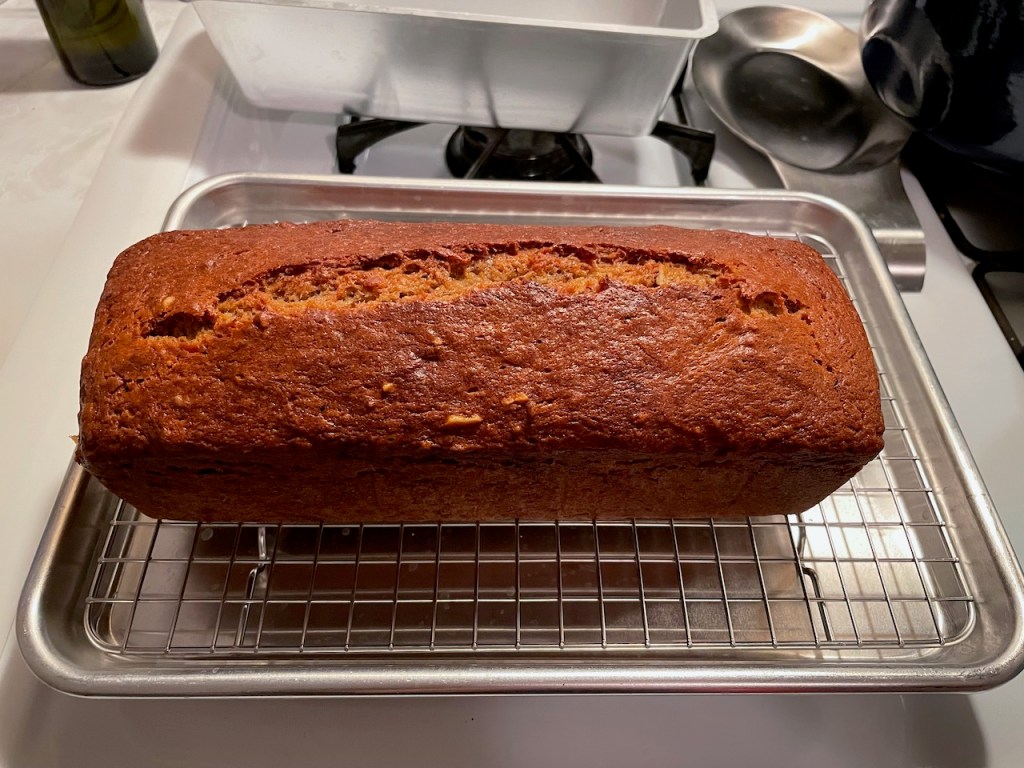
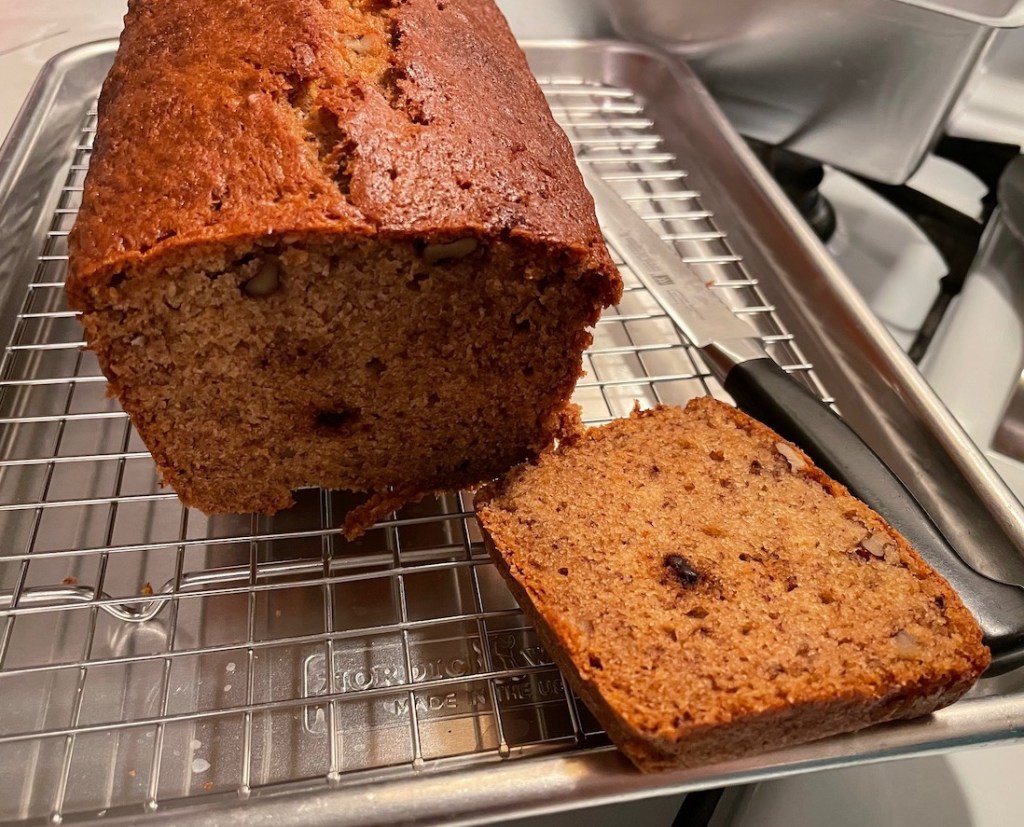
Here’s the first installment. The recipe (provided below), from a 1965 cookbook published by the Salisbury, NH Congregational Church, was made frequently by my mother. It was so popular in our house that I had to check with my sister, Jennifer, to find out if the recipe name (“Dad’s Banana Bread”) came from us or from the cookbook (answer: the cookbook).
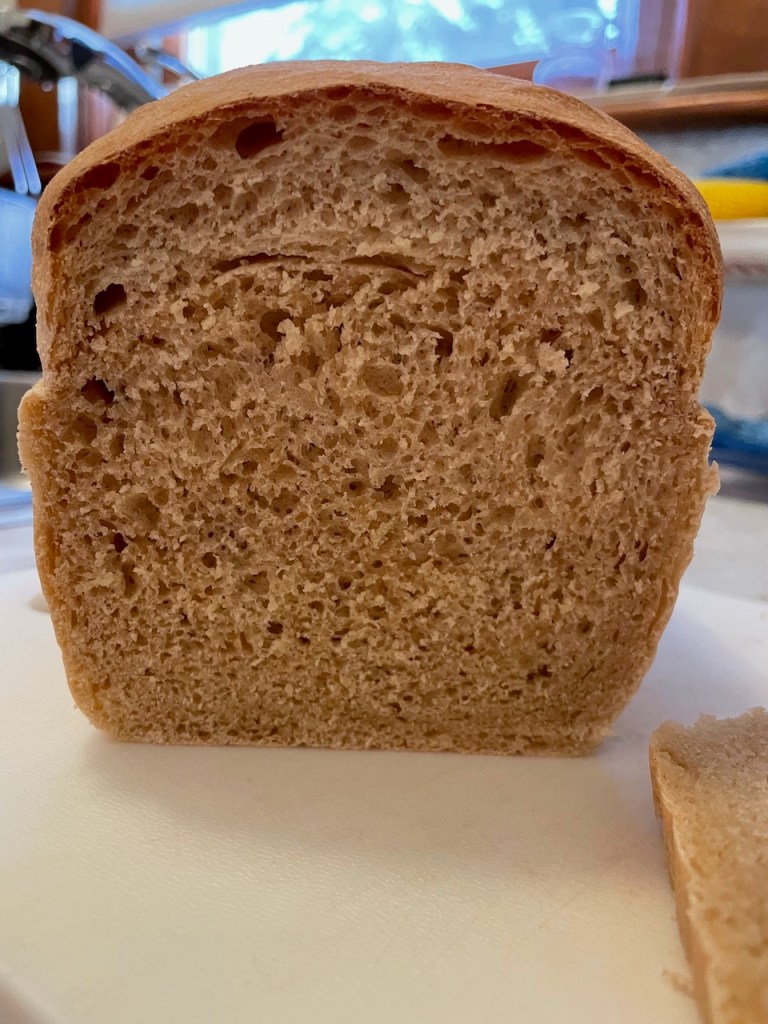
It couldn’t be easier. My mom simplified the steps so that much of the work is done by a food processor, and the whole thing comes together in minutes. I’ve been using parchment for everything lately, even things baked in loaf pans and springform pans, and this was no exception. I’m glad I did. The loaf slipped easily out of the pan and I very much like the crust that formed.
This bread is delicious. Spreading butter on it makes it even more delicious. Apparently, this is the way to get me to eat bananas!
I have two baggies in the freezer, each filled with 510g of mashed banana in anticipation of making this recipe (“Ultimate Banana Bread“) from Smitten Kitchen, possibly twice. I wanted to start with the OG banana bread that mom always made, but I am interested in comparing it with the SK version. So now you know the fate of the unexpected two bunches of bananas.
Here’s the recipe for Dad’s Banana Bread, from the 1965 Salisbury, NH Congregational Church Cookbook:
1 stick of butter, softened (I used salted)
1 C sugar (200g)
1 egg
3 ripe bananas (I used 3½ which came to 440g, not including peels)
¼ C chopped walnuts
2 C all-purpose flour (I used 260g of King Arthur All-Purpose)
1 tsp. baking soda
1 tsp. salt (I used fine sea salt)
In a food processor, process the butter and sugar, then add the egg and process. Add the bananas and process, then add the walnuts and process. Whisk the dry ingredients together, then fold the wet mixture into the dry mixture only until blended. Pour the batter into a buttered loaf pan (I used a parchment-lined 4″ x 10″ x 3″ pan, which is just under 7 cups). Bake at 350°F for 45 minutes (see note below). Remove promptly from pan and let cool on a rack.
Note on bake time: It took me 65 minutes to get a clean cake tester inserted into the center of the loaf. The bread was not overbaked, so maybe the bake time is just low on the recipe. I would use a cake tester to decide when it’s finished, and also lightly press on the top of the bread in the middle to see if the middle feels as stable as the ends. I used an unusual loaf pan size (4″ x 10″) that is slightly narrower and longer than a typical loaf pan, so it’s possible that this impacted the baking time. Anyway, the cake tester method worked.



 FlayRah