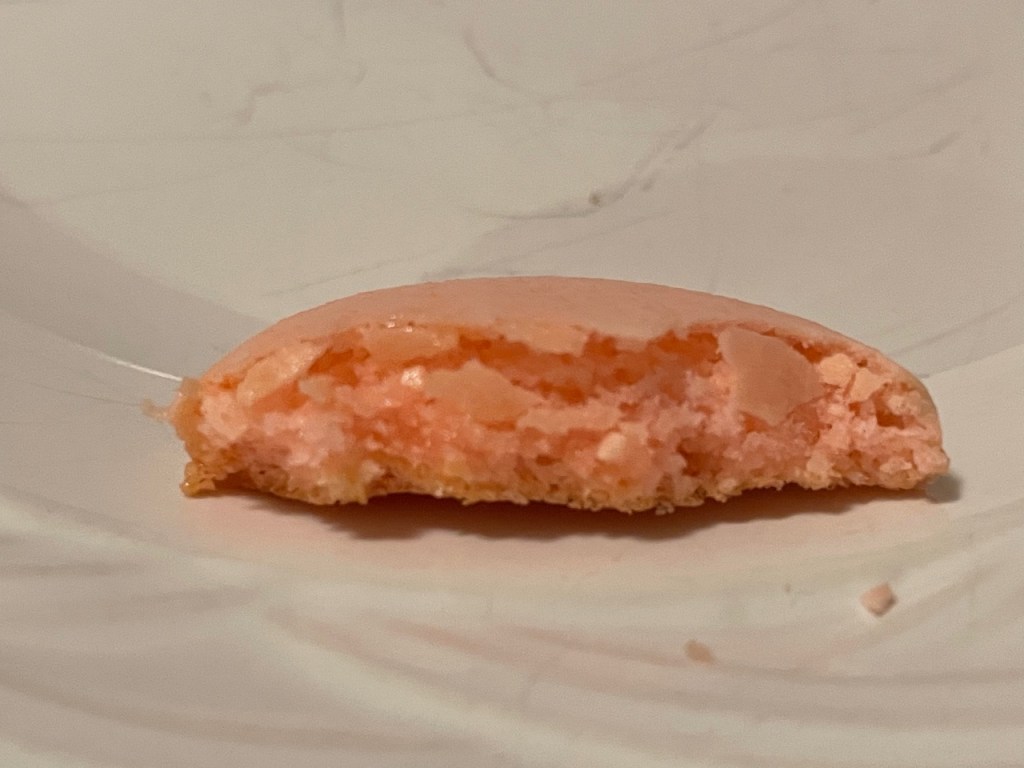
French Macarons (Rookie Attempt!)

I had some leftover egg whites, so I decided to try something I’ve had my eye on for a while: French Macarons. It’s another one of those things, like choux pastry, that the Great British Baking Show makes you want to try. The contestants on that show knock these out like they’re nothing!

I liked this recipe from Preppy Kitchen, and followed it completely. I appreciated all the supporting advice, photos, and video. I also appreciated having a chance to break out my carefully curated piping kit (this tip set, these tips for the range of sizes, these bags, these couplers), which I basically haven’t used since I acquired it all during the pandemic (because of the eclair project). I was only piping one thing, so I didn’t use a coupler, and I was happy to have the larger plain tube tips that I bought. I’m definitely a piping bag noob, but I could tell as I went that it was a technique/familiarity thing, and it did get easier and better as I went.

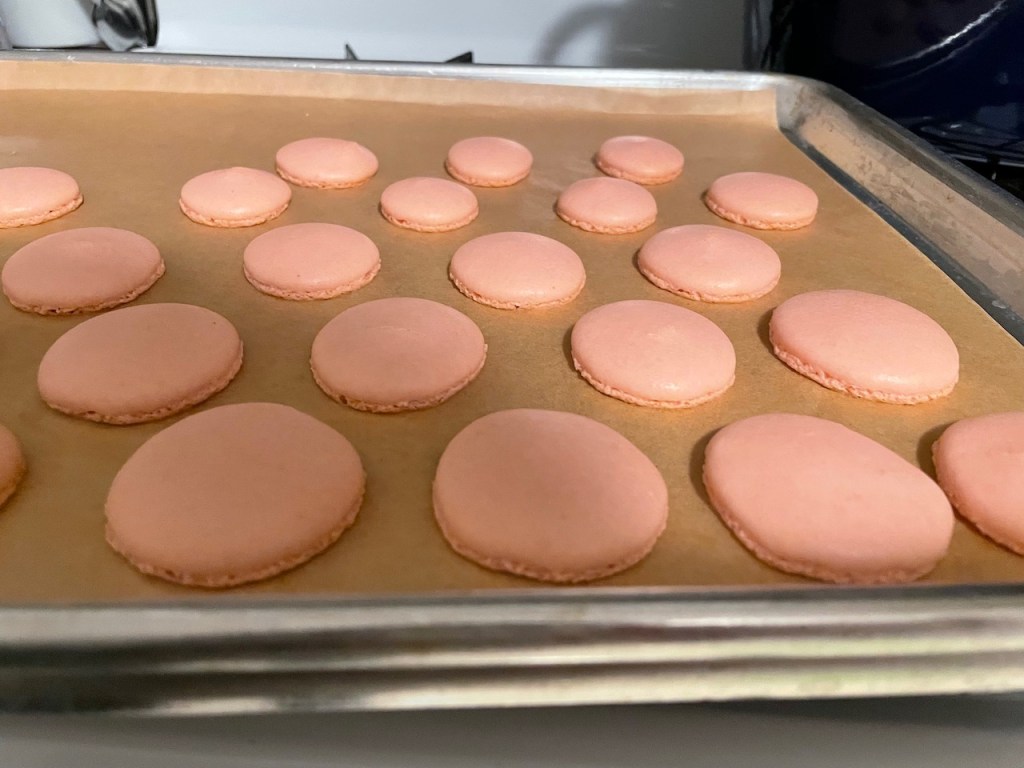
I am also not an expert at what the final result is supposed to look, taste, and feel like, but I did achieve the necessary fringe-y “foot”, and for the most part I think I avoided the big gap/bubble at the top. I flavored these with a little almond extract and colored them a pale pink. I opted not to take it to the buttercream filling sandwich step. These seemed quite sweet enough already. I already had red food coloring on had because of my Christmas Cookie Candy Canes (see header photo), so pink is what we got.

Oh, also: The almond flour that I bought was the Whole Foods brand. It seemed to be less finely ground than was ideal for this, but in the end I think it was OK. I did follow the instructions to put the flour through a fine mesh sieve, but this was actually quite difficult to do. In the end I gave up on forcing about 1/4 cup of it through. I dumped that last pile of flour out of the sieve (saved for some other use, I guess?) and put some more flour through the sieve to yield the right amount. Anyway, it took a long time.

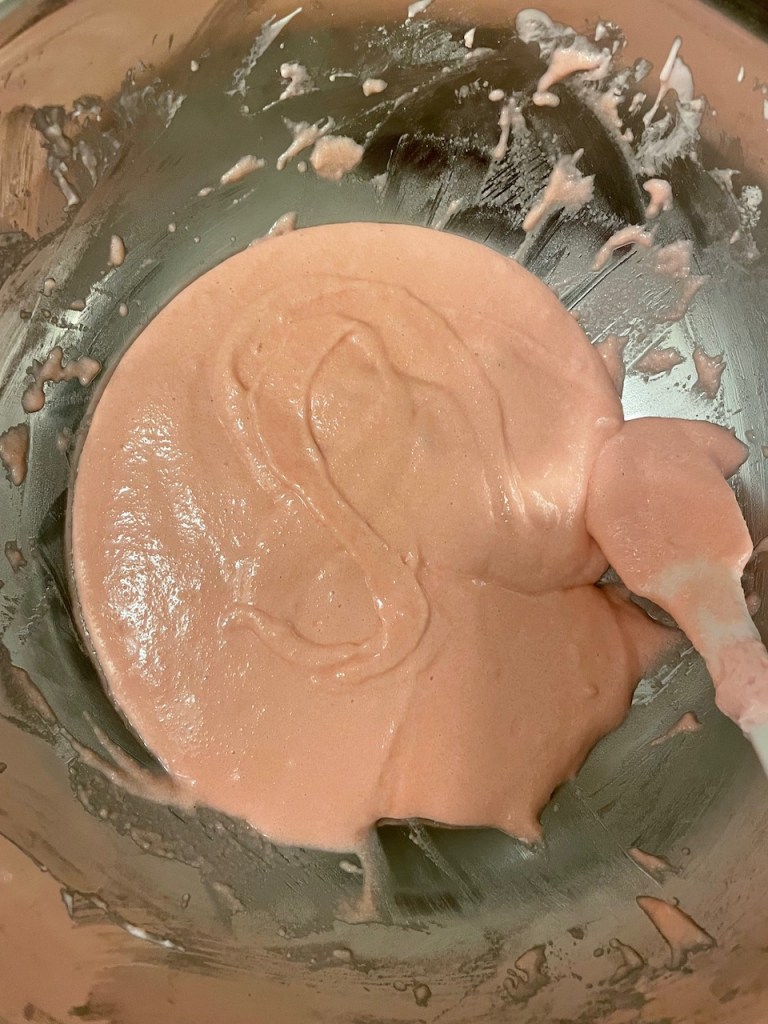
My last thought on this rookie attempt: There’s something that feels weird about going through all the steps to yield stiffly whipped egg whites only to then deflate them almost entirely. Getting to the point where I could even draw the “figure 8” with the egg+flour+sugar batter took quite a bit of deflating. Since the “feet” on my macarons were not very high, I’m guessing I over-did the macaronage, but honestly, I have no idea. More investigation and experimentation needed!

I saw this recipe for lemon macarons that looked very interesting. Maybe next time?

Baklava

This is actually my third try at baklava. I didn’t take any photos of the first two, because they were generally awful. The whole process was awful, and apparently I didn’t want any evidence of their existence.

The problem with the first two attempts was that I tried to make it inside of a rectangular pyrex dish. Maybe for someone who knows what they’re doing this would have been fine. But for me, I had major problems getting the thinly-rolled dough to behave properly in the dish. It tended to contract or otherwise not behave when buttered, yielding an ugly mess. I think it was a mistake to trim the rolled dough before trying to place it in the dish? Maybe having extra would have helped. I don’t know

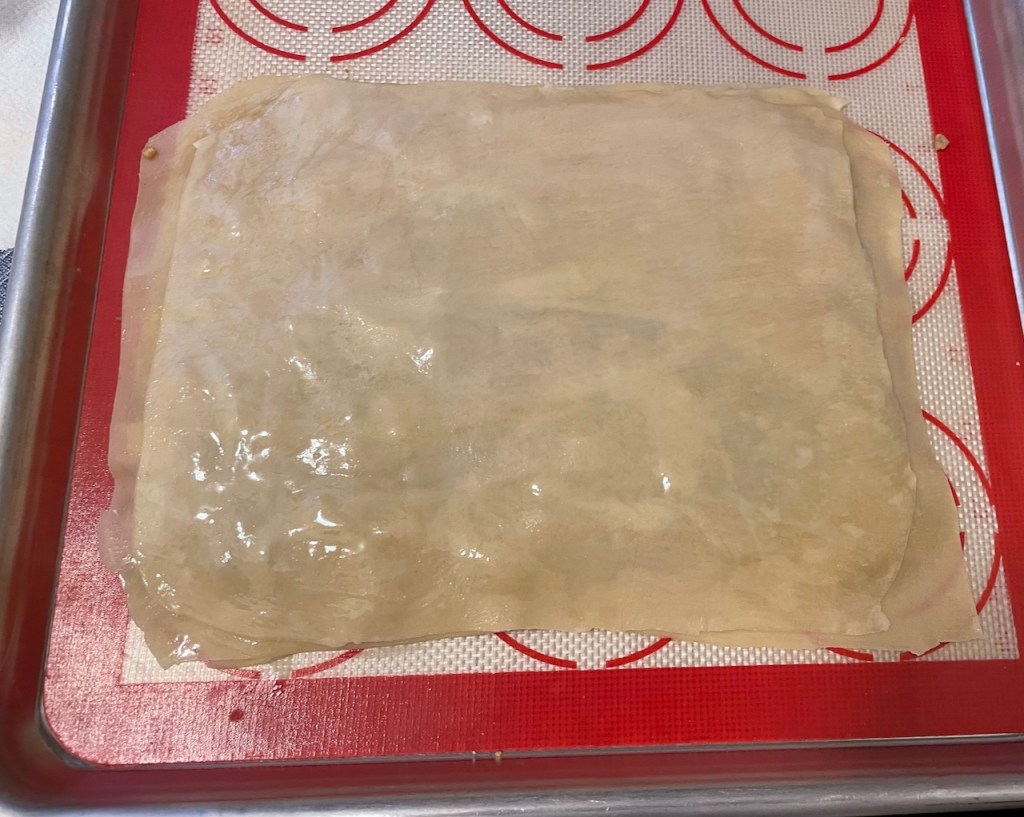
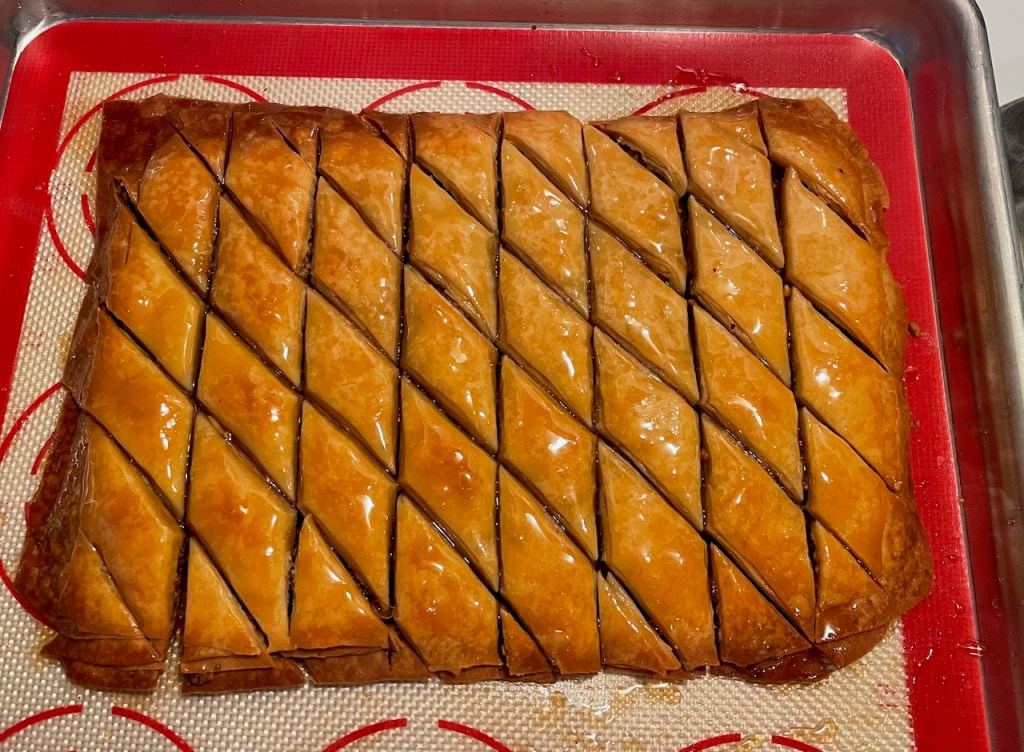
Anyway, this third attempt was more successful because I ditched the pyrex dish in favor of a sheet pan. I rolled the phyllo sheets out and just built the baklava layers on the pan. The dough behaved better and stayed thin, and I was still able to pour the syrup on and have most of it stay within the pastry. One downside was that I couldn’t use a knife to cut the diamond pattern, because I didn’t want to cut the silicone pad. Instead, I used my plastic bench scraper to make the cuts. In hindsight, I could have built the baklava on parchment and then used a knife.

TBH, my conclusion from all this is that, for baklava, I don’t think it’s worth making the phyllo dough. Baklava really needs the paper-thin sheets that you get with the bought stuff. No matter what, mine weren’t going to be that thin!

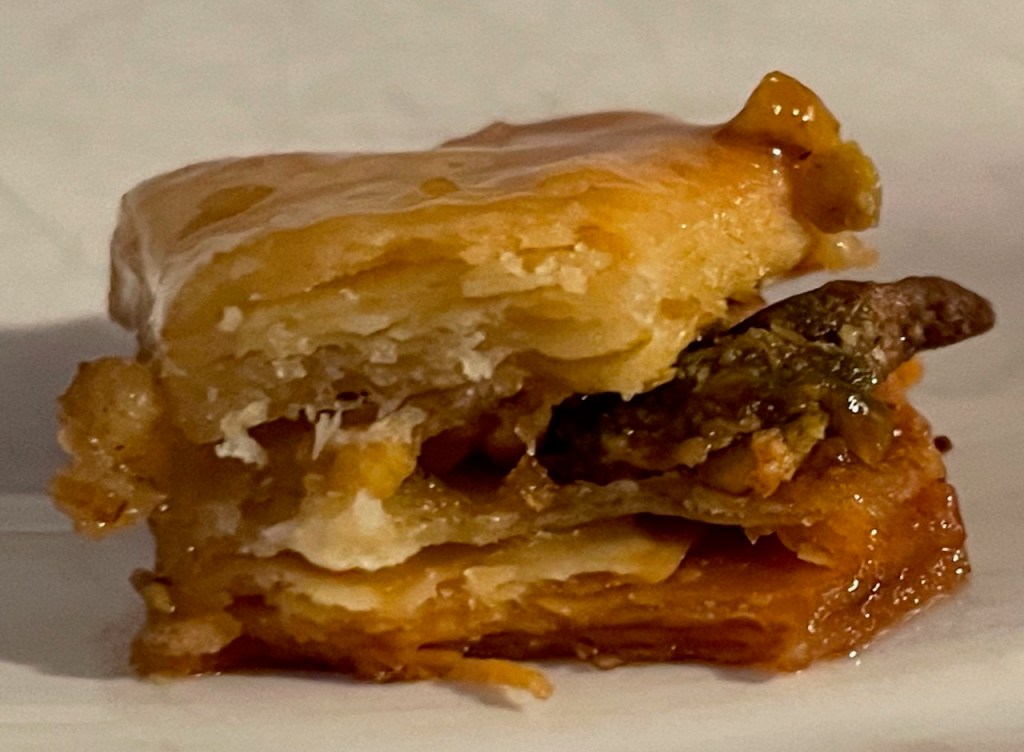
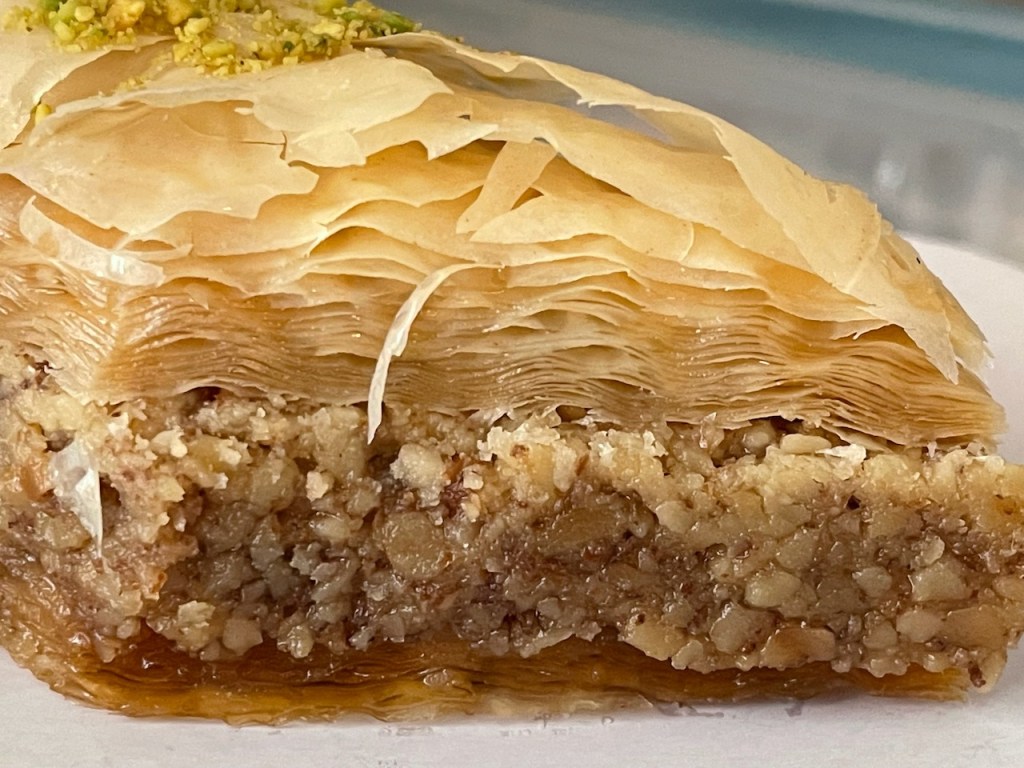
I do wonder if the Paul Hollywood cornflour method would work. I’m tempted to try, but maybe not motivated enough. Here’s why: I bought a piece of baklava from Cafe Barada a few days ago, and it was just sublime. I mean, it was light, delicate, only gently sweet. Just perfect. Why work hard to make something so inferior? This is Cafe Barada’s baklava. I mean, look at this thing of beauty…

Maybe it’s worth it to make homemade spanakopita triangles, but not baklava.

Phyllo Dough and Spanakopita Triangles

I think this one can be blamed on the Great British Baking Show, whose current season had a “technical challenge” that involved making baklava, including making the phyllo dough from scratch. But, I think also I was motivated by a big pile of fresh spinach that Chris gave me from a huge bag that she had bought at Wilson’s Farm.

I started doing some research online about it, and was frustrated by the lack of clear instructions. The New York Times has a recipe for phyllo dough, but stops before saying what to do with the dough. There is one use for it that they show (something called Hortopita), but I wanted to get into more options.

Of course, I did also check out the Paul Hollywood baklava recipe that was used for the GBBS technical challenge, but was thrown a bit by the use of “corn flour” as a separator between the layers.

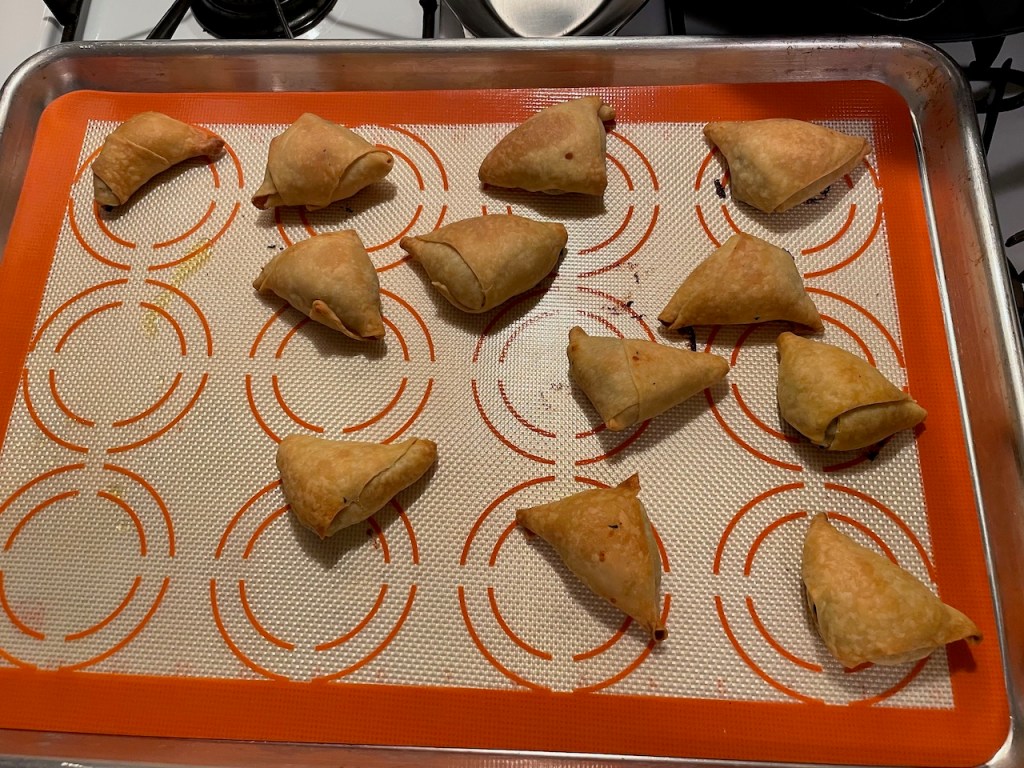
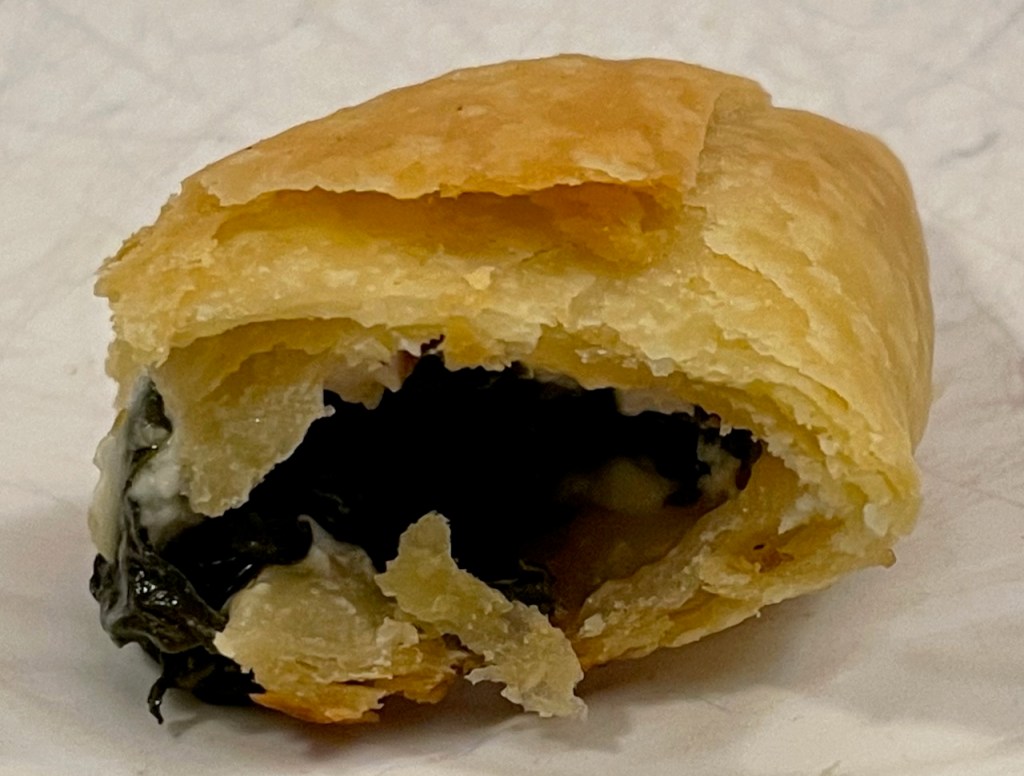
So, I did a bit of “winging it” and made spanakopita triangles. I cleaned and de-stemmed the spinach, then cooked it with diced shallot, garlic, and olive oil. When it was cooled to room temperature, I squeezed out any liquid, drained it on some paper towels to get out any remaining liquid, and stirred in some crumbled feta.

I made the phyllo dough using the NYT recipe, which involved ordering “finely ground durum flour” from King Arthur online. I rolled the dough as thin as I could, cut it into strips, buttered the strips, and then put a blob of spinach on each strip of dough and folded it up into little triangles.

These were great!I wondered if I would have better luck using a pasta roller, so my next batch (I don’t have photos, alas) went through the pasta roller and yielded thinner strips. Of course, I first experienced the sad fiasco where I rolled some dough thinner and thinner, only to then have it merge back into a blob because I hadn’t floured it enough as I went! I’m basically a pasta machine noob, and it showed. Once I got the hang of it, things went better.

The next phyllo project would be baklava, but first the croissant adventures begin…

Choux Buns, Eclairs

It’s really just not possible to watch the Great British Baking Show at any length and not want to make choux buns. Especially in the earlier seasons, one could easily conclude that choux pastry held the keys to the kingdom. On TV, the stuff really does look magical. It goes into the oven looking like little kiss-shaped things, but it come out looking like big, puffy balloons. Pastry magic!

Also, Cook’s Illustrated ran an article about Choux au Craquelin that pushed me over the edge. Choux had to happen.

I’ve made choux before, and have even taken a one-day pastry class from the queen herself (Joanne Chang) which included choux. It never struck me as that difficult, but it seems that the GBBS contestants are often asked to make choux without the benefit of an actual recipe. For me, and for pretty much any typical home cook, this would not be possible.

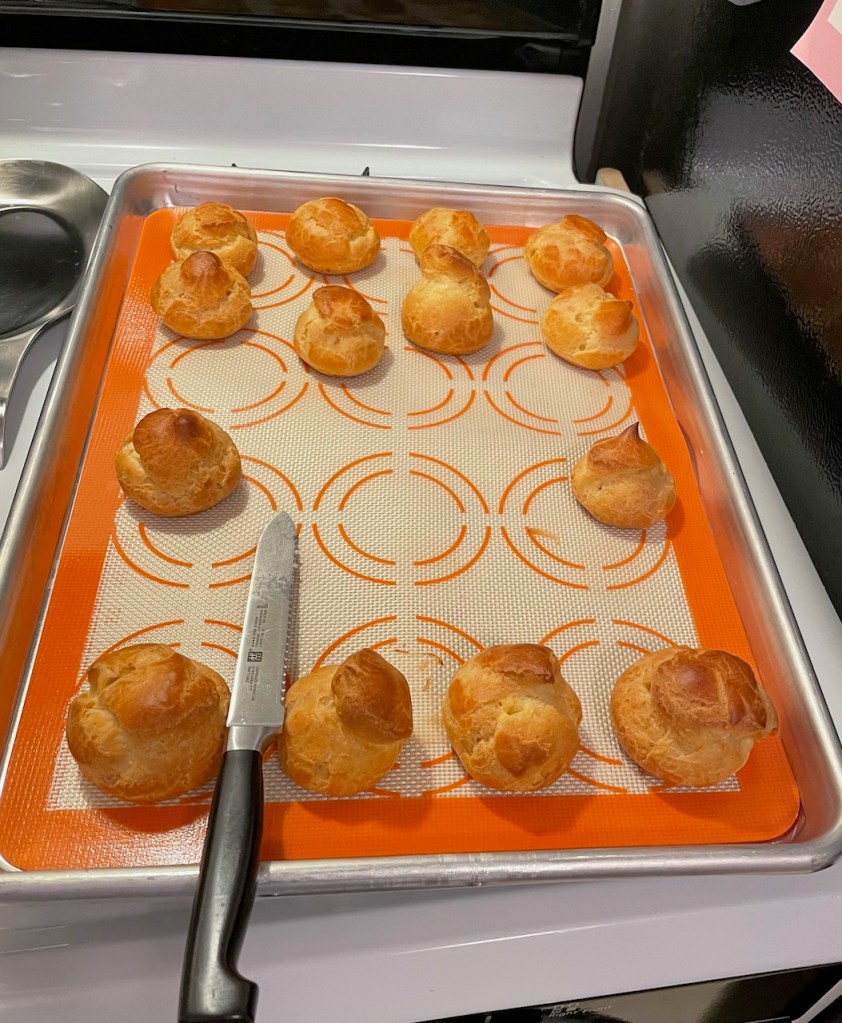
I forgot to take notes on these, but I did take pictures (not usually this careless!). I hazily recall being irked that whatever recipe I used called for a 1″ piping tip, but I found that there really is no such thing for the home baker. I have since managed to find one, but it can’t be used with most couplers. This launched a whole piping tip buying project that I won’t bore you with. Another project that I wouldn’t normally have time for.

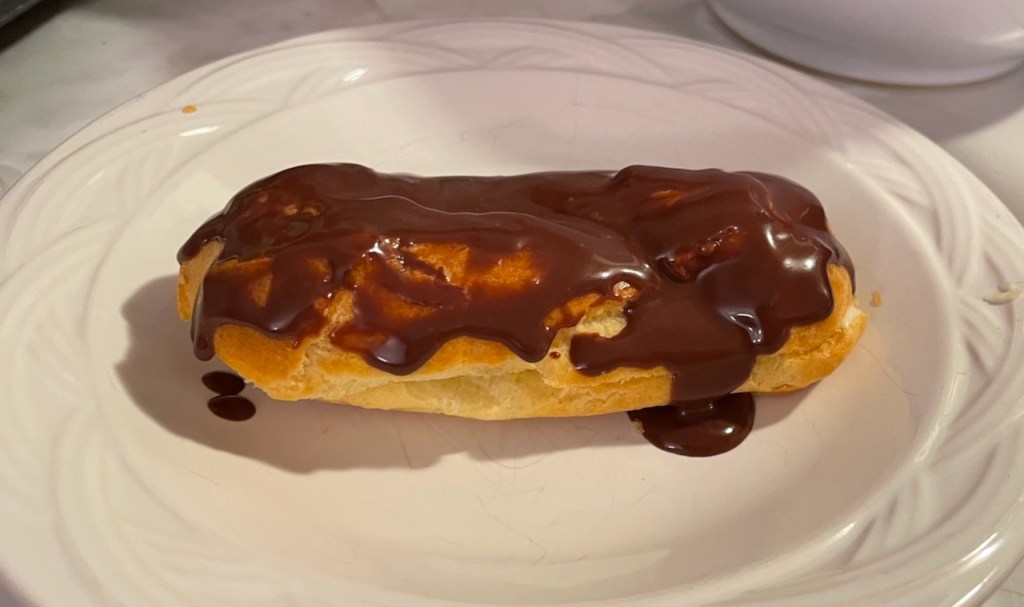
I note that my eclair looks “informal”, as Prue Leith might say. Paul Hollywood would say that it looks like it’s been dropped on the floor. Nonetheless, I do remember that it was very satisfying to eat.

Tattie Scones (Scottish Potato Scones)

Though this is a post about Tattie Scones, I’m first going to write about mashed potatoes. Credit must be given to Food52 and The Daily Spud for pointing me towards the experts and the method. The recipe mostly came from Shirley Corriher’s Cookwise, in which she credits Jeffrey Steingarten.

Who knew that there was science to this seemingly simple food (mashed potatoes), but there it is. And I’m a believer. The process is fussy and takes a while, but the results are wonderful. A perfect pandemic cooking project! And, I can report that the leftovers (nuked with another ¼ T of butter) are just as good as the original result. Really nummy.

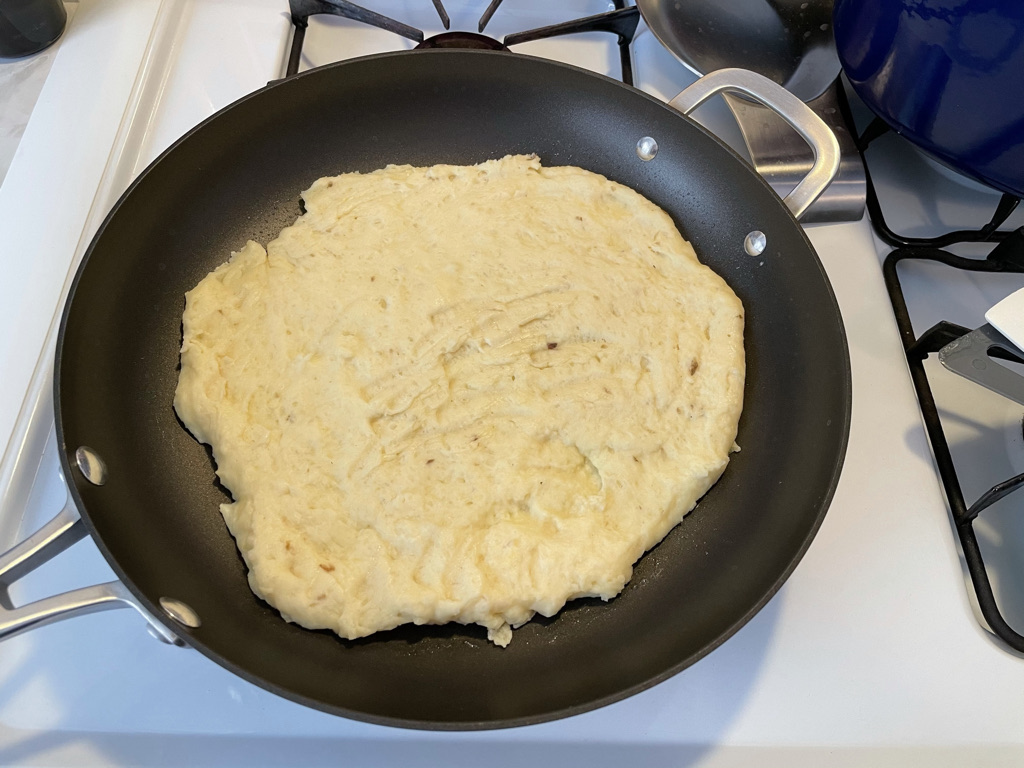
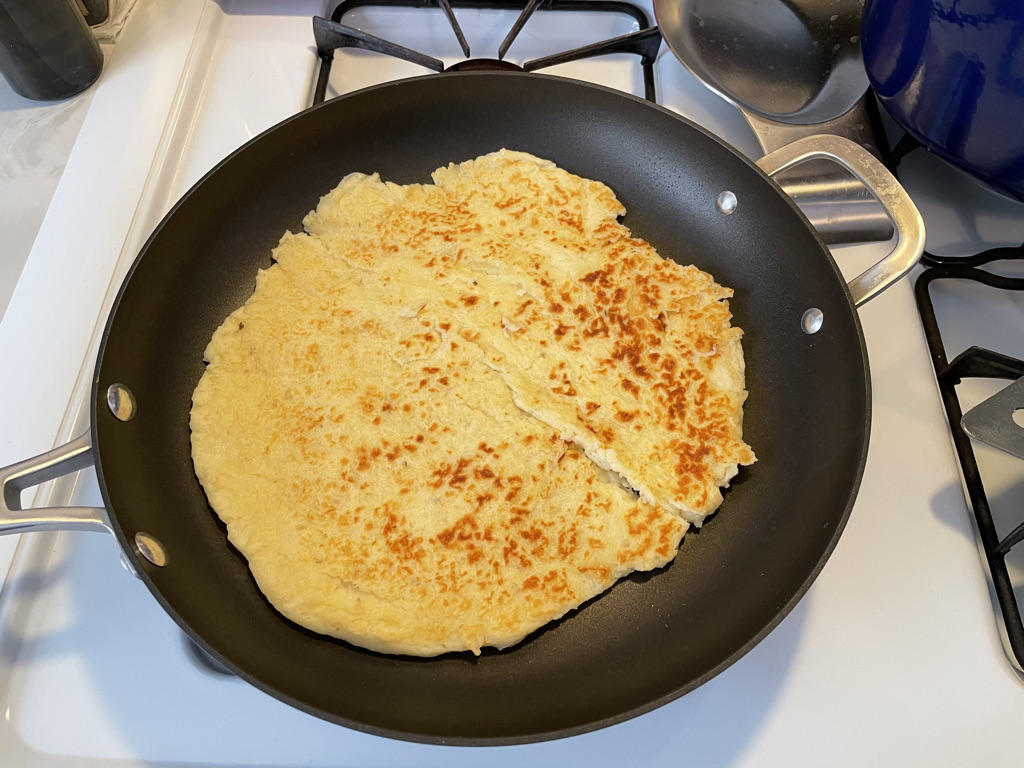
So, then there were leftover mashed potatoes and a timely watching of an old episode of the Great British Baking Show in which James Morton (the Scot) made Tattie Scones during Bread Week. I gave it a whirl, using the SpruceEats recipe, but I already had butter and dairy in the mashed potatoes so I tweaked it accordingly. They came out beautifully, even with a marginally successful (read = “unsuccessful”) pan flip. I had them with some Easter ham (thank you, Mike and Chris!) and was verrrrry happy.

Daffodil Cake

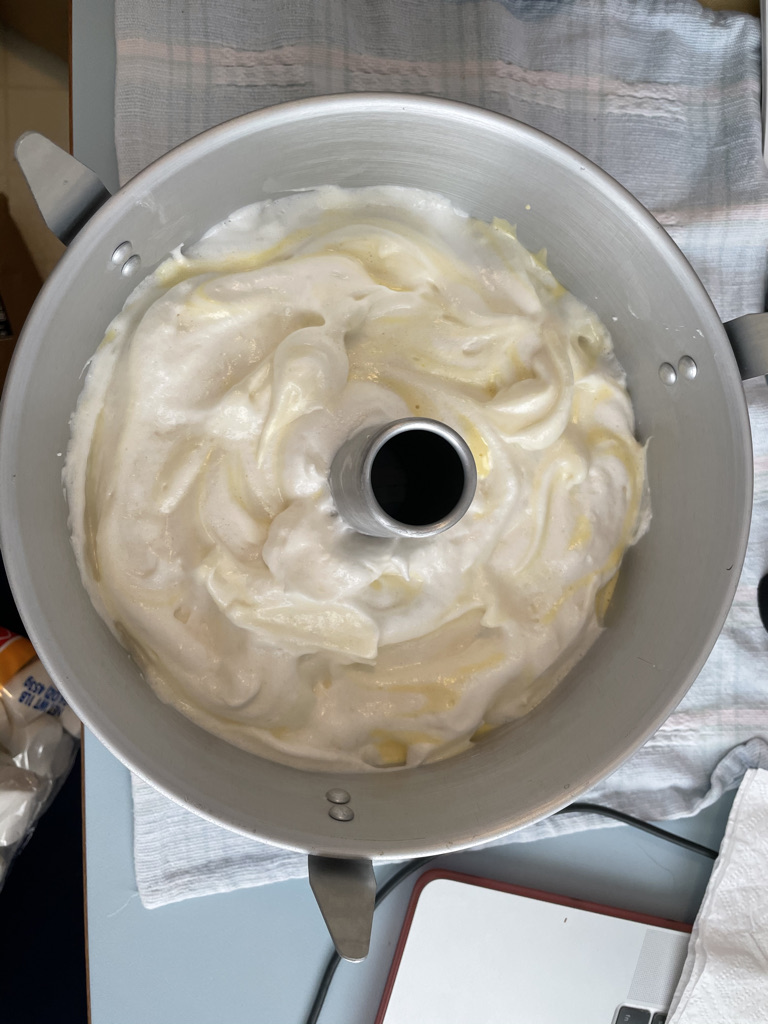
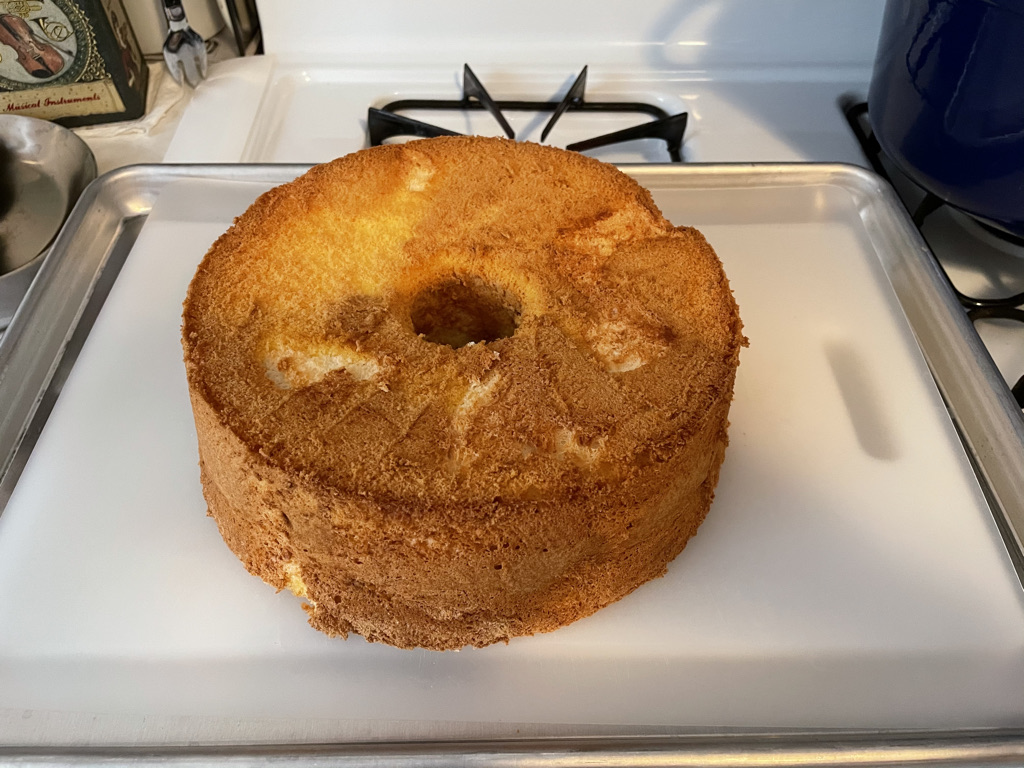
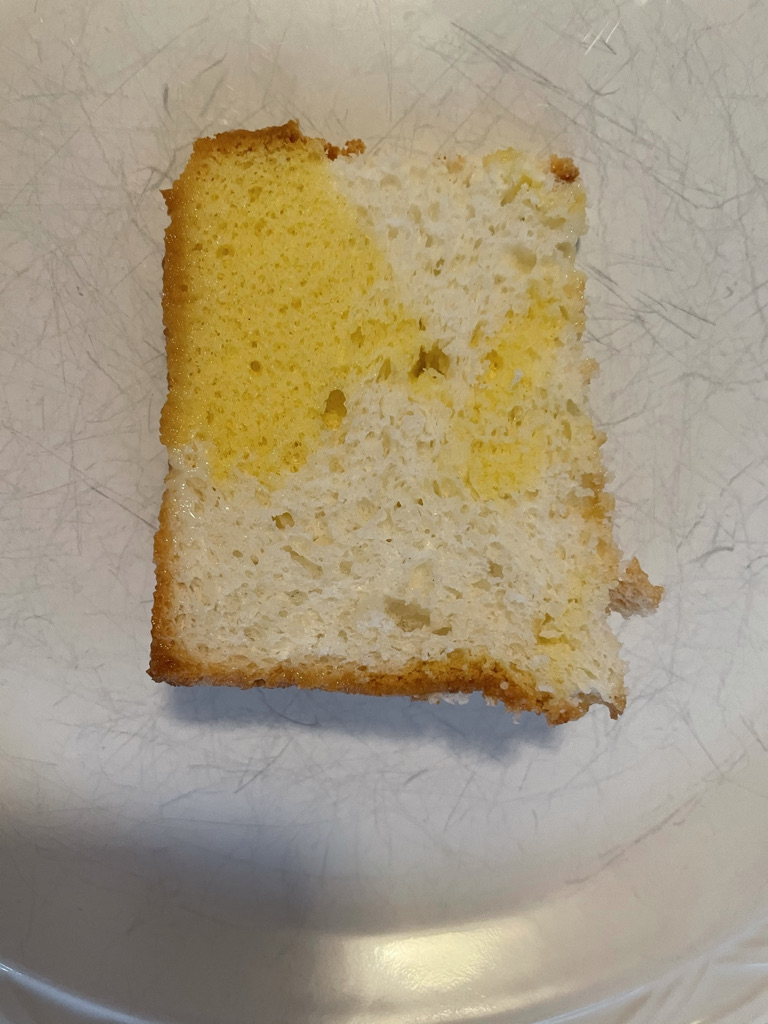
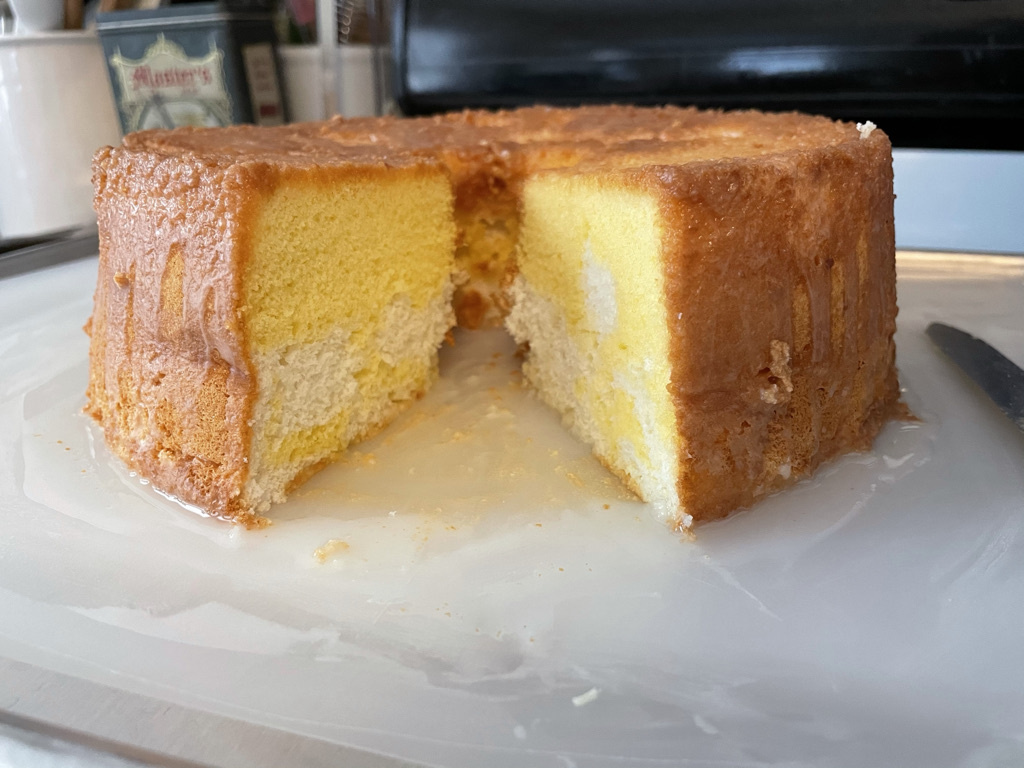
For my birthday, I decided to resurrect a cake from my mother’s standard rotation. Daffodil Cake (many variations exist on the interwebs) is a marbled combination of an Angel Food Cake and a Chiffon Cake, topped with a lemony glaze. It’s very, very SPRINGTIME, and just the right thing for the occasion.

I very often feel great sympathy for the contestants on the Great British Baking Show. I don’t now how they are able to do what they do under such insanely short timeframes. And, I can’t imagine how stressful it must be to have the cameras capturing EVERY thing that they do. Millions of our judgy eyeballs scrutinizing everything!

This cake reminded me of GBBS for a couple of reasons:

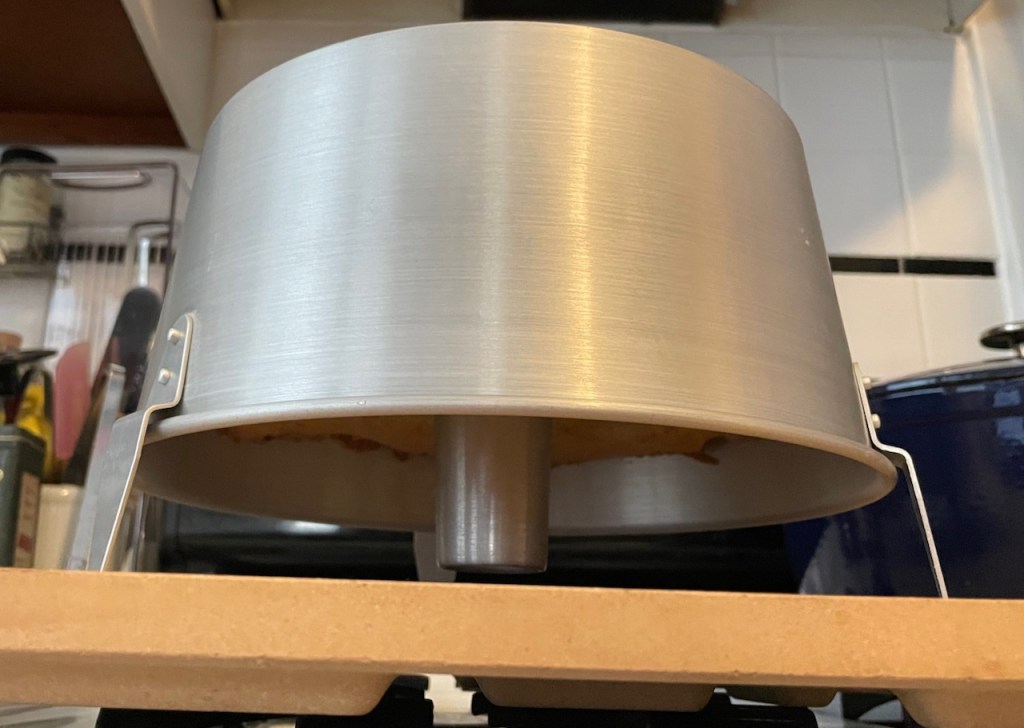
  • I recall some technical challenge where the contestants were not instructed to invert an Angel Food Cake for cooling and it was a test to see who already knew (I knew, thanks mom!).
  • My Daffodil Cake developed a slight “waist”, and I’m sure that was criticized on someone’s GBBS cake at some point. Perhaps I took the cake out of the pan too soon? Or perhaps the structure of this cake can’t quite manage the volume of glaze that it took in?

I am not an expert cake-baker. I have had only middling results in the past with cakes. That might need to be another project for me during this weird sabbatical. I’d like to master the various types of “sponge” that I’ve seen on GBBS, and really understand what makes cakes come out wonderfully.

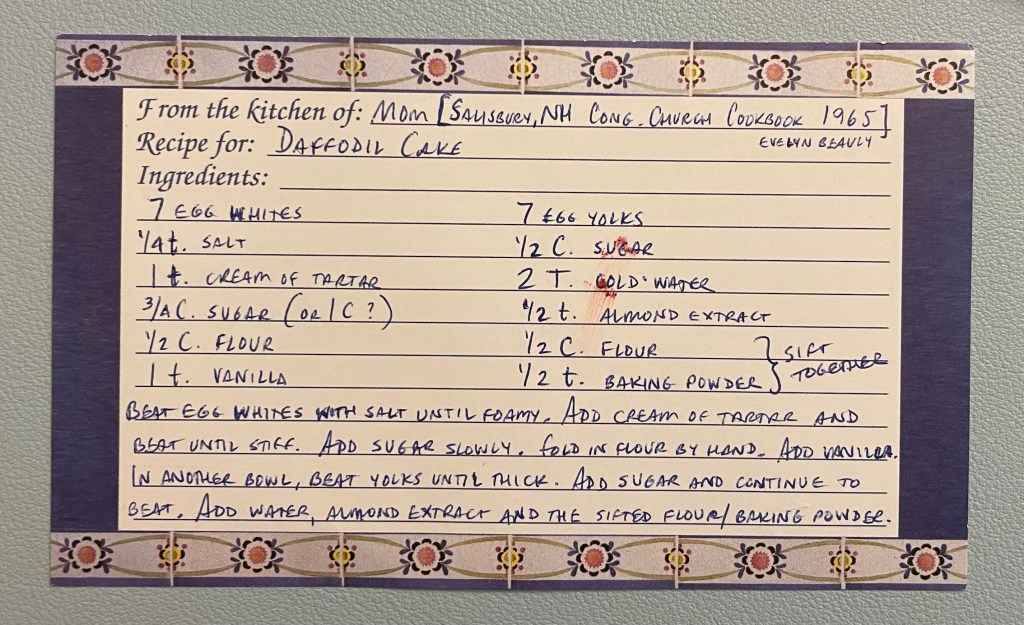
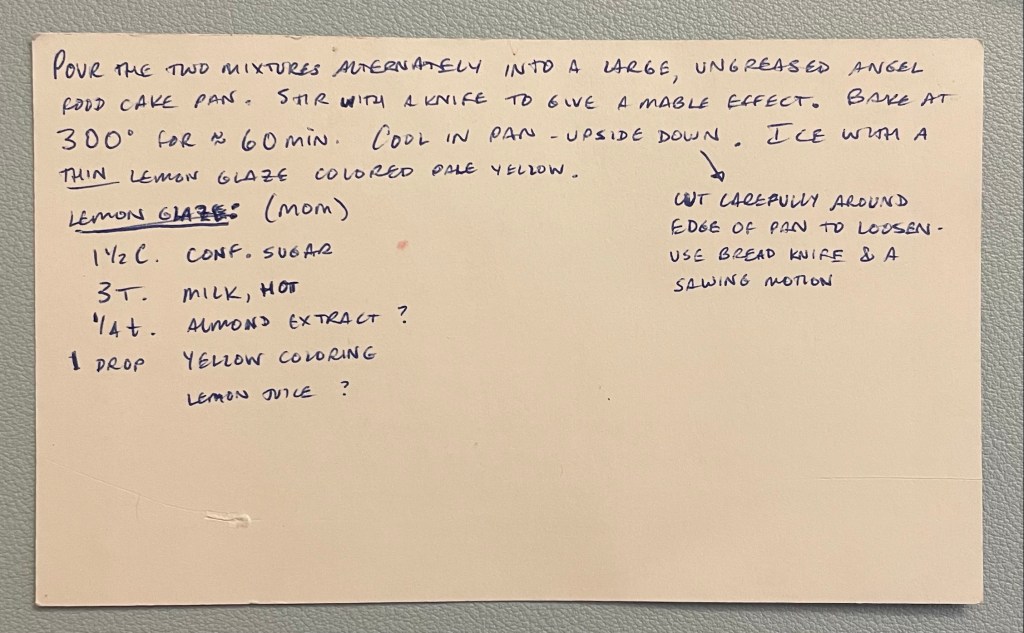
Here’s mom’s Daffodil Cake recipe (copied by me, many years ago), in which she credits Evelyn Beauly in the Salisbury, NH Congregational Church Cookbook, 1965: