Ms. Chang, a.k.a. “The Master”: Making Croissants

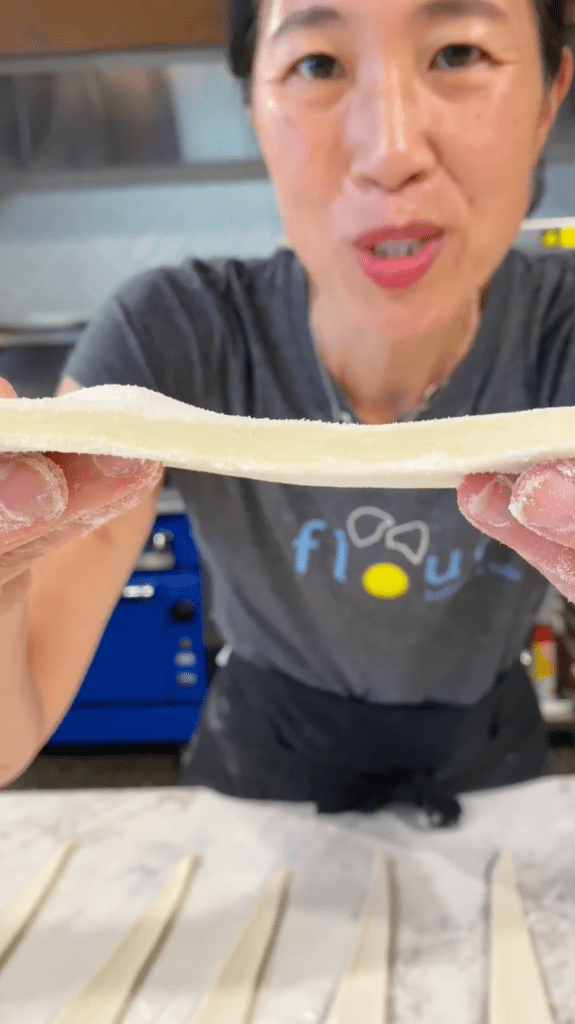
While perusing the Flour Bakery website, I found out that, during the lockdown stage of the pandemic, Joanne Chang produced a bake-at-home instagram series (look for the “Flour❤️ Wk#” videos on her instagram feed). Included in the weekly series was an episode on croissants, including her recipe! I found the series on her instagram account, and here is the video episode showing the wonderful Ms. Chang, herself, making beautiful croissants.

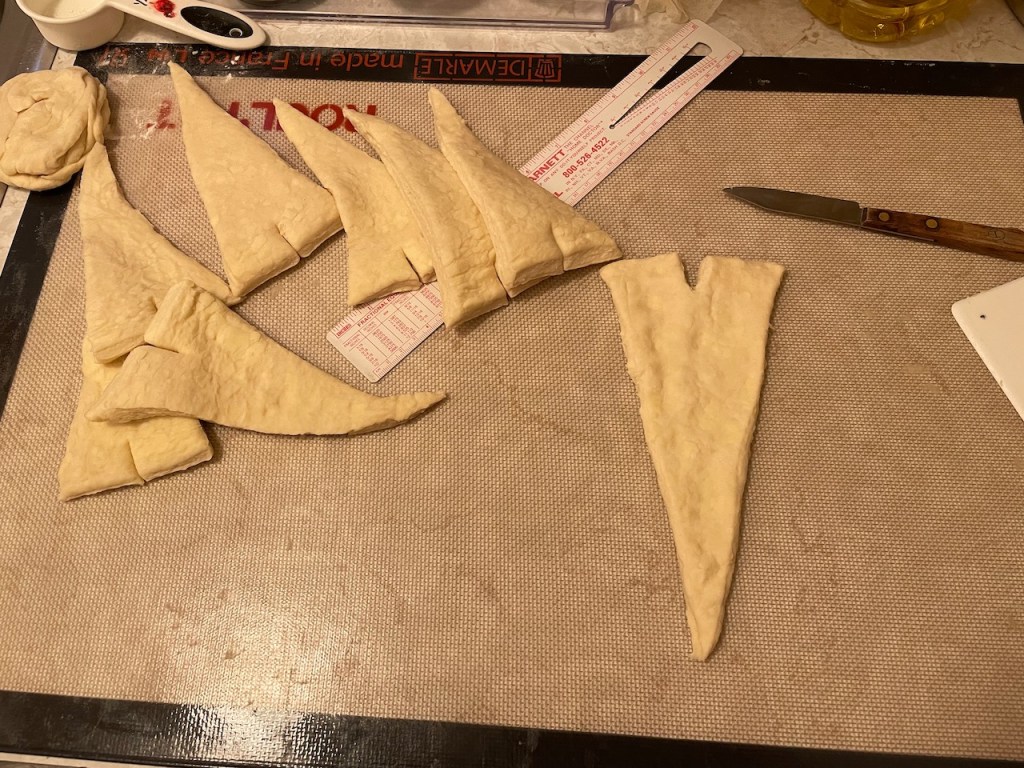
I have been following her recipe for croissants rather exclusively, but seeing her do it really helps to answer some questions I’ve had, and reassures me that I’m going in the right direction. It’s also comforting to know that the problems I have making these roll out into rectangles isn’t just me. (BTW, their secret: Just cut off the parts that make it not square!).

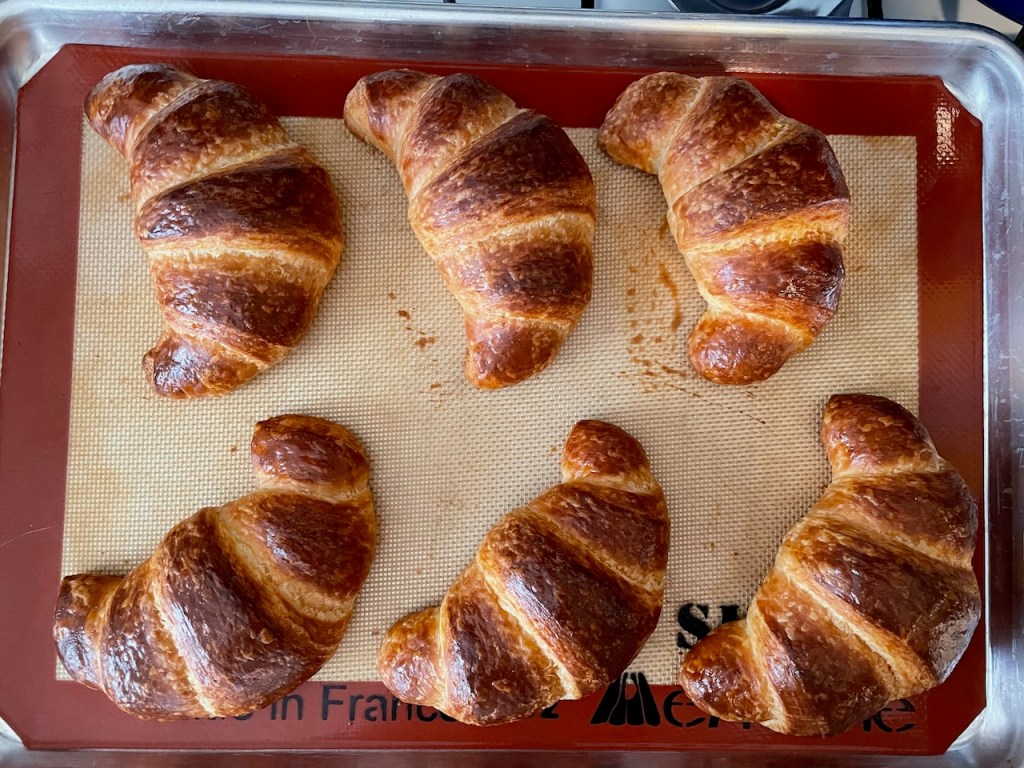
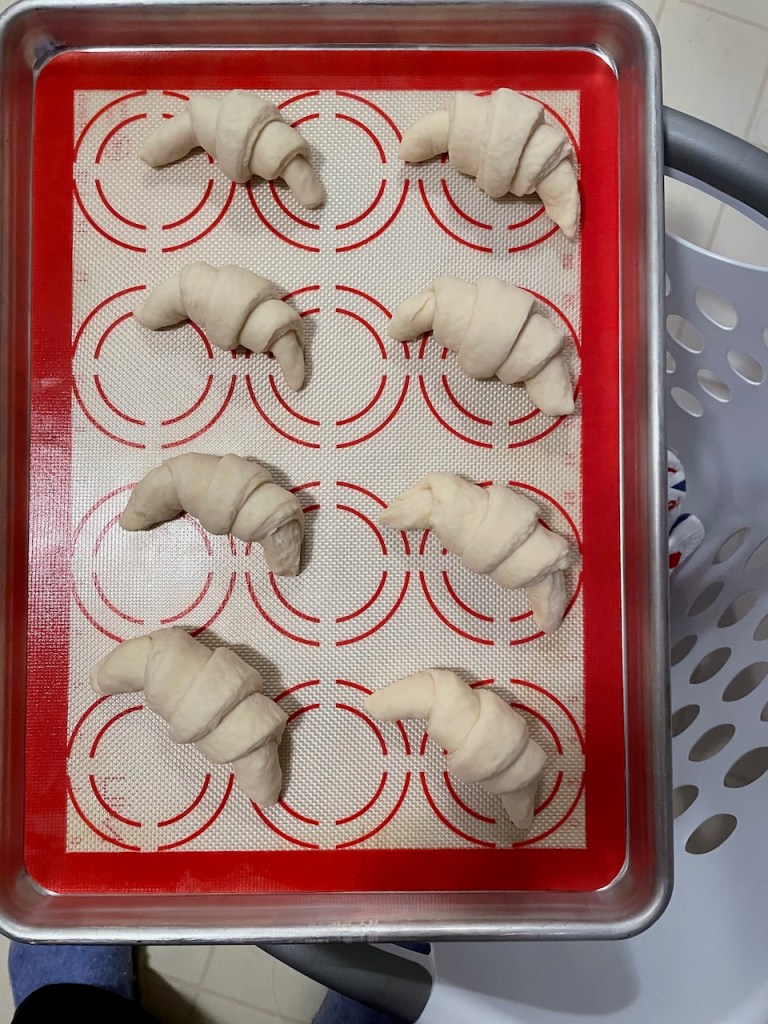
I’ve also been wondering alot lately about the final shaping and whether I’m forming mine correctly. I haven’t been getting the fat, round, super-puffy results that she gets, and I wondered whether it had to do with my technique. I also struggle with butter leakage during baking.

My conclusion from watching her video is that it isn’t about how I form the final croissant; it’s about how they rise. I haven’t figured out the best way to let the formed croissants rise to optimize loftiness without letting the butter get too soft. I’m thinking the answer is a cooler environment than I’ve been using, but for a much longer amount of time. She suggests a room temperature of 78°F for 2-2½ hours, but this hasn’t been working for me.

Maybe it’s my yeast, or the humidity level, or something. But, I suspect I’ll have better luck with a cooler rise for a longer period of time. I think that will be my next experiment, anyway.

One other minor thing to mention: The recipe on the website (on this page, search for “croissant”) differs slightly from the recipes in her first cookbook and in Pastry Love — this version uses a bit of cake flour (as opposed to a bit of bread flour, or a bit of spelt flour), and this version puts a bit of butter into the dough itself (Pasty Love doesn’t do this). I’m guessing none of these variations makes a big difference.

Also, Joanne Chang’s instagram account has wonderful pastry photos!

If you’re wondering what I’ve been baking lately, mostly just a rotation of my usual things… sourdough loaves, sourdough pita, and a mini-obsession with oatmeal-cherry cookies, which I’ll post about soon.
Birthday Pie for George

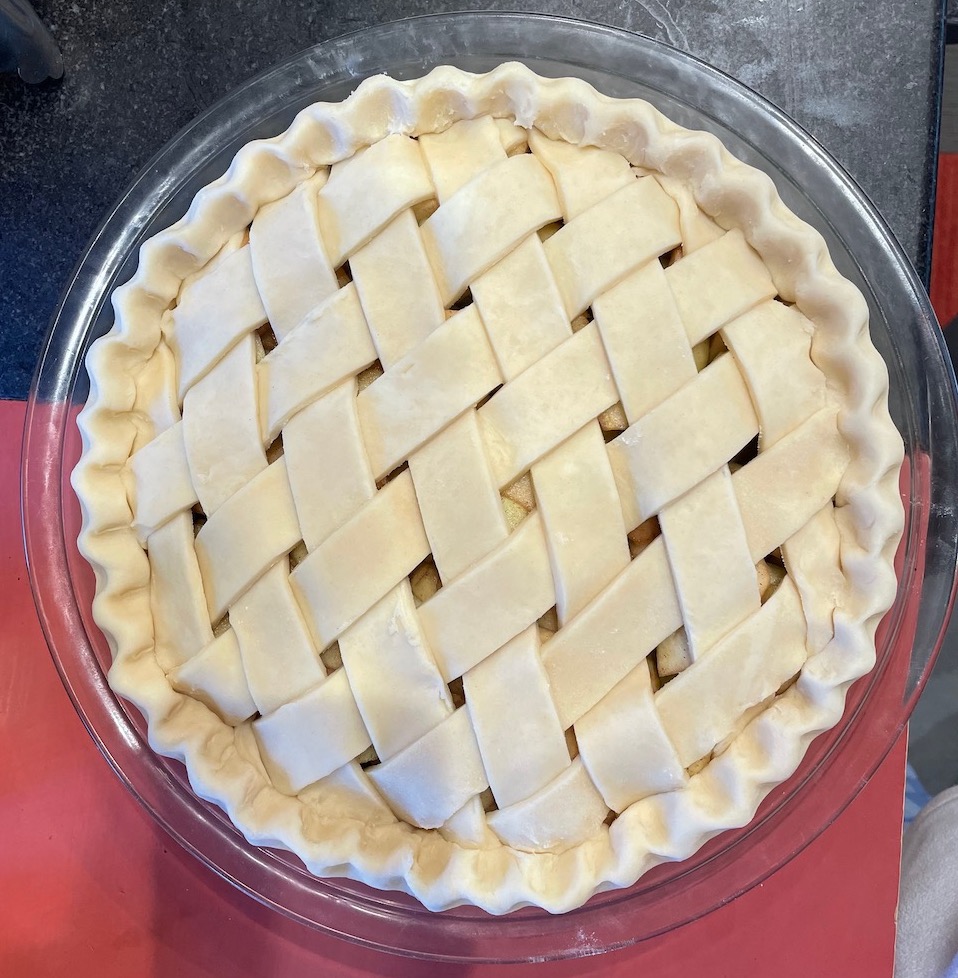
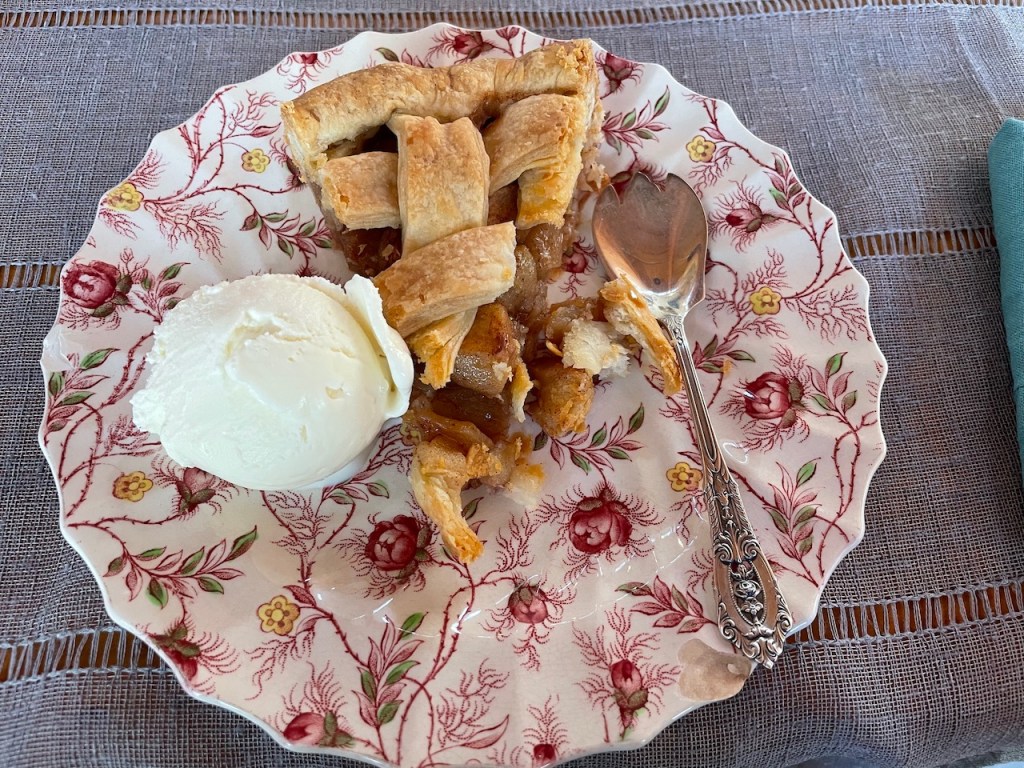
I’m very happy with my pie crust, which combines the ingredients of the New York Times All-Butter Pie Crust with Joanne Chang’s Pâte Brisée technique. Her technique has an important step called “fraisage”, which she describes well in the Atlantic article linked above (she doesn’t use the word in the article, but she does in her cookbooks; it’s the step where you smear the shaggy dough on the counter). Here’s a 15-year-old video in which she very clearly explains and demonstrates the technique. It’s basically fool-proof. I love that the flavor is buttery, and that it has the flakiness of a shortening crust (but without the shortening).

I had the great privilege of baking this apple pie for George’s 94th birthday. George is a wonderful person, and the dad of my dear friend Teresa. What an honor to be part of this auspicious occasion with these people whom I love dearly.

Tartine Morning Buns (take 2)

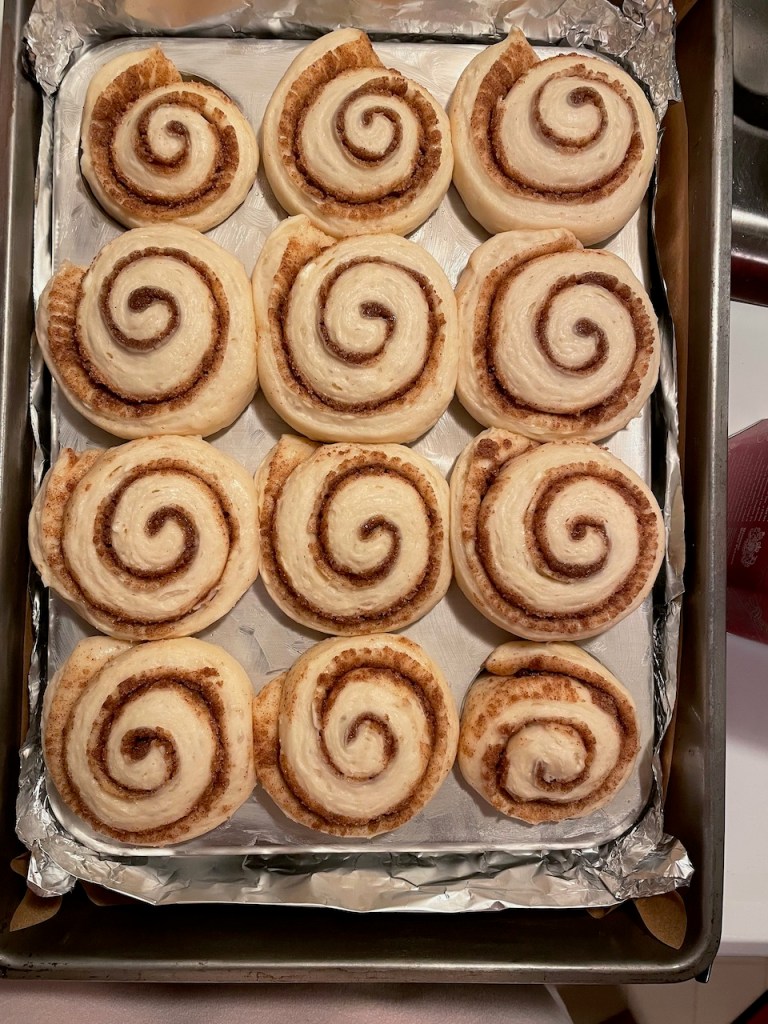
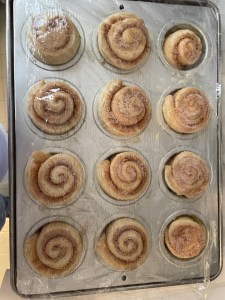
I went for another round of Tartine Morning Buns this weekend, again using the Joanne Chang croissant dough. Here’s what I changed this time:

  • I used a different muffin pan that pushes the buns closer together (I wanted the square-ish shape that the Tartine ones have). It’s a behind-the-scenes benefit that this pan, in addition to being sturdy and inexpensive, is far easier to clean because it doesn’t have any seams (yay!).
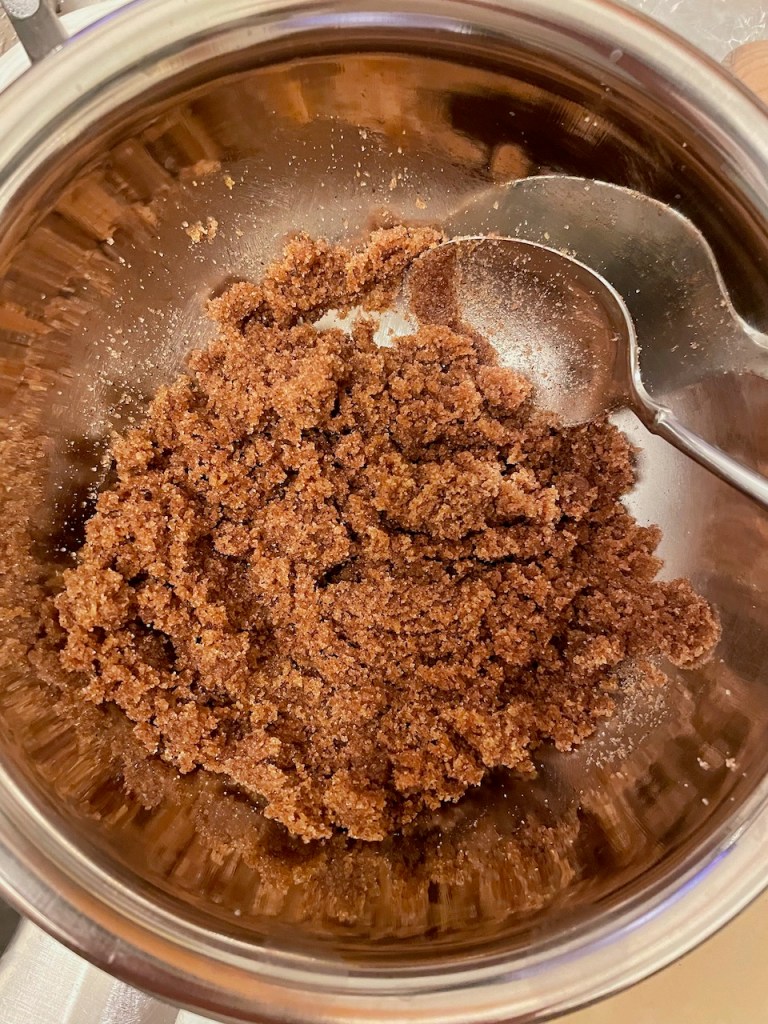
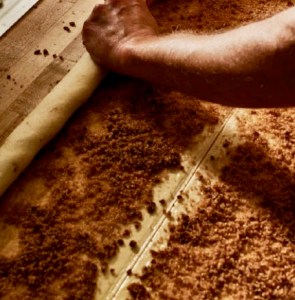
  • The recipe calls for melting a stick of butter (8 Tablespoons) to brush on the pastry before spreading the filling and rolling up the spiral. As I noted in my prior post, I think the recipe omits the instruction to put some of the melted butter into the filling mix (sugar, cinnamon, orange zest). So, I went ahead and put half of the melted butter into the filling. I also swapped out a quarter of the white sugar for dark brown sugar and amped up the cinnamon a wee bit. The result was a darker filling, resembling wet sand, and matching better the photo from the recipe (in prior post).
  • The Tartine recipe calls for too much filling for the amount of croissant dough that I’m making, so I cut everything by about 30%.
  • I reduced the oven temperature to 375°F from 400°F, and did some relatively active (read = fussy) foil tenting to try to stave off burning the tops.

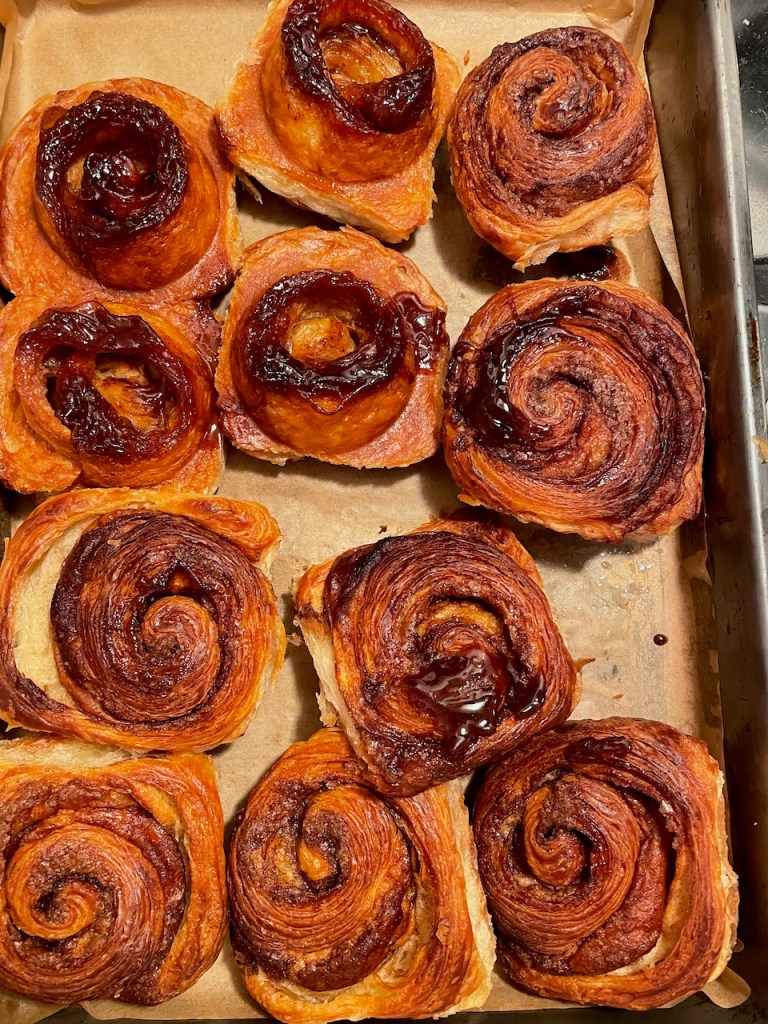
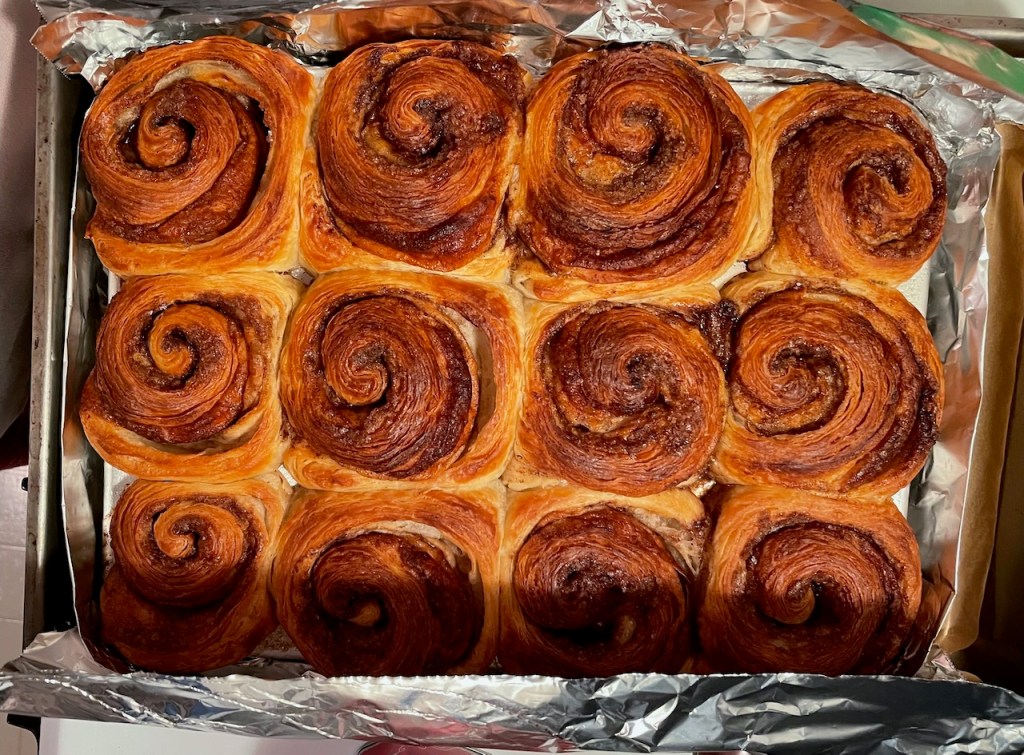
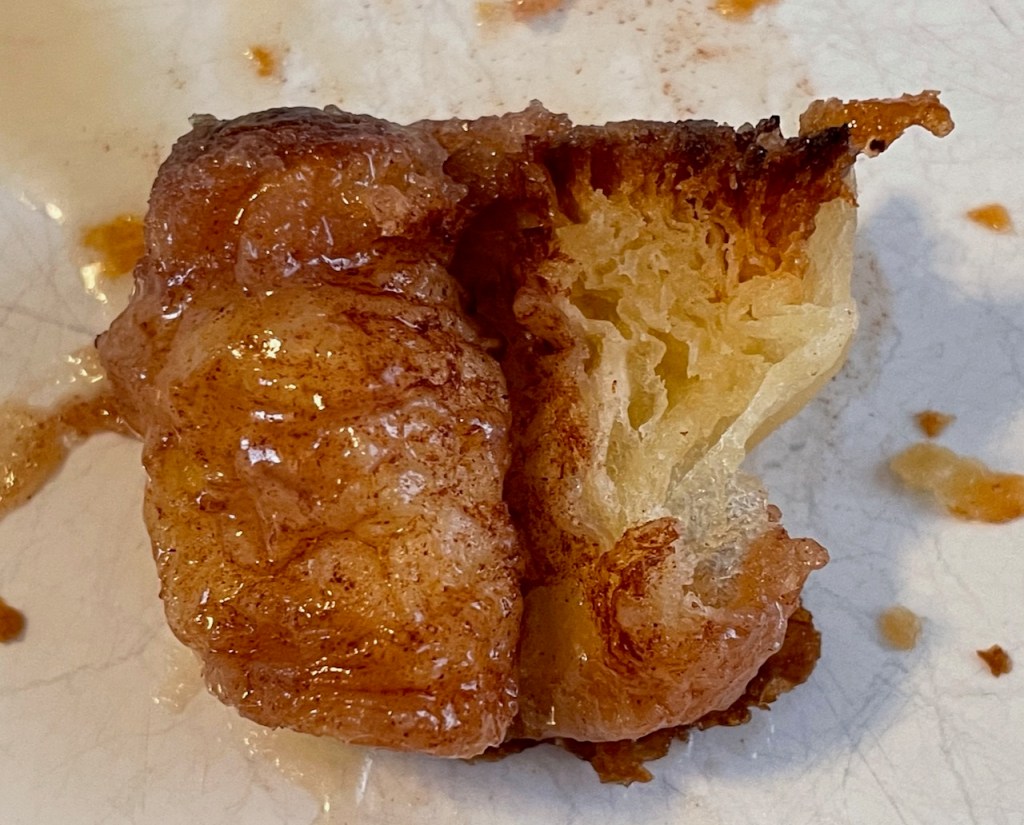
Overall, this batch was an improvement over my first attempt. It was good to not have the burnt tops, but I definitely haven’t solved this. The issue is that I tried too hard to darken the bottoms. What I mean is: I left the buns in the oven too long (yes, shocking) because I was concerned about the bottoms being somewhat pale last time. However, the lower heat plus the extended bake time caused the melted sugar that intentionally pools in each muffin well to go too far in the cooking process, producing a little bit of chewy candy at the bottom of each bun. Ick.

One of the people I enjoyed these with said, “but, what’s the downside of having chewy candy on the bottom?”. She makes an excellent point, but I think even she agreed that it wasn’t quite the right texture for this particular bun. 🙂 My thinking for next time is to go back to 400°F, but very loosely tent the tops for the last 10-15 minutes to avoid burning, and take the buns out as soon as the tops are well done (“bien cuit”).

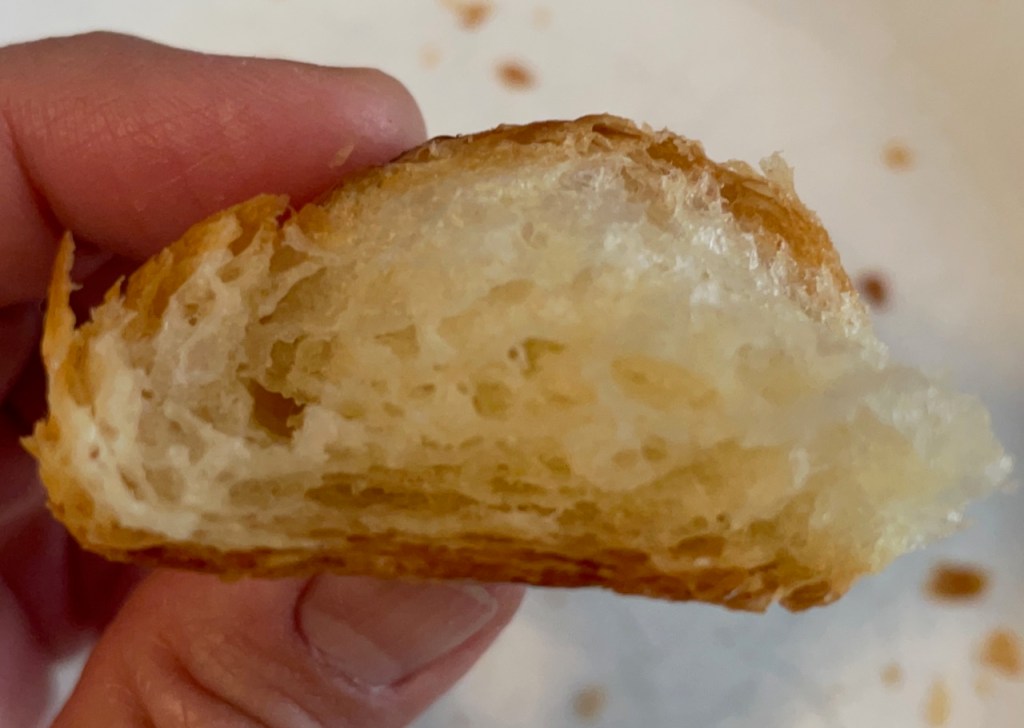
i think I’m getting better at the croissant dough part. It just felt easier, and the lamination in this batch just seemed more consistent and flakier.

I also made changes to the icing. I again started with a half portion of this recipe, but I reduced the vanilla further in half and I chose the heavy cream option (rather than milk or half-and-half). I was much happier with this result and feel like this is now my preferred morning bun icing.

Just in case anyone is wondering: These buns are incredibly yummy! Yes, there are things I want to tweak in order to optimize them, but that’s just how I roll (🙄 🤣). Much enjoyment was experienced, too!

Tartine Bakery Morning Buns

Question:   What do you get when you cross a croissant with a cinnamon roll?

Answer:   A Morning Bun!

Other acceptable (also right) answers:

  • A rather messier kitchen
  • Contentedly pudgier than you were before

I tried an experiment last week with adding sugar and cinnamon to the Joanne Chang croissant butter block. This was successful in only one way: They tasted great. In every other way, they were a failure. It was basically impossible to contain the butter/sugar for the lamination turns, Stuff was bursting out all over the place. Also, the sugar massively leaked out during baking, so the croissants were basically stewing in syrup on the baking sheet. Not that this is necessarily a bad thing, but the croissants weren’t pretty, and they didn’t retain enough sugar to be the sweet treat I had imagined.

So then I googled “laminated cinnamon rolls” and found myself staring, mouth agape, at another Chad Robertson recipe (found via this article and shown in this video). His morning bun recipe is in their book “Tartine: A Classic Revisited“, which I found available as a Prime Reading title on Kindle (free for Prime members). I had not been familiar with the term “morning bun” before this, but apparently it’s “not a big thing on the East Coast.” Well, it should be!

I used Joanne’s croissant dough and then Chad’s morning bun recipe from there. The only other changes I made were:

  • I didn’t have oranges to zest, so I put 1.5 teaspoons of Penzey’s orange extract in the filling. It’s amazing how nicely the orange flavor boosts these, even though it’s not evident that that’s what’s in there.

I need to note that after 35 minutes (well before the morning bun recipe’s 45 minute baking time) the tops were overdone and the bottoms weren’t quite done enough. Eating them, though, the textures felt right, so I wasn’t too far off the mark. I suspect that the bottoms didn’t brown as well because the muffin pan needed to be placed on a sheet pan to collect the anticipated overflow of butter, cinnamon, and sugar. Next time, I think it would help to shield the tops with a piece of loosely placed foil after maybe 15 minutes. Another possible step is to reduce the 400°F oven temperature to 375°F.

Another note is that in the video of Chad linked above and in the photo provided in the recipe itself (shown here), his filling looks totally different from the one I got from following the recipe. I checked it three times, and I’m reasonably sure that the recipe has an error. It says that the filling has only white sugar, cinnamon, and orange zest. No moisture. I substituted orange extract for the zest, but that wasn’t much moisture and the result was a pale brown sandy mixture. It was wonderful, but I noticed afterwards that the video and photo show a darker brown and lumpier mixture.

I think that the recipe omits stirring in melted butter and/or including some brown sugar. Melted butter is on the ingredient list, but is only called for as a brushed-on layer before spreading out the sugar/cinnamon filling. The large amount of melted butter is reasonable for spreading, as his croissant recipe yields a massive amount of dough (nearly 1,000g of flour compared with 410g in Joanne’s recipe) rolled out to a very large 1/4″ x 10″ x 32″ rectangle. But, I suspect that some of the listed melted butter amount was meant to be combined with the sugar and cinnamon. I did check for book errata and found one, but not this one.

So, next time I will put some melted butter into the filling until it looks like his photo.

Thanksgiving 2021

I’m sad that I forgot to take photos, but here’s what I baked for Thanksgiving:

  • I made really terrible sourdough rolls. We ate them, and they didn’t taste terrible, but they really were a colossal failure. The primary issue was that I didn’t leave myself enough time, combined with my inexperience and ignorance about turning my usual Tartine sourdough recipe into rolls. The result was that the rolls looked OK, but inside were horribly dense and heavy. I mean, they had the density of bowling balls. I’d like to give this another go and see if I can make this work. This was definitely an example of my being unjustifiably cocky about what I can do with sourdough. I’m really still just a noob, and was robustly reminded of that with these rolls.
  • I made my classic apple pie, but this time I pre-cooked the apples on the stovetop. I think this helped with my usual problem of ending up with a gap between the apples and the top crust, but I changed another variable that also helped: I made a lattice crust rather than a solid crust. So, not enough data, but at least I didn’t have the gap.
  • I made the Joanne Chang Rich Chocolate Cream Pie, and it was great. Following the instruction to chill before blind baking the crust seemed to really forestall any “slumping”. I did fill the thing up with foil and pie beads, and will continue to, but the dough seemed quite sturdy this time.

Happy Thanksgiving!

Croissants, Episode 3

So, I wanted to try the updated croissant recipe that I saw in Joanne Chang’s newer cookbook, Pastry Love. In my comparison chart I refer to this as “Chang 2”. Here are the differences that I saw:

  • The newer recipe is for “spelt croissants” so the flour content is half spelt flour and half bread flour. Her original recipe is 3/4 all-purpose flour and 1/4 bread flour, but the overall flour volume is nearly the same, as is the flour to liquid ratio. I wasn’t interested in trying the spelt variation, but it seemed safe to stick with the original all-purpose/bread flour approach from the original recipe.
  • The newer recipe eliminates the step of mixing 2T of butter into the dough itself. That 2T of butter gets added into the butter block, so it’s not removed overall. It just doesn’t have to mixed into the dough. I appreciated the idea of saving some work, so I went with this change
  • Her lamination method is notably updated. Rather than book-fold/letter-fold/chill/letter-fold, this recipe has only two book-folds and that’s it. No mid-lamination chilling! Because of my prior issues with the butter breaking up after being chilled mid-lamination, I am especially excited about this change. And, it reduces the overall duration of the effort (because it takes away one chill step and one fold step). We’re now down to 16 layers (having already gone from 729 -> 36), and I haven’t seen a deterioration in the flakiness of the end result.

I should note that Joanne’s newer lamination method isn’t a classic “book fold”. I think of it as a “modified book fold” and haven’t seen it described anywhere else. It is essentially the same, and still creates the four layers as a regular book fold. The only difference is that all the dough ends are not concentrated in the middle of the dough packet. She offsets the “seam” a bit, and I think this is another tweak that helps maintain the structural integrity of the desired rectangular shape. It’s hard to explain the difference without just sending you to her book (Pastry Love), which has very helpful instructions and photos.

I love the idea that Joanne Chang and her team at Flour Bakery are looking for ways to improve things – even very good things. The lamination method has nothing to do with the spelt change, so this seems to be entirely a process improvement.

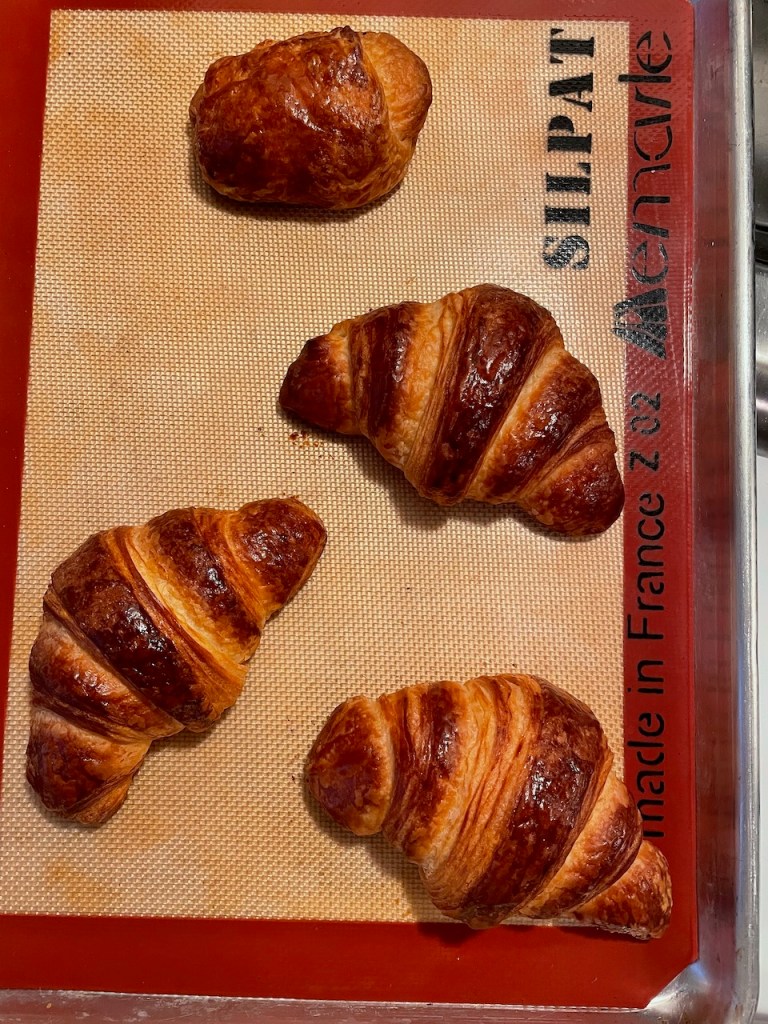
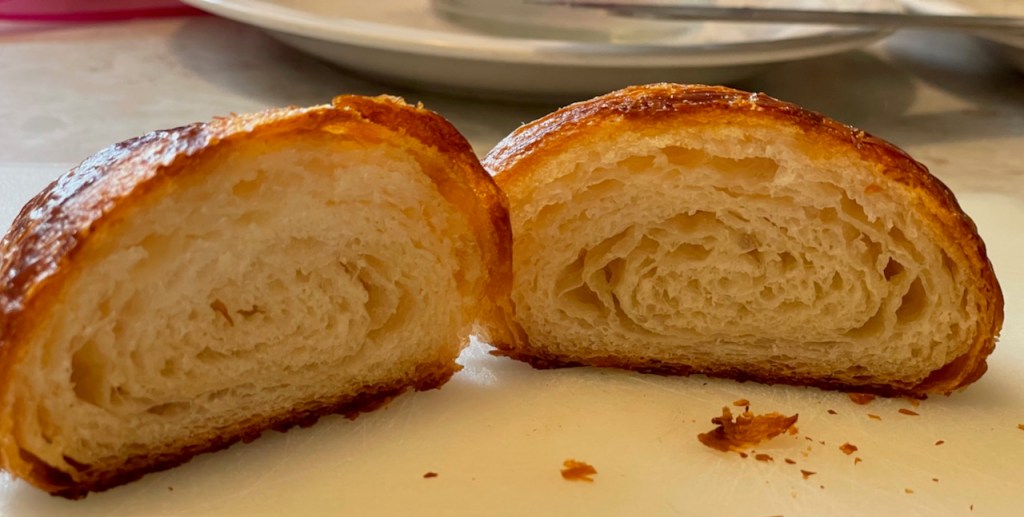
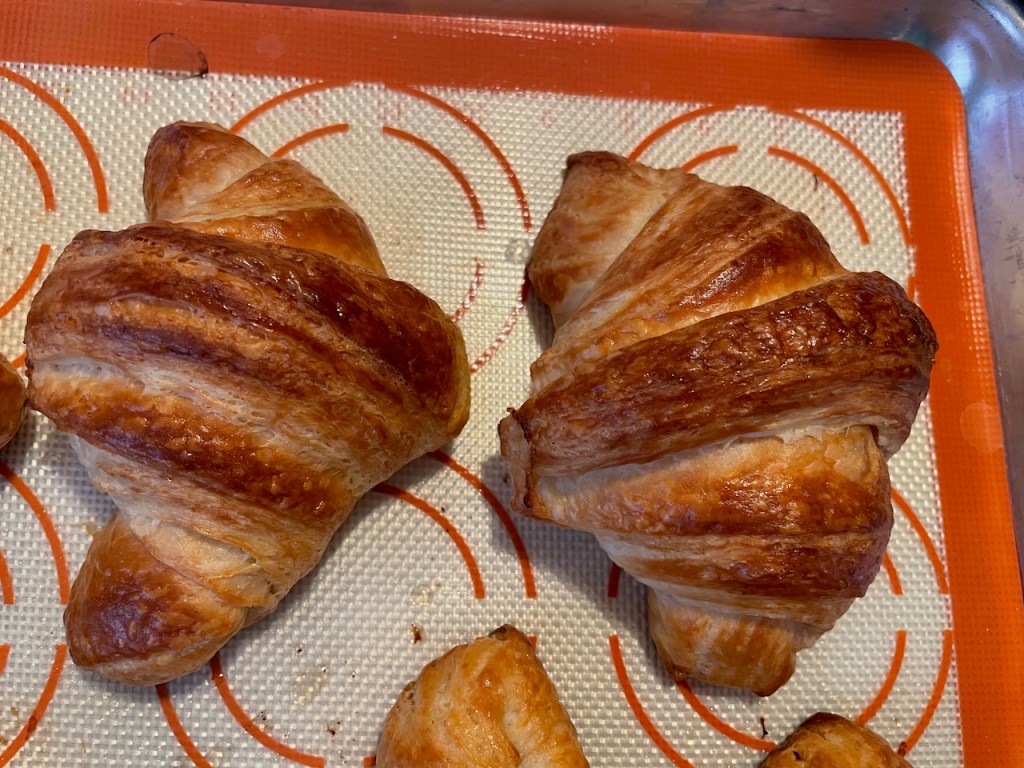
I think I haven’t explicitly mentioned that I make one Pain au Chocolat with each batch of croissants using any leftover bits of laminated dough. (You can see it in the first photo at the top of this post.) I mush the bits back together and roll them out into a rectangle, then roll up some dark chocolate batons and bake with the rest of the croissants. I have to say that these little treats, made from the “leftover bits”, have been such a delight that I think I will try to make more of an effort to allocate some proportion of the next batch to Pain au Chocolat – not just the scraps!

Croissants, Episode 2

If you check out the comparison chart that I made to identify differences between various croissant recipes, you’ll see the wide variety in lamination methods (in the 2nd to last row). For my attempt last week, I wanted to try Shirley Corriher’s lamination method, because I figured: the more lamination = the more better. She also had this peculiar technique of brushing each rolled layer with ice water, and I wanted to see if this worked.

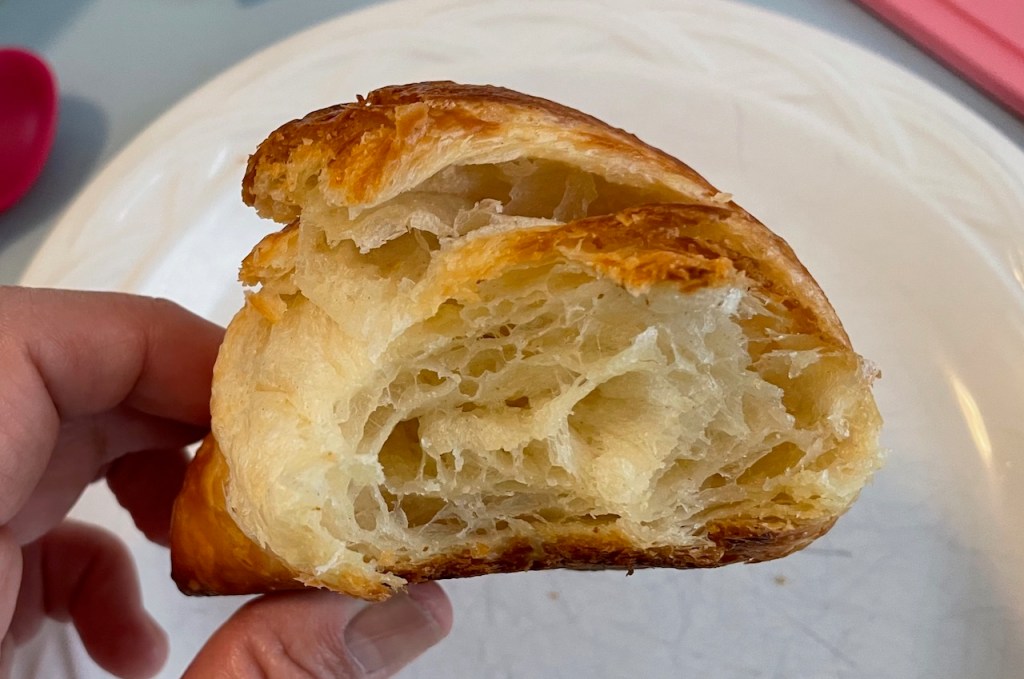
But, I wasn’t convinced by that experience. As I wrote in that prior post, I had big problems with the butter breaking apart after being chilled, and things just kinda went off the rails from there. Yes, I was able to do the 6 turns, and yes the results were great. But, I remained curious whether other techniques could solve some of the logistical problems.

For instance, I found it really hard to roll things out into rectangular form. The cumulative effect of a seemingly small issue of “roundness” (as opposed to “squareness”) was pretty horrible as the turns increased. It seemed that there were big blobs of unlaminated dough extending off the ends of the dough packet, and these appendages just kept getting bigger and bigger. And, it irked me that the scientific-minded Corriher hadn’t accounted for the butter breakage or rolling technique in her recipe.

So, I tried again, but this time I went 100% with the Joanne Chang recipe. This attempt faithfully follows the recipe from her first book, Flour, which is referred to as “Chang 1” in my comparison chart. Notably, this method has only three folds (or “turns”), where the first two (one book and one letter fold*) occur before any chilling, then there’s one more letter fold after chilling. This, compared with Shirley Corriher’s six letter folds, each interspersed with chilling!

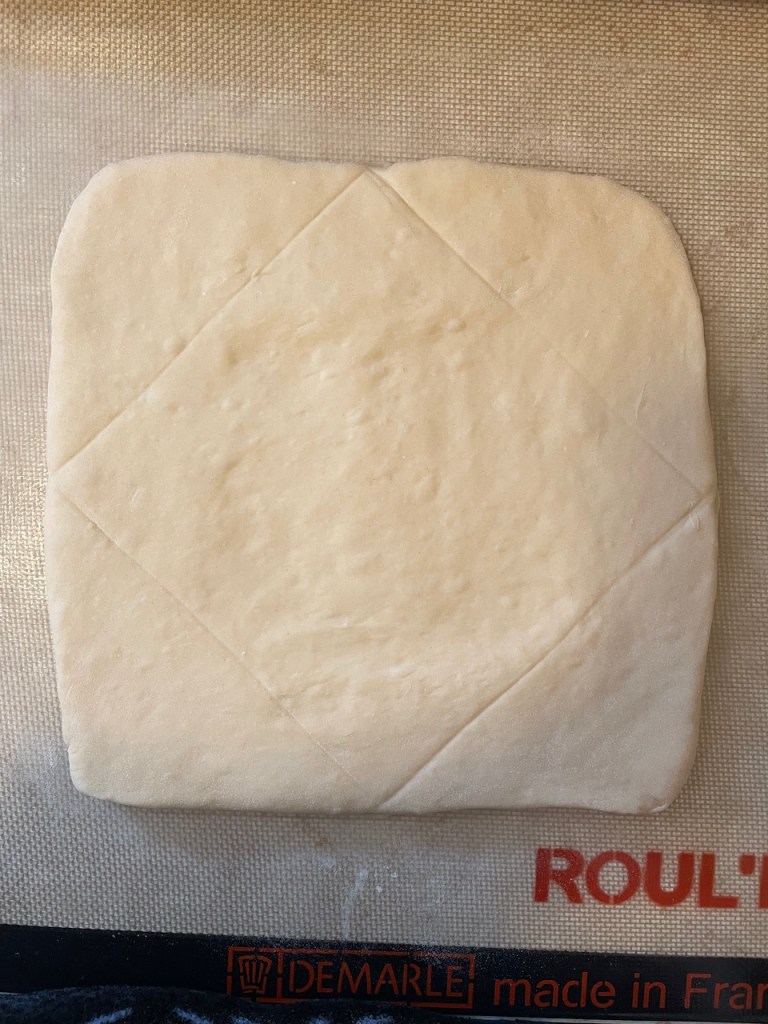
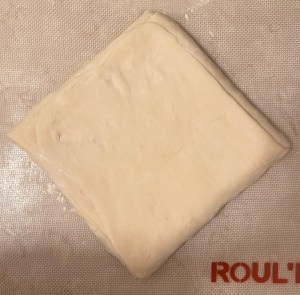
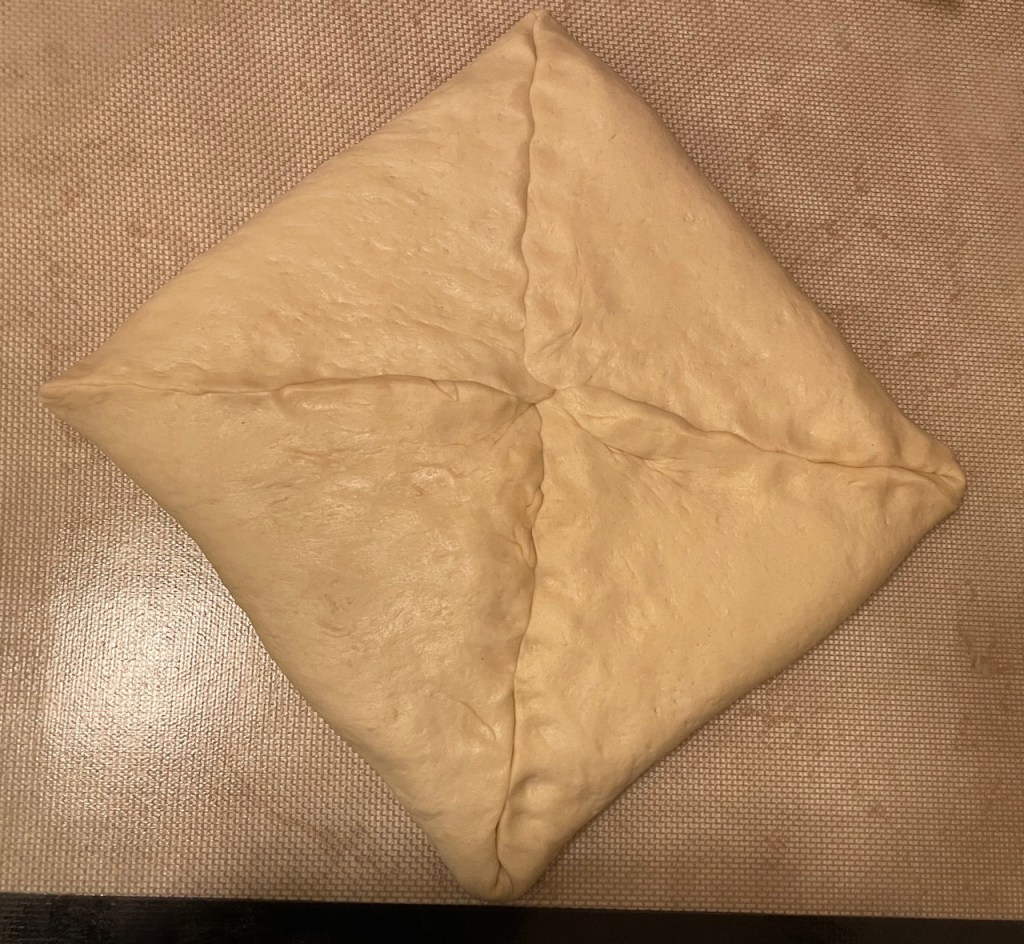
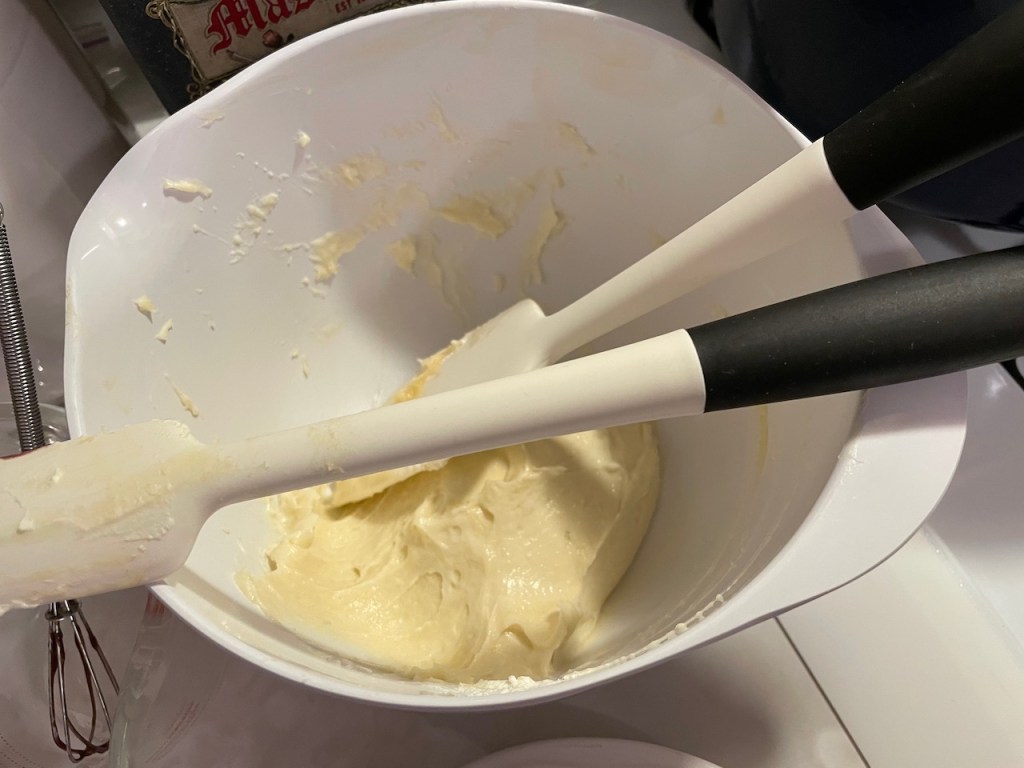
Another difference that I didn’t think would matter, but did, was the method that is used to encase the butter at the outset. I am now convinced that this makes quite a big difference. If you look at my first photo above you’ll see that I’ve marked the dough per Joanne’s instructions. Her technique says to place the butter block on the dough so that the dough’s corners are exposed (actually, so does Shirley, see this photo). The part that is really different is that Joanne says to then flatten out the four exposed dough corners – to the extent that each corner will fully cover the entire butter block. So, the butter is enclosed on one side by at roughly 3/4″ layer of dough and on the other side by four flattened out layers of dough (the parts that were the dough corners). Here’s mine after flattening and folding in the corners so that the butter is fully encased.

The reason this turned out to be better for me is that it helped to establish a shape and structure that rolls out to be more square than round. It avoids putting large blobs of unlaminated dough in the middle or edges of the dough packet, instead establishing a more even, rectangular shape from the beginning.

A few more notes to add:

  • Joanne addresses the butter-breaking issue by suggesting that you first use the rolling pin to press on the dough layers up and down the dough, and only afterwards roll out the resulting ridges. She explains that the goal is to get the dough and the butter to form even layers, without any one part extending beyond any other part.
  • I’ve taken to thinking of the lamination rolling step as, actually, rolling out the butter — where the dough is just along for the ride. The butter is really the important layer to get thinned and extended before folding.
  • I don’t think there was a loss with the fewer folds compared to last week’s attempt. Theoretically, six letter folds makes more than 700 layers where a book fold and two letter folds makes 36. In fact, this King Arthur article addresses why fewer turns actually makes a better result.

* If you’re not familiar with terms “book” and “letter” fold, you can see a primer here. The basic difference is that a book fold creates four layers and a letter fold creates three.

Croissants, Episode 1

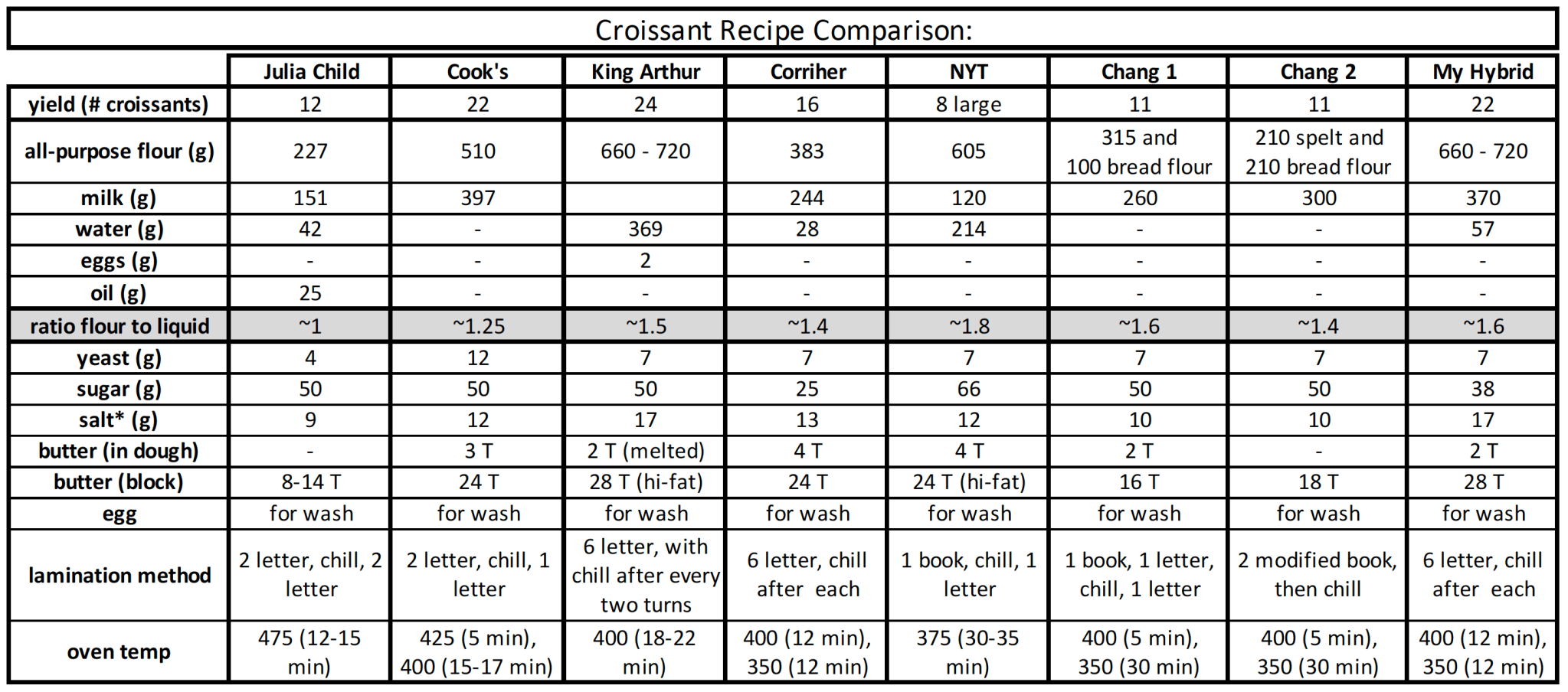
Making the Kouign Amann and the phyllo pastry pointed me towards making croissants. I have made them once (years ago), but I wanted to try again. I started by doing some research and comparing recipes and techniques from: Julia Child (Mastering the Art of French Cooking, Vol. 2), Cook’s Illustrated (Jan/Feb 2012), King Arthur Baking Company (Baker’s Companion), Shirley Corriher (BakeWise), The New York Times (recipe with link to helpful video), and two versions from Joanne Chang (one from her first cookbook, Flour, and another from a later cookbook, Pastry Love). It surprised me how varied these all were. I decided to try making a hybrid version, mostly based on the King Arthur proportions and overall volume, but using the Shirley Corriher lamination method because it had the most folds. [You can click on the table below to enlarge it.]

My biggest problem with this batch came with the second turn (after the first chill). As with the Kouign Amann, the butter got too cold and when I tried to roll out the “packet”, the butter inside broke into pieces rather than spreading out. I decided to let the dough sit and warm up before proceeding, and for the 3rd through 6th letter folds I did not chill the bundle between the folds. Instead, I let the dough sit on the counter in my cool (60°F) kitchen.

I think the lamination was OK, but that broken-butter 2nd turn wasn’t pretty.

Surprisingly, only Julia Child and Joanne Chang even raise the topic of the butter possibly breaking apart and how to avoid that. It seems to me that, given this and my previous experience with the Kouign Amann, this is a common problem. Or, is my fridge colder than most?

Anyway, the result was still wonderful. I ended up with a big pile of crispy, flaky, buttery croissants, and though my math says that each one was about 300 calories, I ate lots of them! I did freeze eight of them before the final proof, which worked well. The frozen ones just have to thaw and then rise, which means sitting out overnight (“Just like the Trader Joe’s croissants”, as Christine pointed out!), then bake them as with the others.

This experience made me want to make more croissants. Stay tuned!

[Yes, this is evidence that up to the posts in early December 2021, this blog was written far after-the-fact. I mean, during World War I, nobody referred to it as “World War I”, right?]

Choux Buns, Eclairs

It’s really just not possible to watch the Great British Baking Show at any length and not want to make choux buns. Especially in the earlier seasons, one could easily conclude that choux pastry held the keys to the kingdom. On TV, the stuff really does look magical. It goes into the oven looking like little kiss-shaped things, but it come out looking like big, puffy balloons. Pastry magic!

Also, Cook’s Illustrated ran an article about Choux au Craquelin that pushed me over the edge. Choux had to happen.

I’ve made choux before, and have even taken a one-day pastry class from the queen herself (Joanne Chang) which included choux. It never struck me as that difficult, but it seems that the GBBS contestants are often asked to make choux without the benefit of an actual recipe. For me, and for pretty much any typical home cook, this would not be possible.

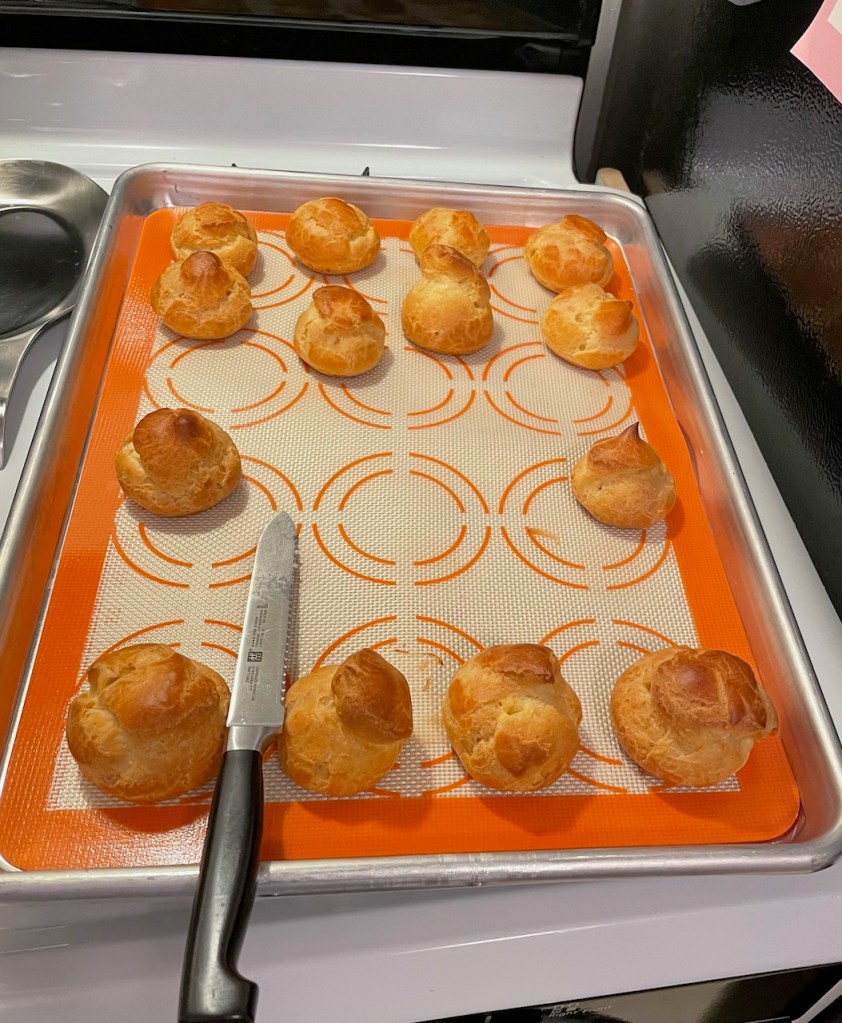
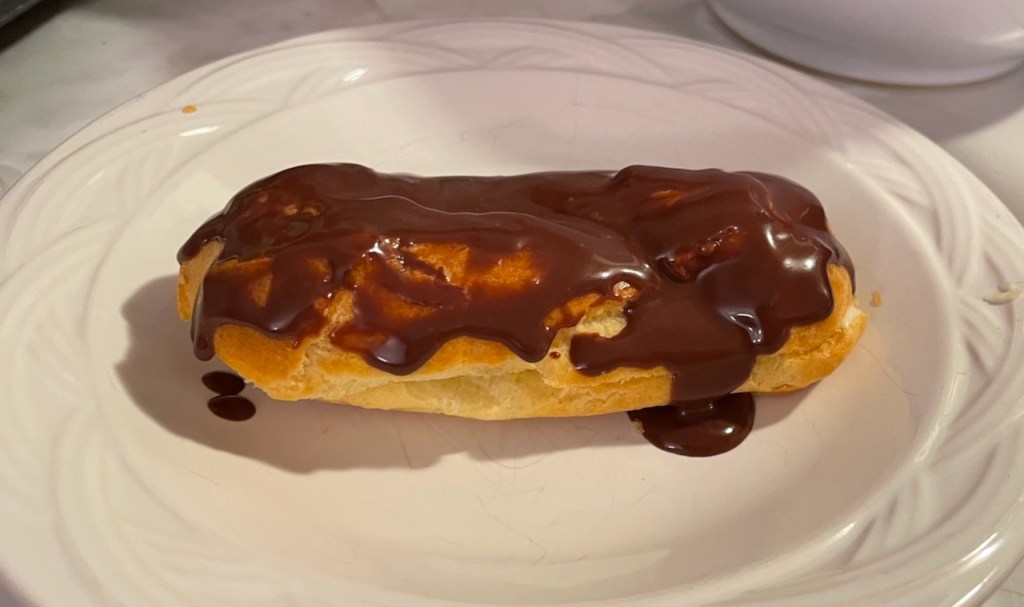
I forgot to take notes on these, but I did take pictures (not usually this careless!). I hazily recall being irked that whatever recipe I used called for a 1″ piping tip, but I found that there really is no such thing for the home baker. I have since managed to find one, but it can’t be used with most couplers. This launched a whole piping tip buying project that I won’t bore you with. Another project that I wouldn’t normally have time for.

I note that my eclair looks “informal”, as Prue Leith might say. Paul Hollywood would say that it looks like it’s been dropped on the floor. Nonetheless, I do remember that it was very satisfying to eat.

Thanksgiving in Wisconsin

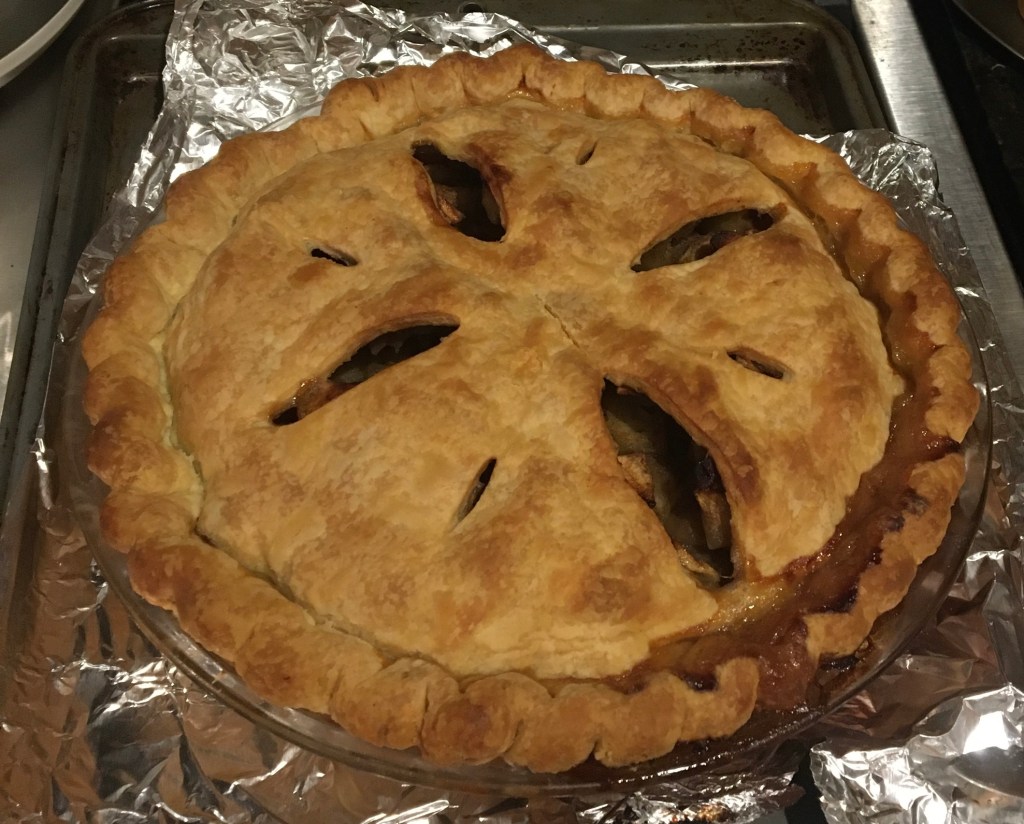
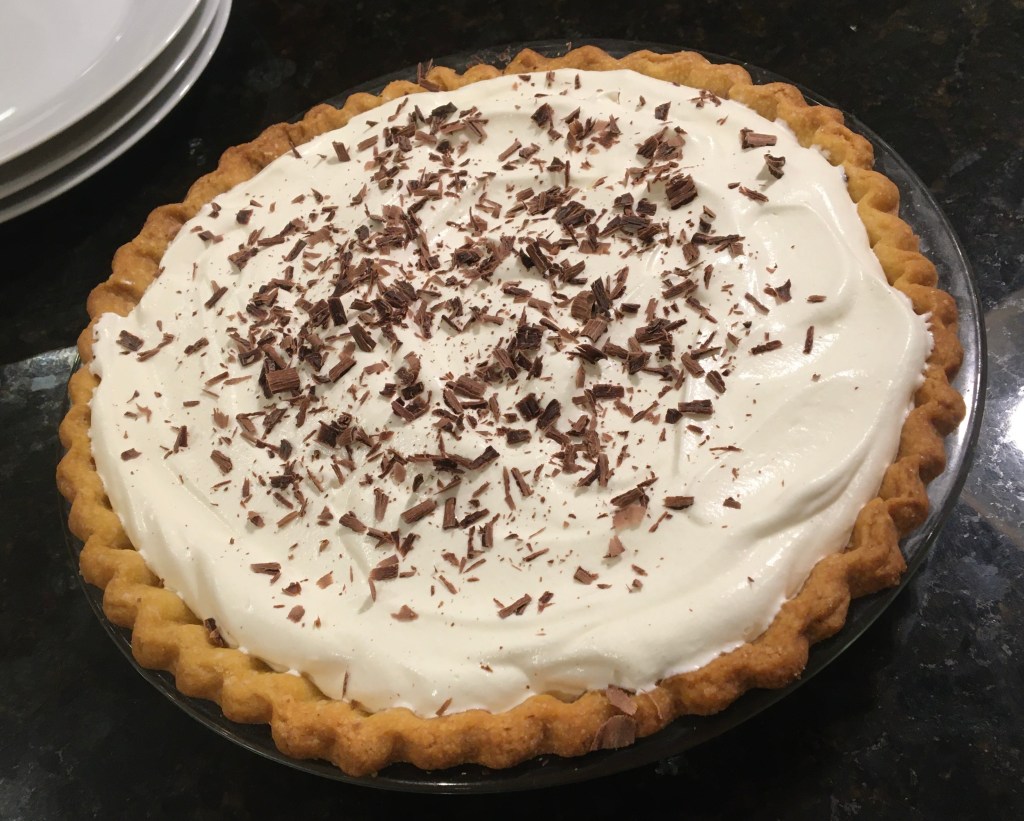
For complicated reasons, I drove out to Wisconsin and spent several weeks with mom, Jennifer, Michael, and Mac, despite Wisconsin being in a covid surge at that time. It was meaningful to be there with them, and I spent much of my time there sewing and baking. Here are the two pies I made: my classic apple pie and Joanne Chang’s Rich Chocolate Cream Pie.

A few thoughts on these pies:

  • I have a consistent issue with my apple pies where the level of the apples sinks after the top crust has set, causing a big gap between the fruit and the top crust. You can see that in the photo. Even with macerating the apples in sugar for 30 minutes, it’s not enough to solve this issue. Next attempt will probably involve pre-cooking the apples.
  • I am very happy with my pie crust recipe, and keep returning to it despite trying several other recipes and techniques. The basic idea is that I use the New York Times all-butter crust recipe, but I use Joanne Chang’s “fraisage” technique. I did have success using Shirley Corriher’s technique of using a rolling pin to do the fraisage, but that method caused a tremendous mess in my kitchen, so I now stick with the regular fraisage by hand.
  • I seem to have been willing to make a fancy edge on the chocolate pie, perhaps because I didn’t have a fluted tart shell? I always follow the stated pâte sucrée recipe for this chocolate pie, and love it. It also appears that I made chocolate crumbs rather than curls!
  • It’s probably worth fessing up that I once made this pie and forgot to put the egg yolks and sugar into the chocolate custard filling. The resulting pudding/ganache (rather than custard) was still delicious (and one or two people preferred it!), so I now routinely cut back the number of yolks to 2 (from 4) and the sugar to 2 Tbs (from 1/3 cup). I do keep forgetting to bump up the cream and chocolate a bit to compensate for the loss in volume, but it’s not a big deal.