
Gnocchi Class

Another really fun online class with King Arthur Baking Company, courtesy of Christine and Mike!

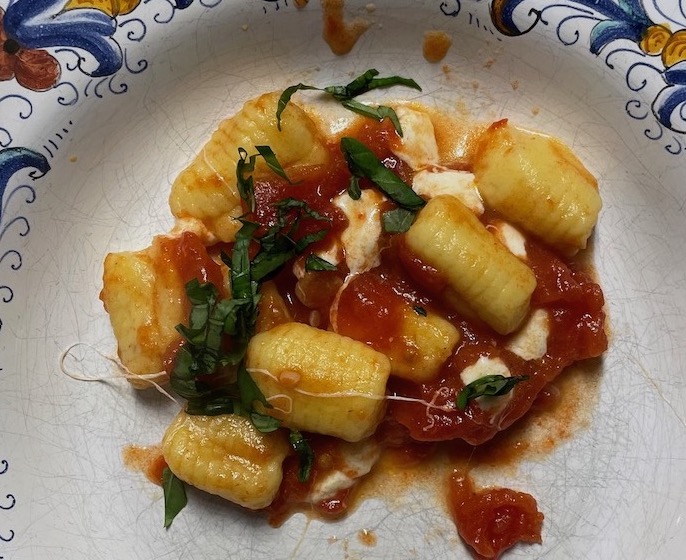
This time, it was potato gnocchi with a simple tomato sauce, mozzarella, and basil. Their blog post here has basically the same gnocchi recipe, but the recipe in class used just egg yolks rather than whole eggs. Chris also made a lovely roasted red pepper pesto, shown as my next-day leftovers on the right.

Mike did the work of making the mashed potatoes in advance. So, the recipe itself was very easy. Chris has a gnocchi board, which produced the lovely, finely-ridged gnocchi you can see in the left-hand photo. I used a fork, and the result (which isn’t obvious, but is just visible in the right-hand photo) was gnocchi with fewer, deeper ridges.

We were happy to have the teacher demonstrate the technique of forming the gnocchi. Photos and words wouldn’t be enough information. Their blog post has a video, but it’s broken, so I found this video that matches our instructor’s technique, using a gnocchi board. The technique is the same with a fork. The part that’s hard to describe with words is that you have to kinda “schmear” the dough piece along the board as opposed to just rolling it. The schmear creates the ridges, but also causes the piece to kinda roll on itself, creating a concave, curled shape. It’s not log-shaped, concave and somewhat curled.

We had some trouble with the gnocchi sticking to themselves and the parchment, causing their nice shape to collapse before being cooked. Following the instructions of the teacher, we held back some of the flour to avoid making dry gnocchi, but we wished we had used recipe’s the full flour amount, theorizing that a slightly drier dough would have allowed the gnocchi to hold more of their shape and ridges.

It’s also a fair bit of work to form each piece (“gnoccho”? “gnocche”?), sort of like forming fussy cookies (who would do that?!?). We enjoyed imagining the Italian grandmas making these very quickly and beautifully in their kitchens while gossiping together.
Sourdough Pita x2

I have been feeling, in general, that I prefer the flavor of bread made with sourdough over that made with yeast. So, I’ve been experimenting with replacing yeast with sourdough in some recipes, and here are a couple of attempts.

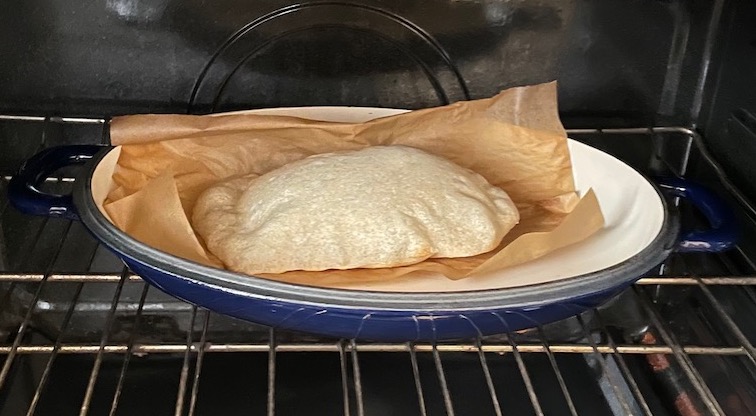
The basic idea for both attempts is to make half of the King Artur pita recipe from the class I took last week with Chris and Mike, but replace the yeast with a couple of tablespoons of sourdough starter. The rising time was extended as long as was necessary to get the dough to double. Everything else was the same as the recipe.

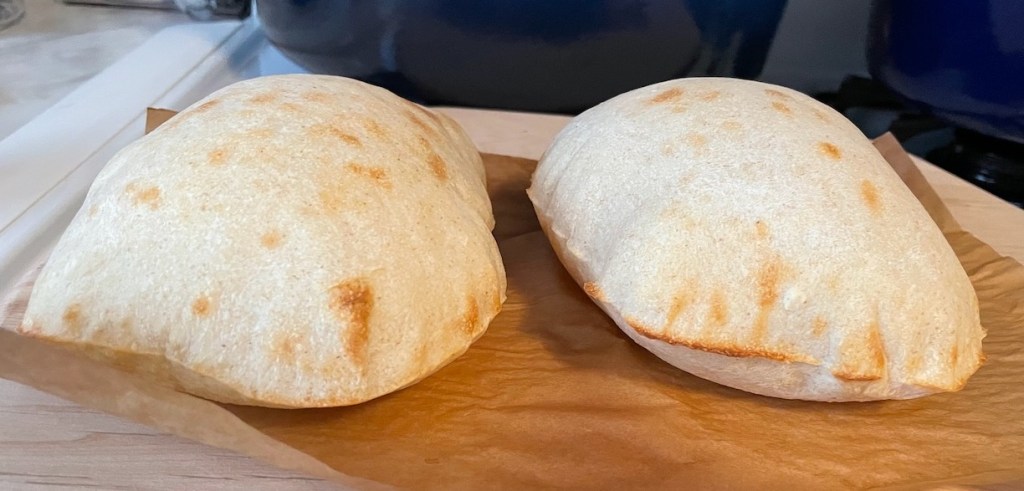
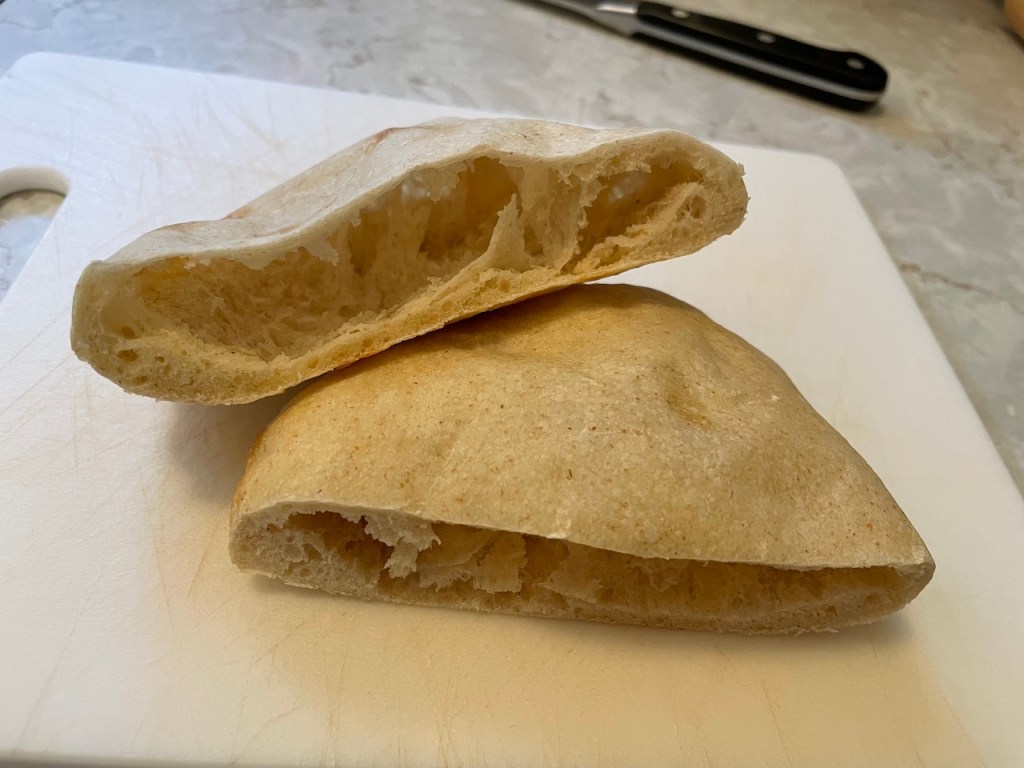
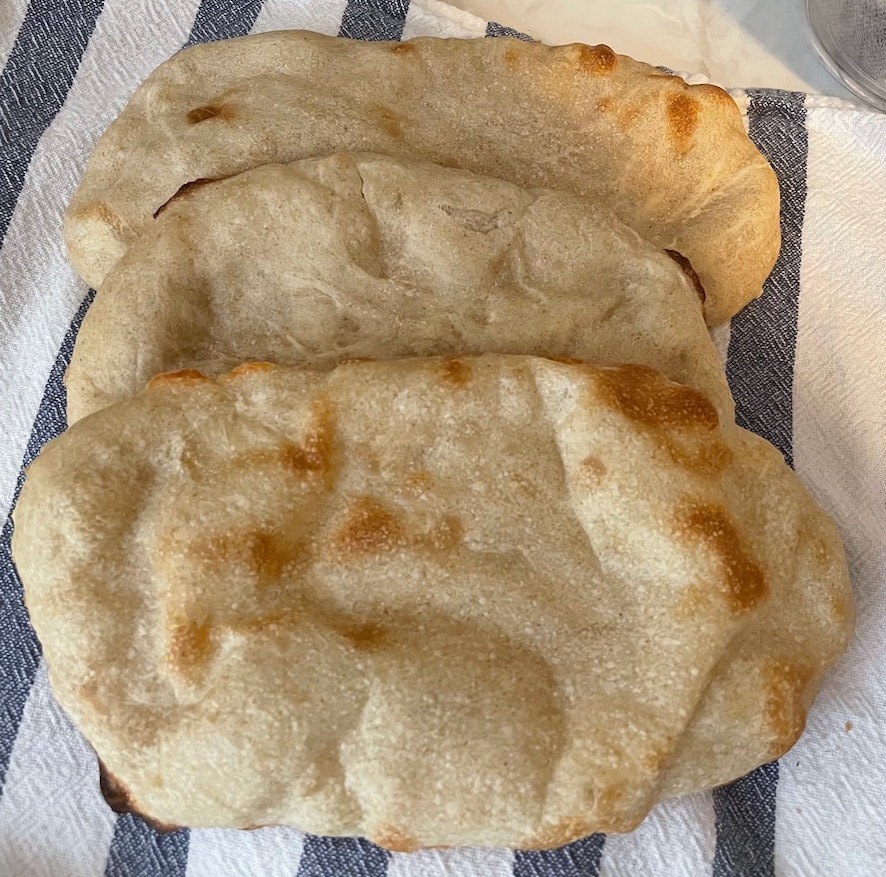
The first set was challenged primarily (I think) by the fact that my sourdough starter hadn’t been used in at least three months, so it was pretty “sleepy”. I left the dough to rise for 12 hours, and it did rise, but I didn’t get the impressive pillowy puffing-up that we got with the yeast version. It had air bubbles, but not one big pillowy pocket. It was soft, airy, and wonderful, and did have much more flavor than the yeast variety.

Then I tried again a week later and got the pillowy result I was hoping for!

This time, I let the dough rise for 6 hours (I think?). The only difficulty I had was that the big air pocket inside didn’t happen evenly between the top and bottom layers of the pita. You can kinda see it in the photo on the right side… the top layer is thin and the bottom layer is thicker. Some research on the interwebs seems to hint that this could be because of a temperature differential between the top and bottom (baking stone) in the oven. I dunno, maybe?

Last thoughts on these:

  • Because i feed my sourdough starter with 50% whole wheat flour and 50% white bread flour, I wonder if part of what I prefer about sourdough bread flavor is the whole wheat (in addition to the flavor that the sourdough itself provides). In this recipe, the sourdough starter was just two tablespoons, but you can see that the color of the resulting bread shows some flecks of whole wheat.
  • This recipe really is easy, and the results really are better than store-bought. But, I have to put in a plug for the pita from Cafe Barada. I don’t know for sure that they make it themselves, but I think so. It’s wonderful, and during the pandemic they were selling it in large quantities as a grocery item. Anytime I order their hoummos (which is the best hoummos I’ve had, anywhere, ever) I always buy extra pita.

Pita Bread and Man’oushe

I got to take another online baking class with Christine and Mike, and it was really fun and yielded much yumminess! The basic recipe was similar to this one, but without the “dough improver” (what’s up with that?) and replacing the sugar with honey. The same dough was used for both the pita and the man’oushe.

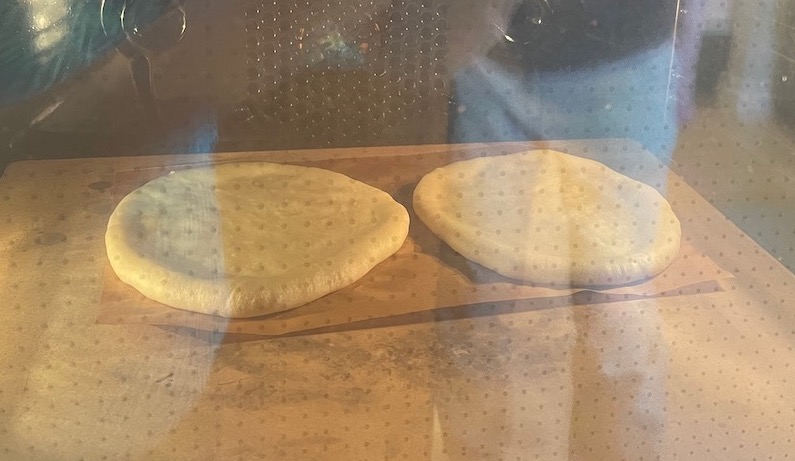
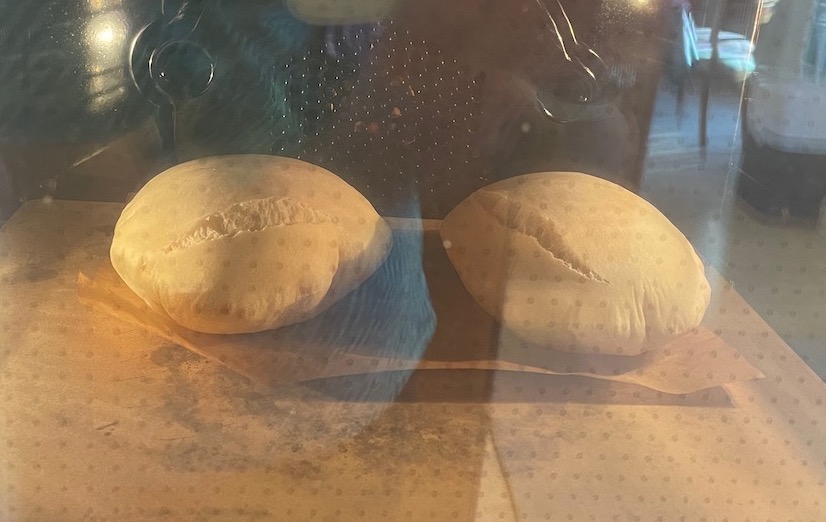
The difference was only whether the dough is baked plain (and allowed to pillow) or baked with toppings, like a Lebanese pizza. You can see in the first two photos above that the pita is popped onto the baking stone completely flat, then it puffs up in the hot oven (500°F) — like magic! It’s really fun to watch that happen.

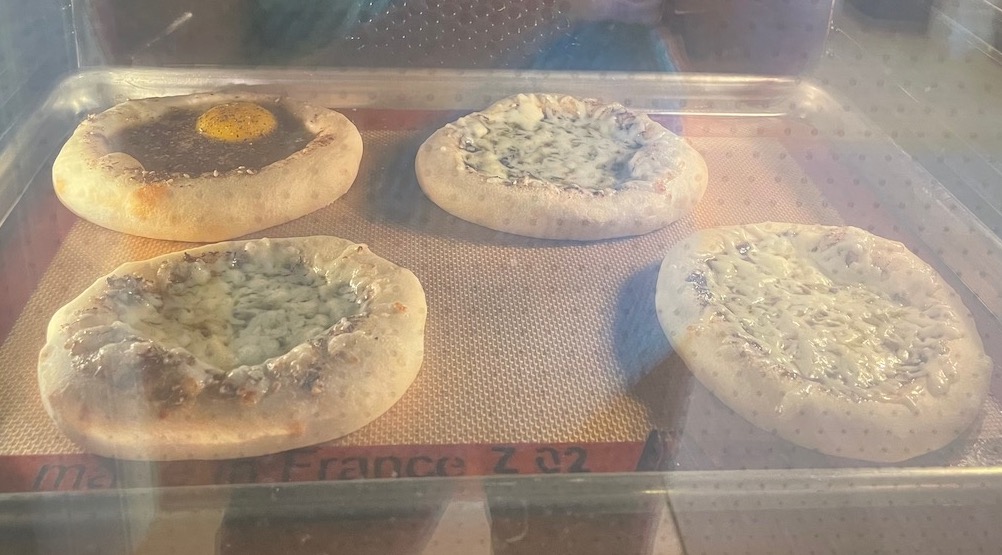
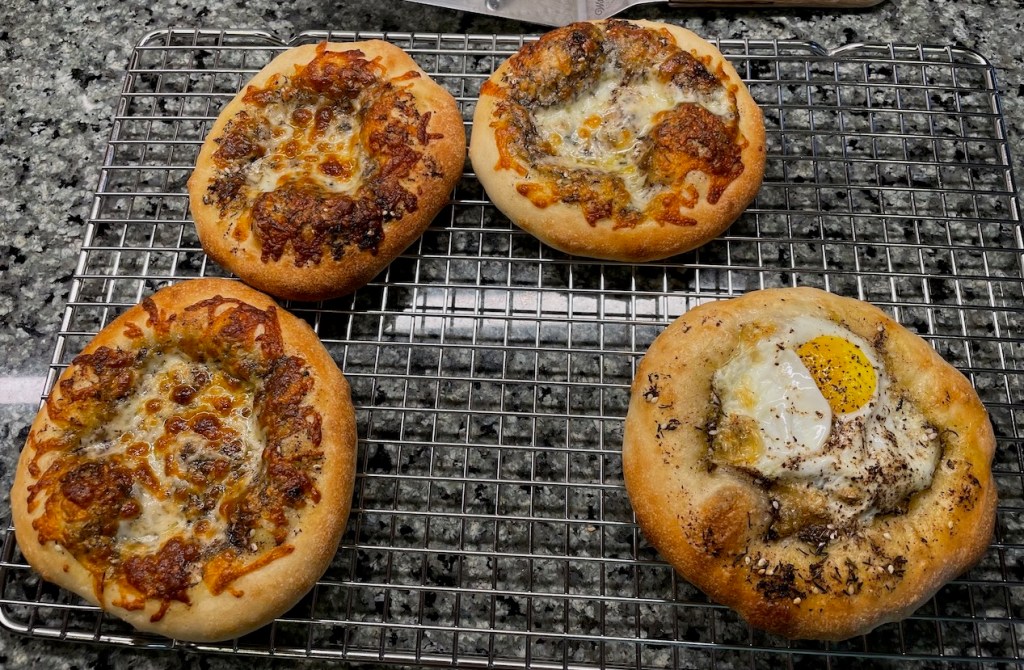
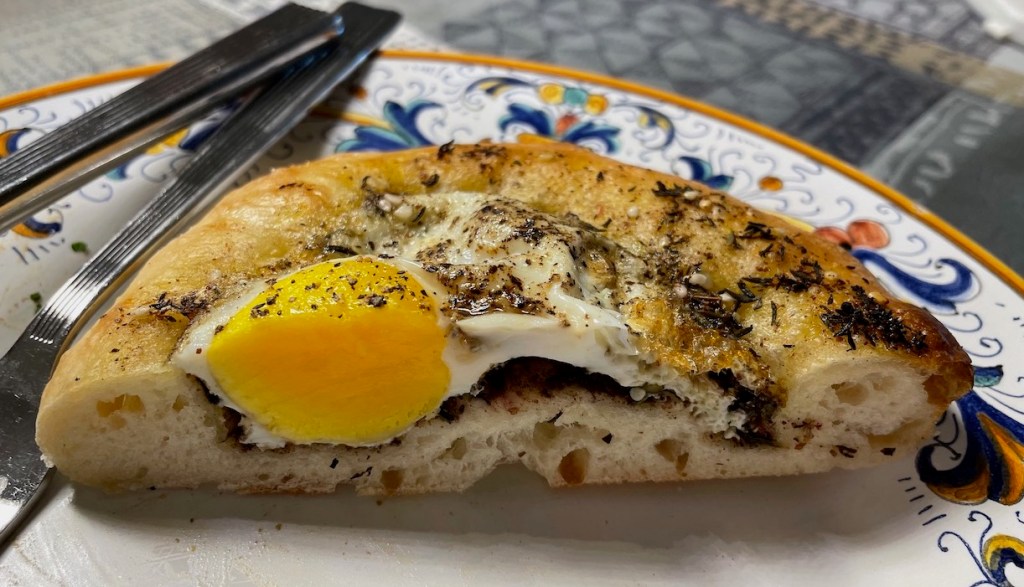
For the man’oushe, the dough is also rolled flat, but it is then topped with za’atar mixed with olive oil, and whatever additional toppings you like. The class recipe suggested mozzarella cheese and also an egg, so you can see both options in the photos.

A beautiful meal (pitas under the purple towel)!

Chris and Mike made a lovely ground pork dish and carrot salad (I think both from an Ana Sortun cookbook), and it all went perfectly with the freshly-baked pita bread. All of the results were amazingly yummy. As Chris said: It makes one never want to buy another pita in the grocery store. The recipe is very easy and very fast. She has a point!

Also, I went out the next day to buy a robust amount of za’atar from Penzey’s.

Final thoughts: I’m so grateful to be able to join in for these classes! And, I want to try making the pita with sourdough. Watch this space…

Honey Whole Wheat Bread and Rolls

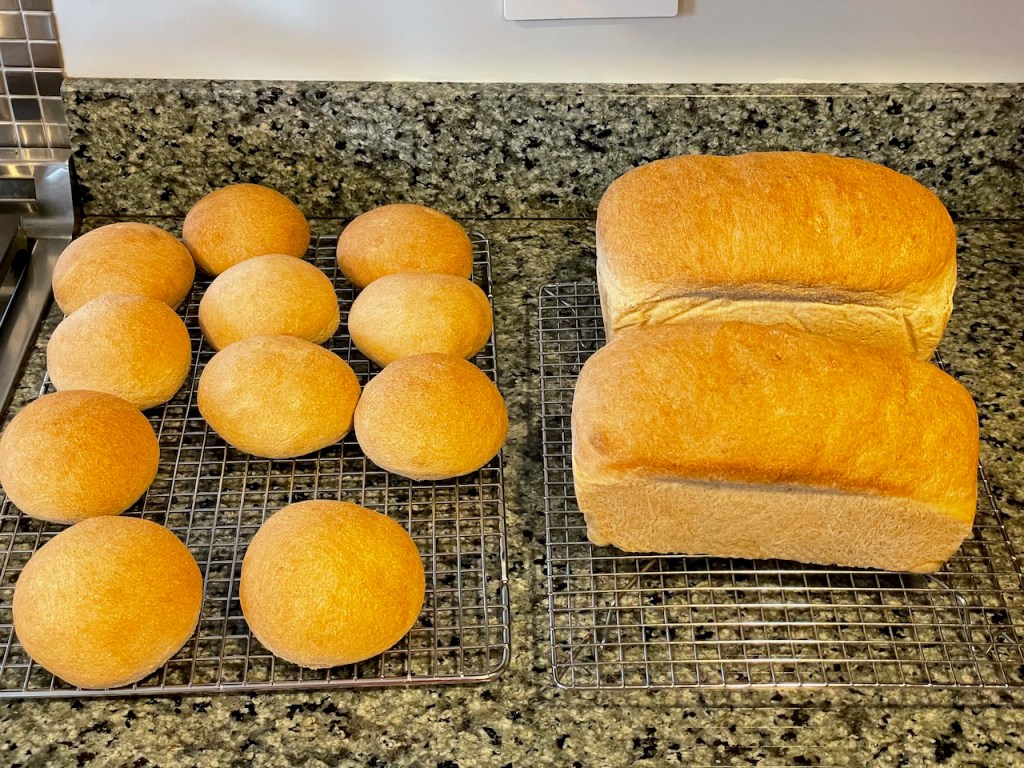
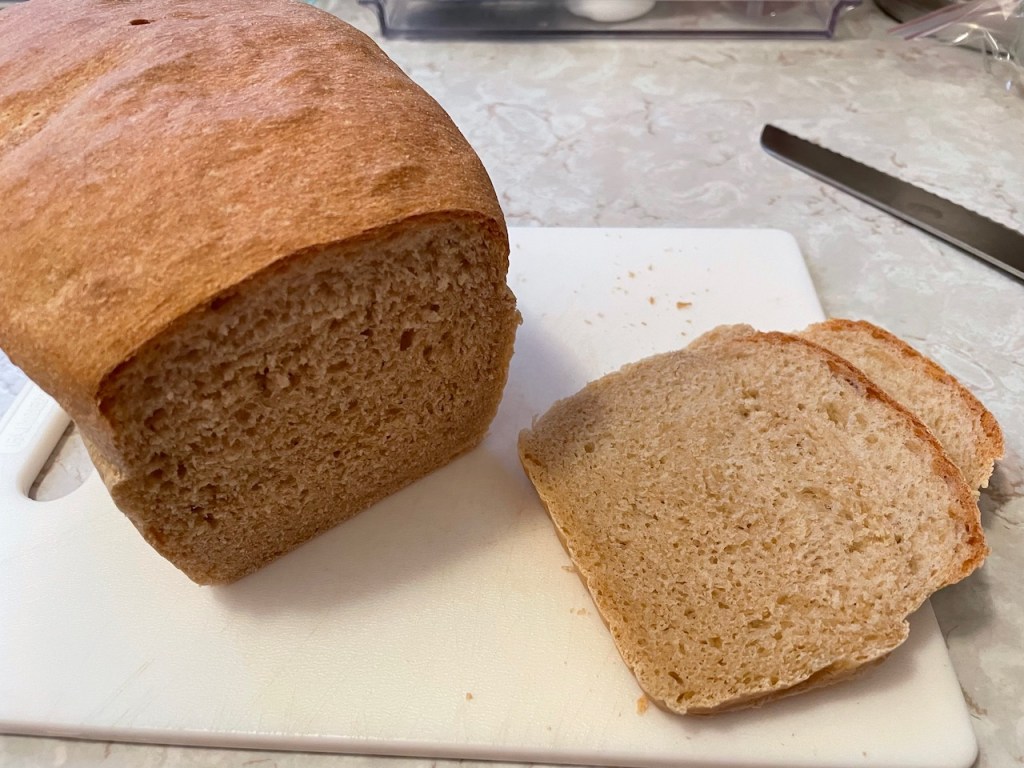
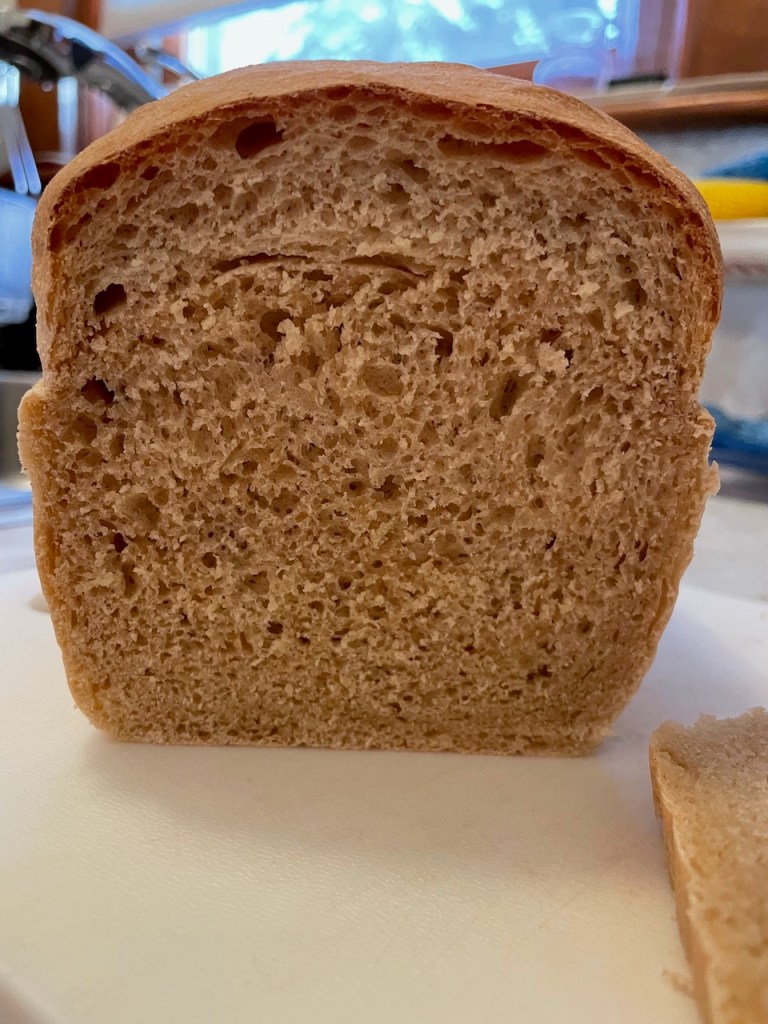
I got to participate in another King Arthur online class with Christine, this one about Honey Whole Wheat Bread and Rolls. The recipe was easy and good, and we got some nice results. I suspect that there was some issue with my proving, since the crumb is uneven. You can see in the third photo above that it’s more open in the top two thirds of the loaf and more dense in the bottom third.

I also wish I had been able to get a browner crust on the sides and bottom, so that’s something to tinker with in the future. The top crust was very nice, but the bottom and sides didn’t match it. The sourdough boules that I make are not baked in a pan, so I’m not used to that particular aspect. I bake the sourdough in a preheated pan and never have problems with it browning on the bottom. For this whole wheat sandwich bread, I’m assuming I have to put the pan on a preheated baking stone and/or keep it lower in the oven to get more bottom browning.

It’s a nice bread: soft, easy to make, easy to cut, and with an unassertive flavor; very well-suited to sandwiches.

It’s been fun and educational to gain more experience baking yummy bread!

Croissants, Episode 1

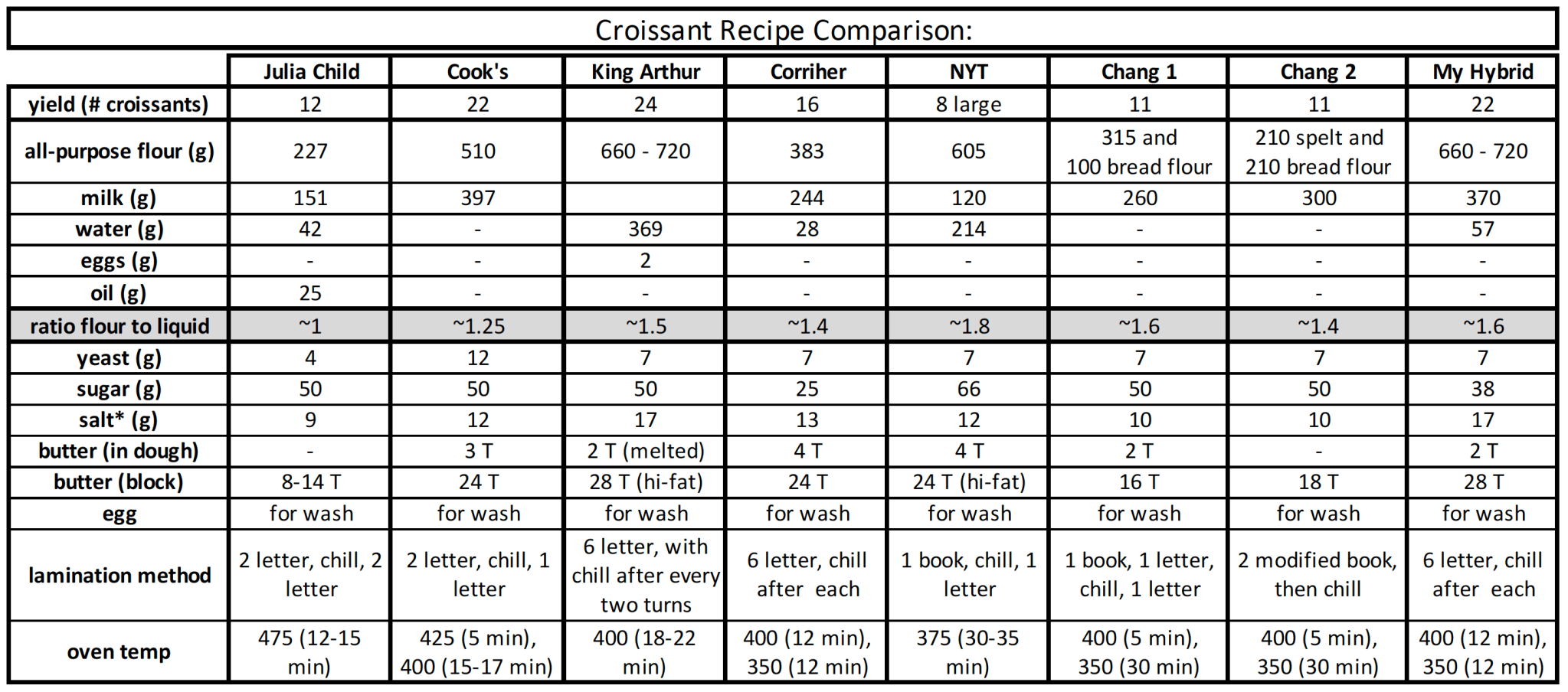
Making the Kouign Amann and the phyllo pastry pointed me towards making croissants. I have made them once (years ago), but I wanted to try again. I started by doing some research and comparing recipes and techniques from: Julia Child (Mastering the Art of French Cooking, Vol. 2), Cook’s Illustrated (Jan/Feb 2012), King Arthur Baking Company (Baker’s Companion), Shirley Corriher (BakeWise), The New York Times (recipe with link to helpful video), and two versions from Joanne Chang (one from her first cookbook, Flour, and another from a later cookbook, Pastry Love). It surprised me how varied these all were. I decided to try making a hybrid version, mostly based on the King Arthur proportions and overall volume, but using the Shirley Corriher lamination method because it had the most folds. [You can click on the table below to enlarge it.]

My biggest problem with this batch came with the second turn (after the first chill). As with the Kouign Amann, the butter got too cold and when I tried to roll out the “packet”, the butter inside broke into pieces rather than spreading out. I decided to let the dough sit and warm up before proceeding, and for the 3rd through 6th letter folds I did not chill the bundle between the folds. Instead, I let the dough sit on the counter in my cool (60°F) kitchen.

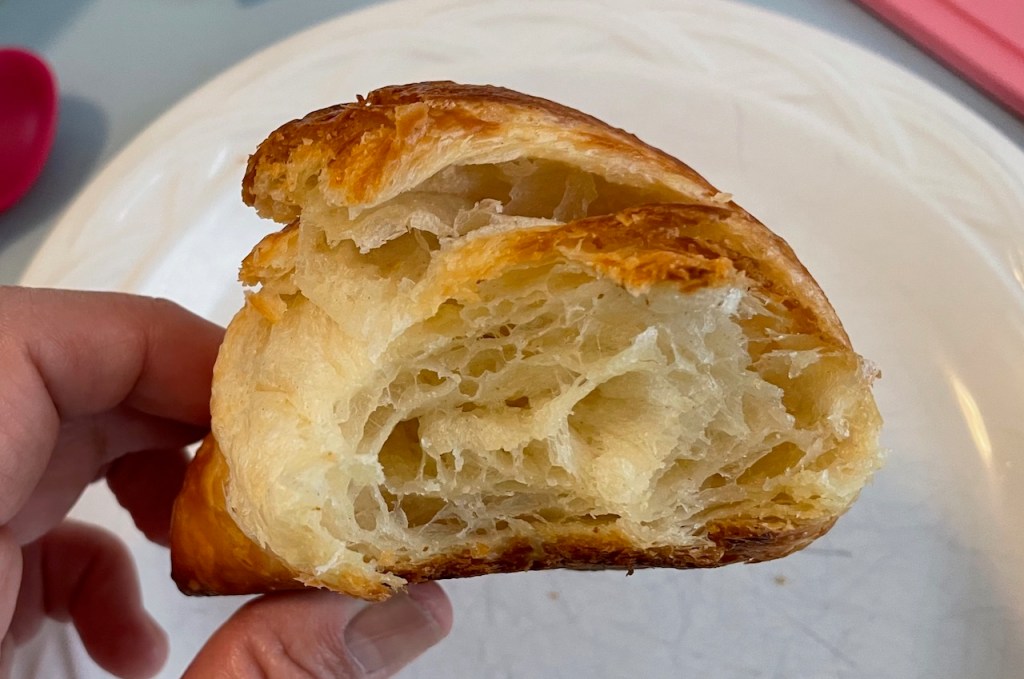
I think the lamination was OK, but that broken-butter 2nd turn wasn’t pretty.

Surprisingly, only Julia Child and Joanne Chang even raise the topic of the butter possibly breaking apart and how to avoid that. It seems to me that, given this and my previous experience with the Kouign Amann, this is a common problem. Or, is my fridge colder than most?

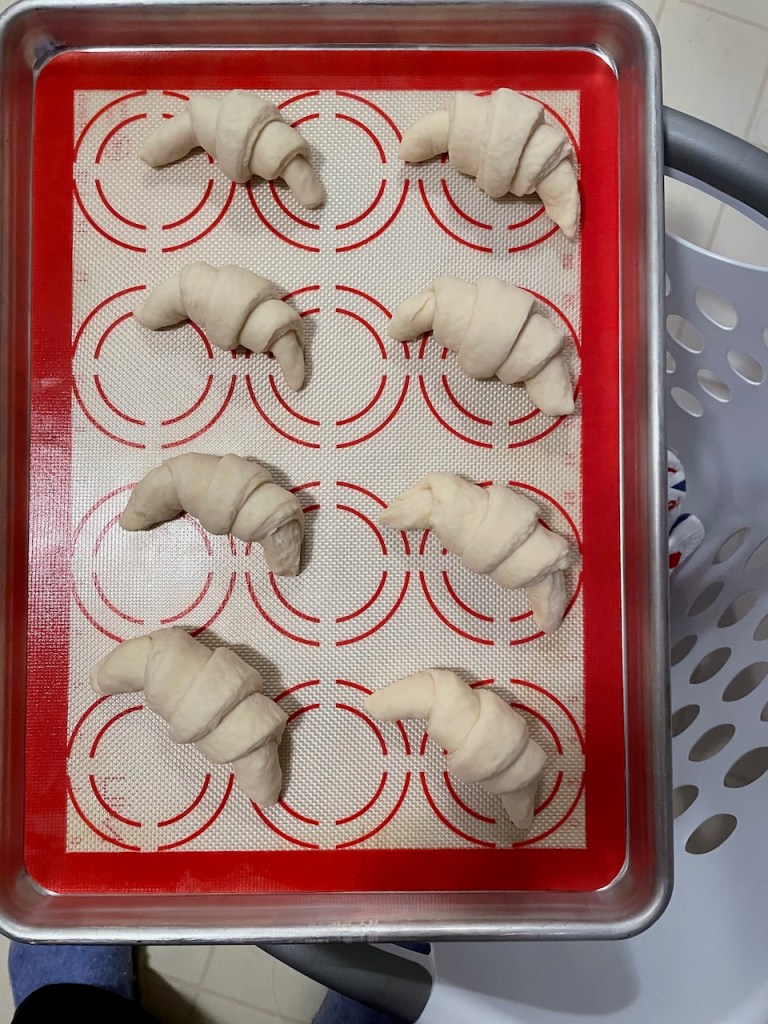
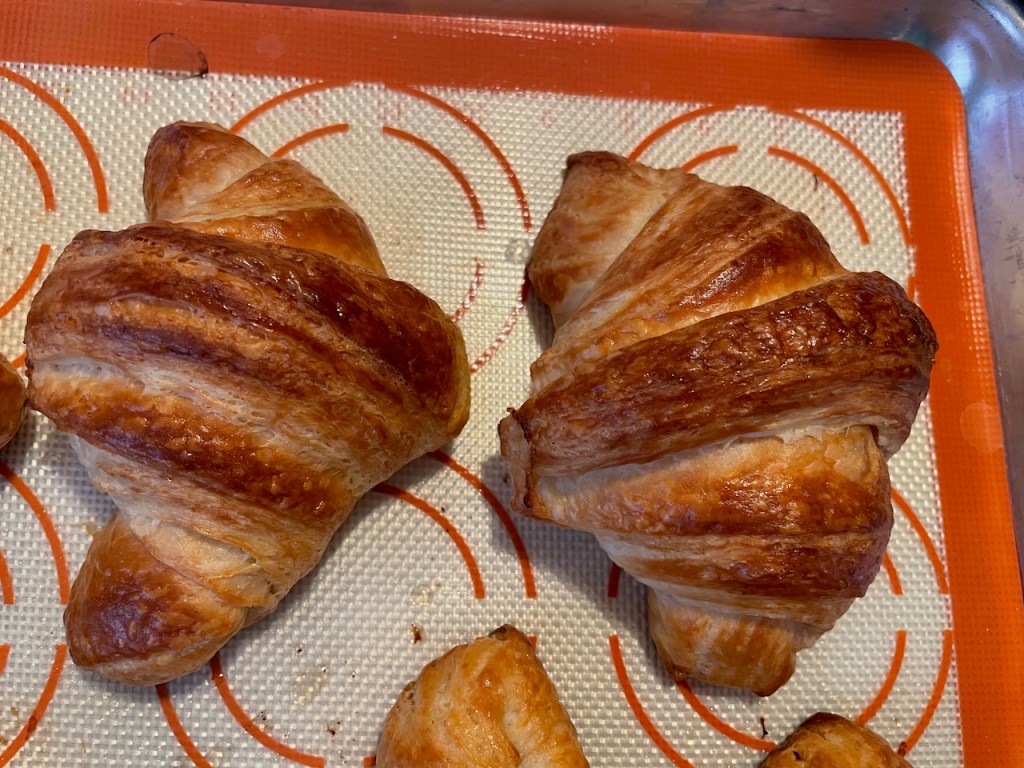
Anyway, the result was still wonderful. I ended up with a big pile of crispy, flaky, buttery croissants, and though my math says that each one was about 300 calories, I ate lots of them! I did freeze eight of them before the final proof, which worked well. The frozen ones just have to thaw and then rise, which means sitting out overnight (“Just like the Trader Joe’s croissants”, as Christine pointed out!), then bake them as with the others.

This experience made me want to make more croissants. Stay tuned!

[Yes, this is evidence that up to the posts in early December 2021, this blog was written far after-the-fact. I mean, during World War I, nobody referred to it as “World War I”, right?]