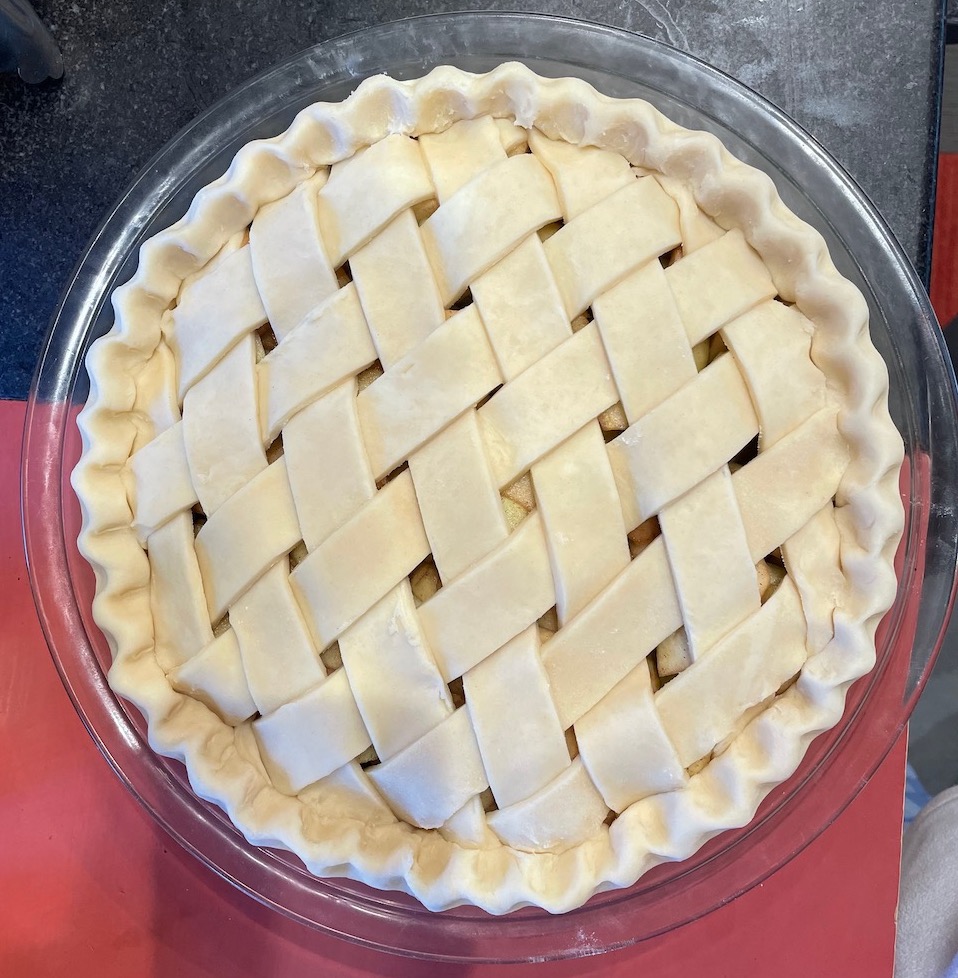
I’m very happy with my pie crust, which combines the ingredients of the New York Times All-Butter Pie Crust with Joanne Chang’s Pâte Brisée technique. Her technique has an important step called “fraisage”, which she describes well in the Atlantic article linked above (she doesn’t use the word in the article, but she does in her cookbooks; it’s the step where you smear the shaggy dough on the counter). Here’s a 15-year-old video in which she very clearly explains and demonstrates the technique. It’s basically fool-proof. I love that the flavor is buttery, and that it has the flakiness of a shortening crust (but without the shortening).
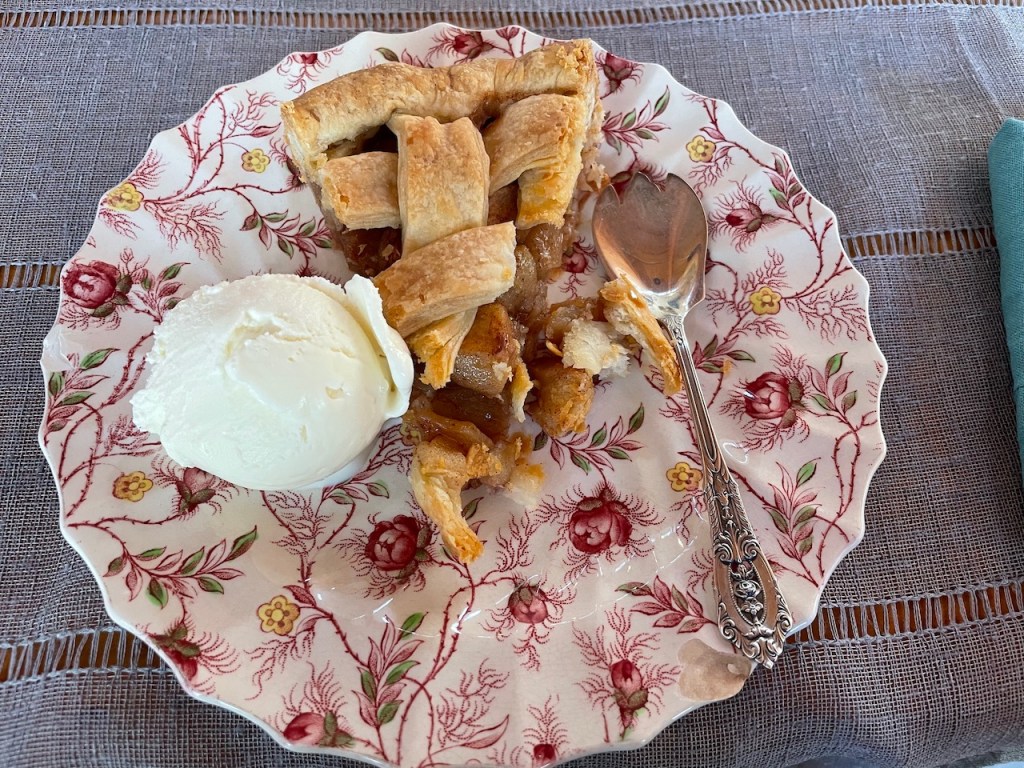
I had the great privilege of baking this apple pie for George’s 94th birthday. George is a wonderful person, and the dad of my dear friend Teresa. What an honor to be part of this auspicious occasion with these people whom I love dearly.
I think this one can be blamed on the Great British Baking Show, whose current season had a “technical challenge” that involved making baklava, including making the phyllo dough from scratch. But, I think also I was motivated by a big pile of fresh spinach that Chris gave me from a huge bag that she had bought at Wilson’s Farm.
I started doing some research online about it, and was frustrated by the lack of clear instructions. The New York Times has a recipe for phyllo dough, but stops before saying what to do with the dough. There is one use for it that they show (something called Hortopita), but I wanted to get into more options.
Of course, I did also check out the Paul Hollywood baklava recipe that was used for the GBBS technical challenge, but was thrown a bit by the use of “corn flour” as a separator between the layers.
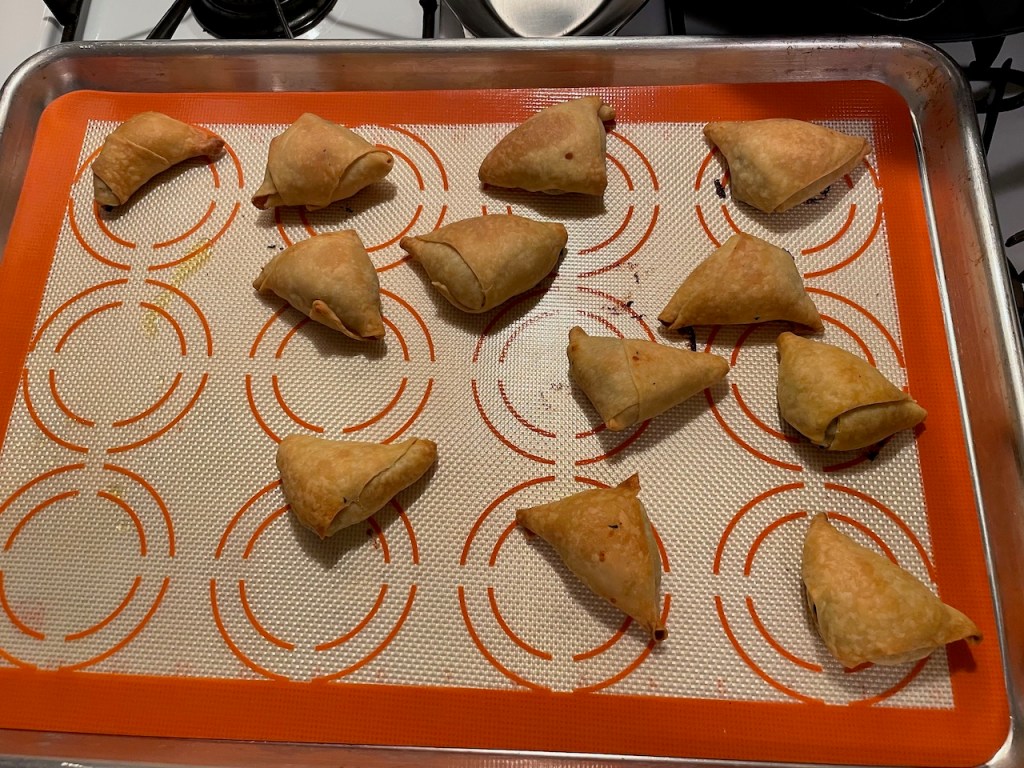
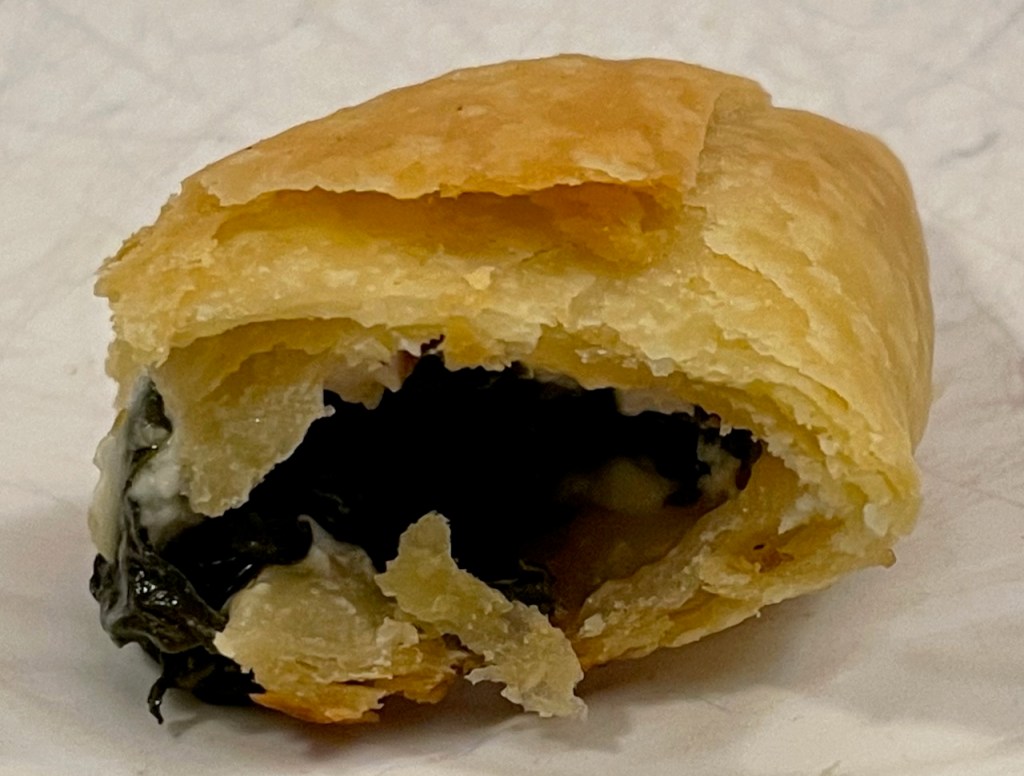
So, I did a bit of “winging it” and made spanakopita triangles. I cleaned and de-stemmed the spinach, then cooked it with diced shallot, garlic, and olive oil. When it was cooled to room temperature, I squeezed out any liquid, drained it on some paper towels to get out any remaining liquid, and stirred in some crumbled feta.
I made the phyllo dough using the NYT recipe, which involved ordering “finely ground durum flour” from King Arthur online. I rolled the dough as thin as I could, cut it into strips, buttered the strips, and then put a blob of spinach on each strip of dough and folded it up into little triangles.
These were great!I wondered if I would have better luck using a pasta roller, so my next batch (I don’t have photos, alas) went through the pasta roller and yielded thinner strips. Of course, I first experienced the sad fiasco where I rolled some dough thinner and thinner, only to then have it merge back into a blob because I hadn’t floured it enough as I went! I’m basically a pasta machine noob, and it showed. Once I got the hang of it, things went better.
The next phyllo project would be baklava, but first the croissant adventures begin…
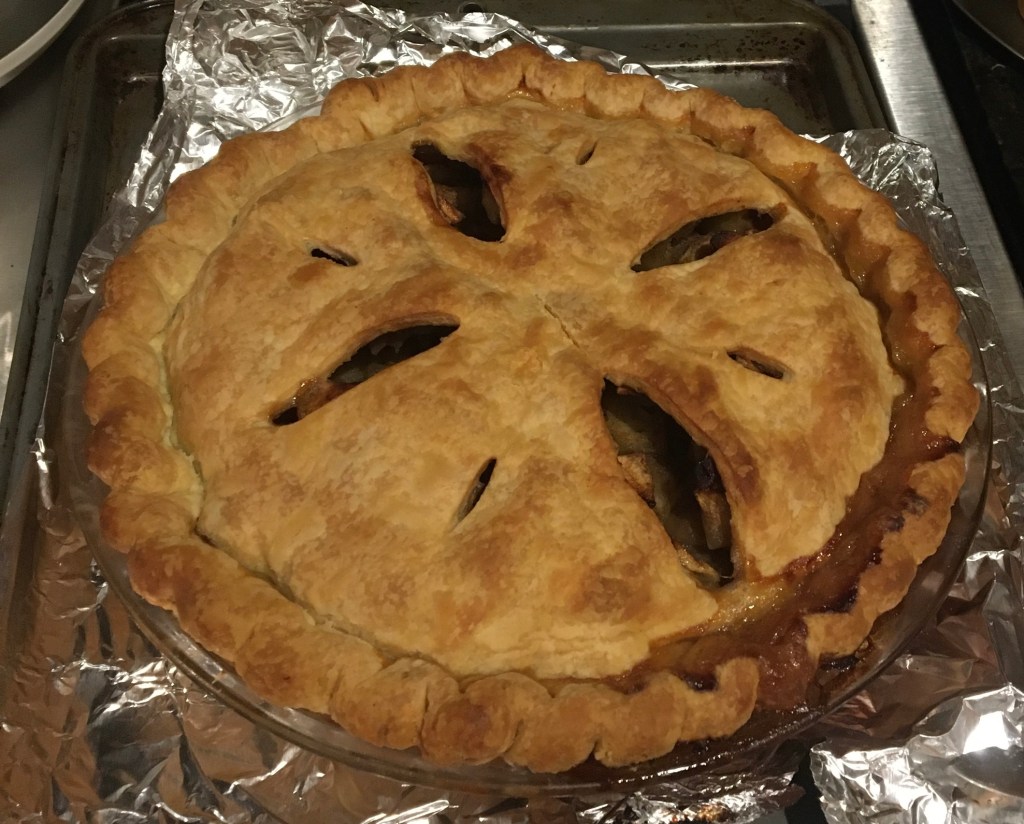
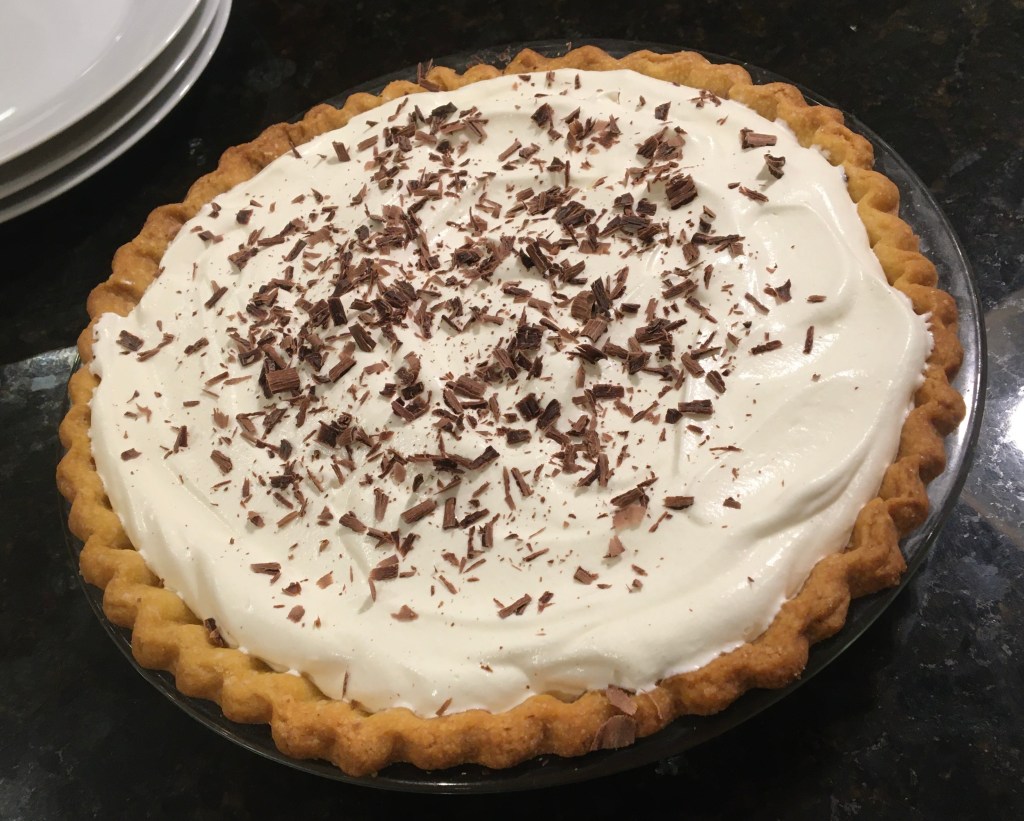
For complicated reasons, I drove out to Wisconsin and spent several weeks with mom, Jennifer, Michael, and Mac, despite Wisconsin being in a covid surge at that time. It was meaningful to be there with them, and I spent much of my time there sewing and baking. Here are the two pies I made: my classic apple pie and Joanne Chang’s Rich Chocolate Cream Pie.
A few thoughts on these pies:
I have a consistent issue with my apple pies where the level of the apples sinks after the top crust has set, causing a big gap between the fruit and the top crust. You can see that in the photo. Even with macerating the apples in sugar for 30 minutes, it’s not enough to solve this issue. Next attempt will probably involve pre-cooking the apples.
I am very happy with my pie crust recipe, and keep returning to it despite trying several other recipes and techniques. The basic idea is that I use the New York Times all-butter crust recipe, but I use Joanne Chang’s “fraisage” technique. I did have success using Shirley Corriher’s technique of using a rolling pin to do the fraisage, but that method caused a tremendous mess in my kitchen, so I now stick with the regular fraisage by hand.
I seem to have been willing to make a fancy edge on the chocolate pie, perhaps because I didn’t have a fluted tart shell? I always follow the stated pâte sucrée recipe for this chocolate pie, and love it. It also appears that I made chocolate crumbs rather than curls!
It’s probably worth fessing up that I once made this pie and forgot to put the egg yolks and sugar into the chocolate custard filling. The resulting pudding/ganache (rather than custard) was still delicious (and one or two people preferred it!), so I now routinely cut back the number of yolks to 2 (from 4) and the sugar to 2 Tbs (from 1/3 cup). I do keep forgetting to bump up the cream and chocolate a bit to compensate for the loss in volume, but it’s not a big deal.
 FlayRah