-
I love baking. A big part of that enjoyment is the analysis and thinking about what I’ve made and how it could be done differently and better. Of course, I love eating what I produce, too, but really I like to learn how to make things better and better.
Some people think that this analysis takes away from the enjoyment of the effort and product, but for me the analysis is part of the enjoyment and takes away nothing. Yes, I’m thinking about ways that something can be better, but for me this is a positive and hopeful process, and in no way is it negative or discouraging.
I can happily scarf down a croissant (or two!) while making a long mental list of all the things I want to try to do better with the next batch. Most people will want to just enjoy the croissants without the analysis. A very few people might want to think about these things with me. This blog is for us.
-
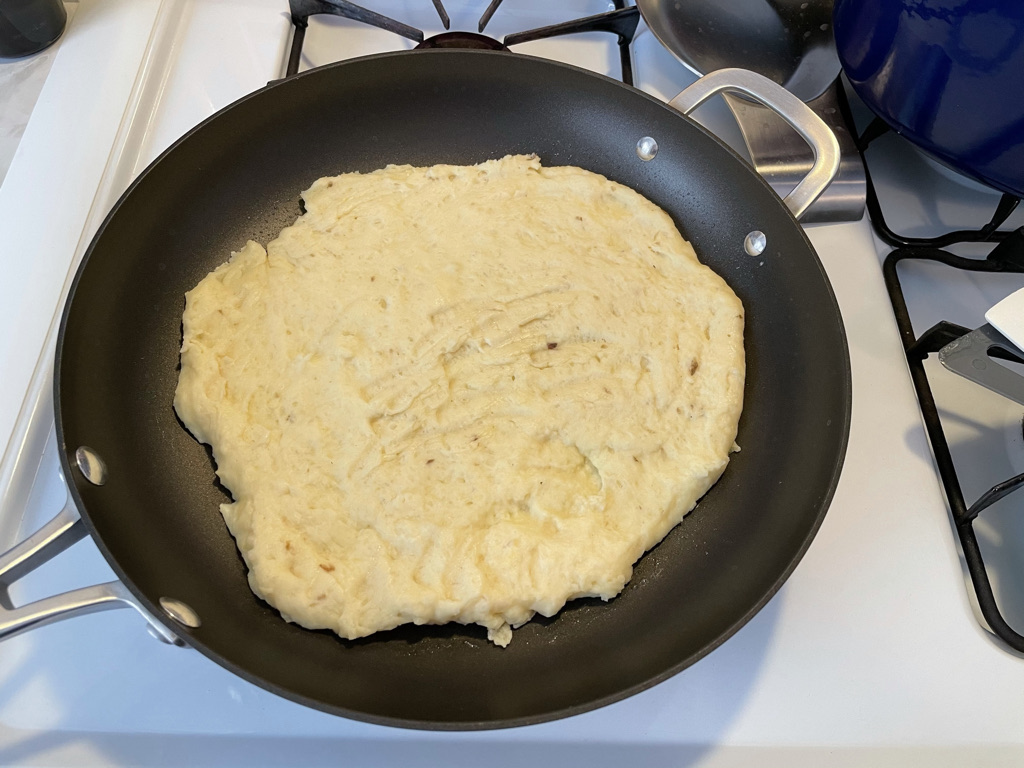
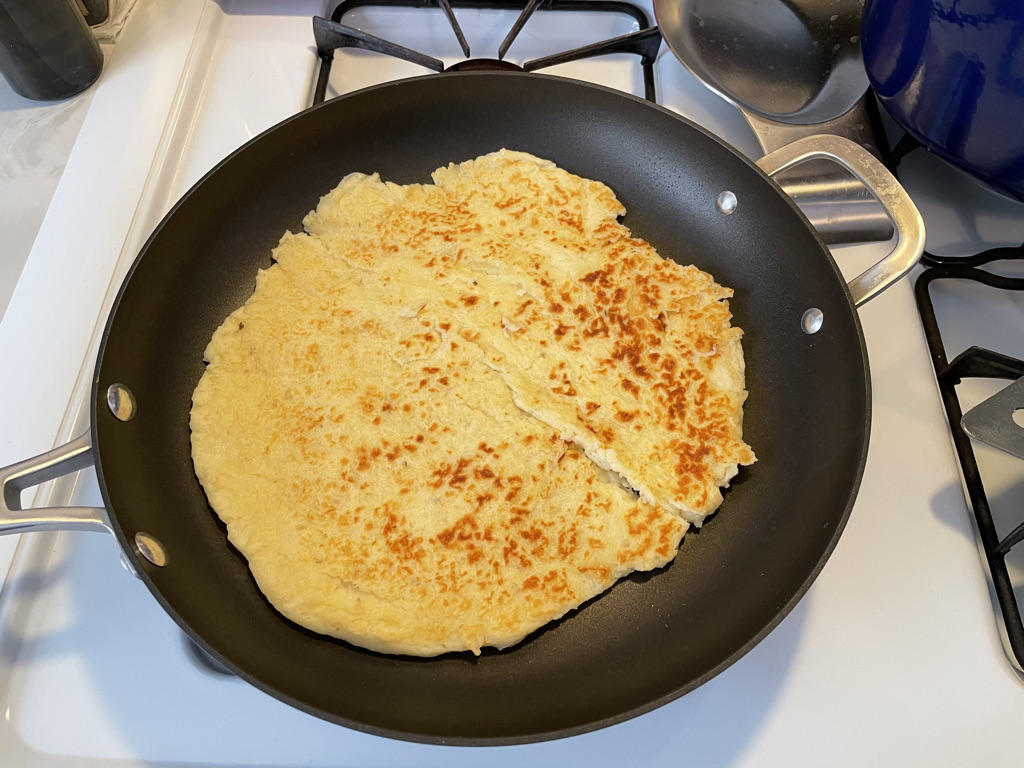
Though this is a post about Tattie Scones, I’m first going to write about mashed potatoes. Credit must be given to Food52 and The Daily Spud for pointing me towards the experts and the method. The recipe mostly came from Shirley Corriher’s Cookwise, in which she credits Jeffrey Steingarten.
Who knew that there was science to this seemingly simple food (mashed potatoes), but there it is. And I’m a believer. The process is fussy and takes a while, but the results are wonderful. A perfect pandemic cooking project! And, I can report that the leftovers (nuked with another ¼ T of butter) are just as good as the original result. Really nummy.
So, then there were leftover mashed potatoes and a timely watching of an old episode of the Great British Baking Show in which James Morton (the Scot) made Tattie Scones during Bread Week. I gave it a whirl, using the SpruceEats recipe, but I already had butter and dairy in the mashed potatoes so I tweaked it accordingly. They came out beautifully, even with a marginally successful (read = “unsuccessful”) pan flip. I had them with some Easter ham (thank you, Mike and Chris!) and was verrrrry happy.
-
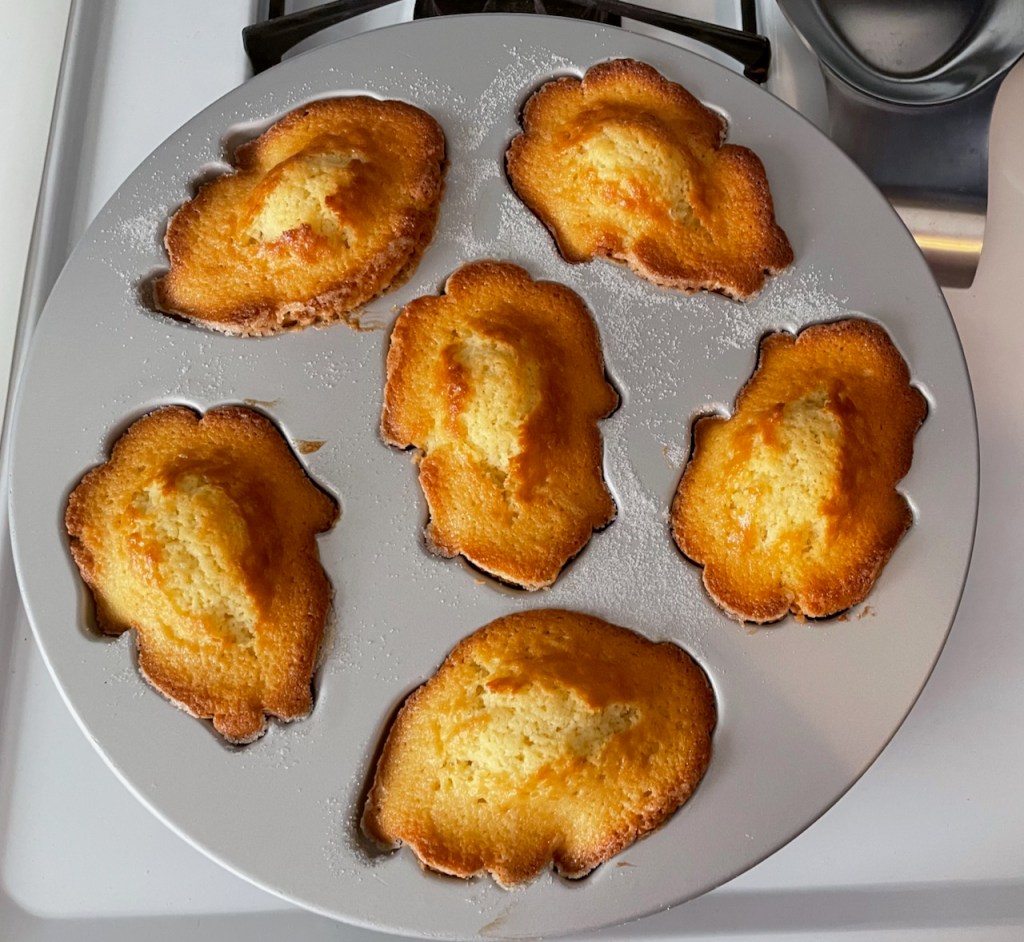


Buying this cake pan was something of a pandemic-depression-induced shopping whim. But that said, it’s also incredibly cute, and I am glad to have had the right occasion for using it. It was a significant headache getting the cakes out of the pan. A light layer of Crisco and fine sugar wasn’t enough, so I either need to buy baking spray or use more Crisco next time.
I haven’t written yet about Maida Heatter, so it’s high time. Christine got me into Maida Heatter’s cookbooks. Maida writes ever so clearly and reassuringly. It’s not uncommon for her to include the words “this is OK” in the recipe, lest you panic upon seeing a crack develop or some other such phenomenon. She’s a real home baker (she produced desserts for her husband’s restaurant from her home); she writes as a home baker and she writes to the home baker. She’s a goddess. I own all of her cookbooks, even ones that have been out of print for years. They all are littered with post-it notes flagging recipes I want to try.
One year, Chris and I baked our way through one of Maida’s cake chapters, alternating who made which recipe and then getting together to “share bakery”. It was delightful.
These bunny cakes used Maida’s “East 62nd Street Lemon Cake” from her Book of Great Desserts. There is a New York Times article about how this cake was part of making her famous, and there’s a link to the recipe in the article.
-
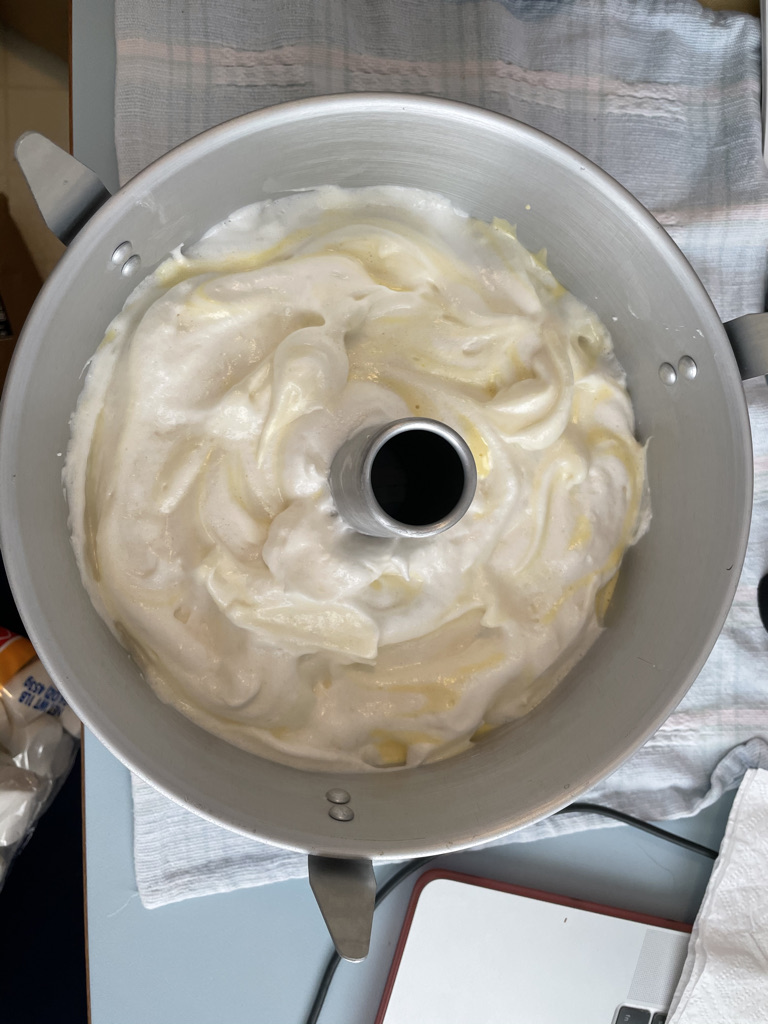
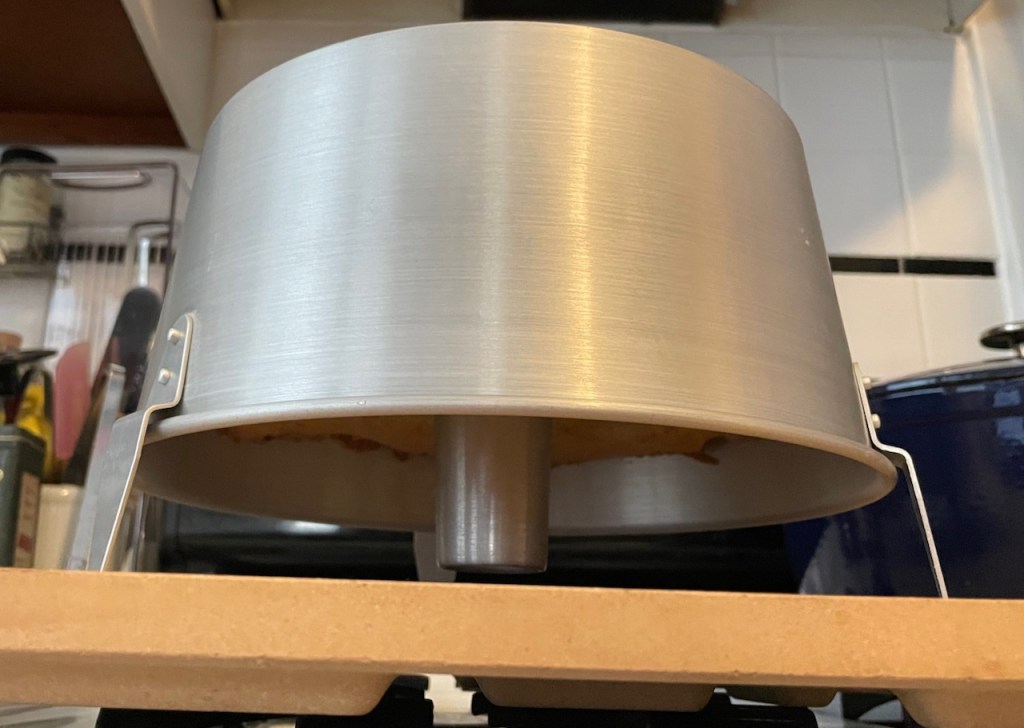
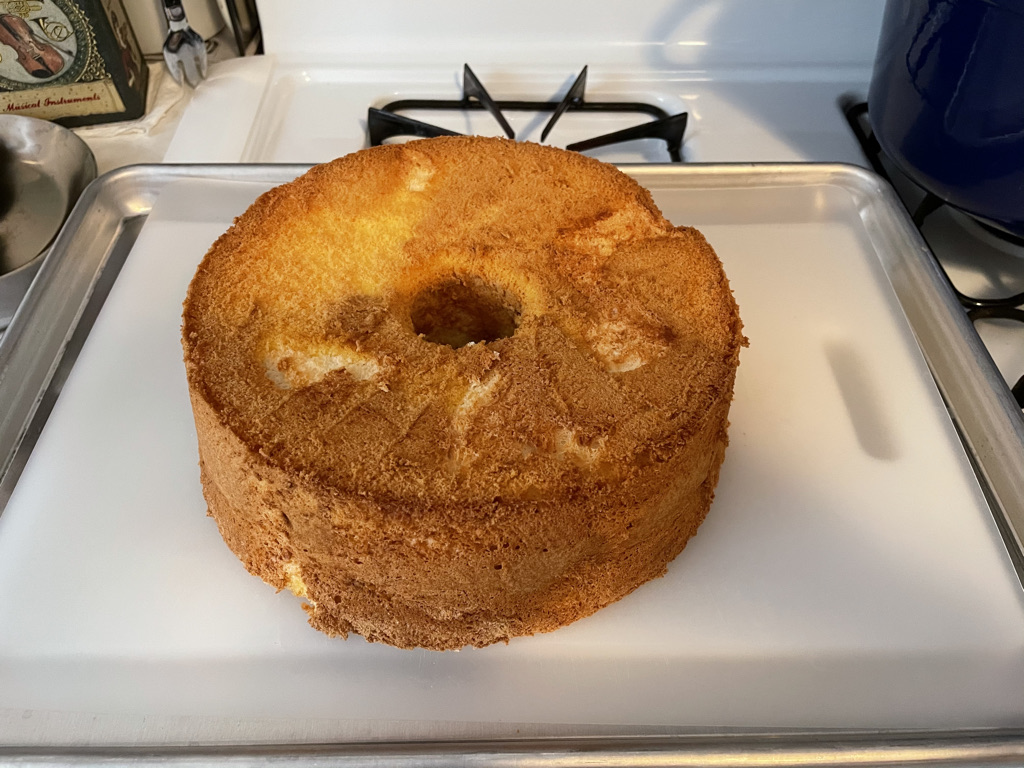
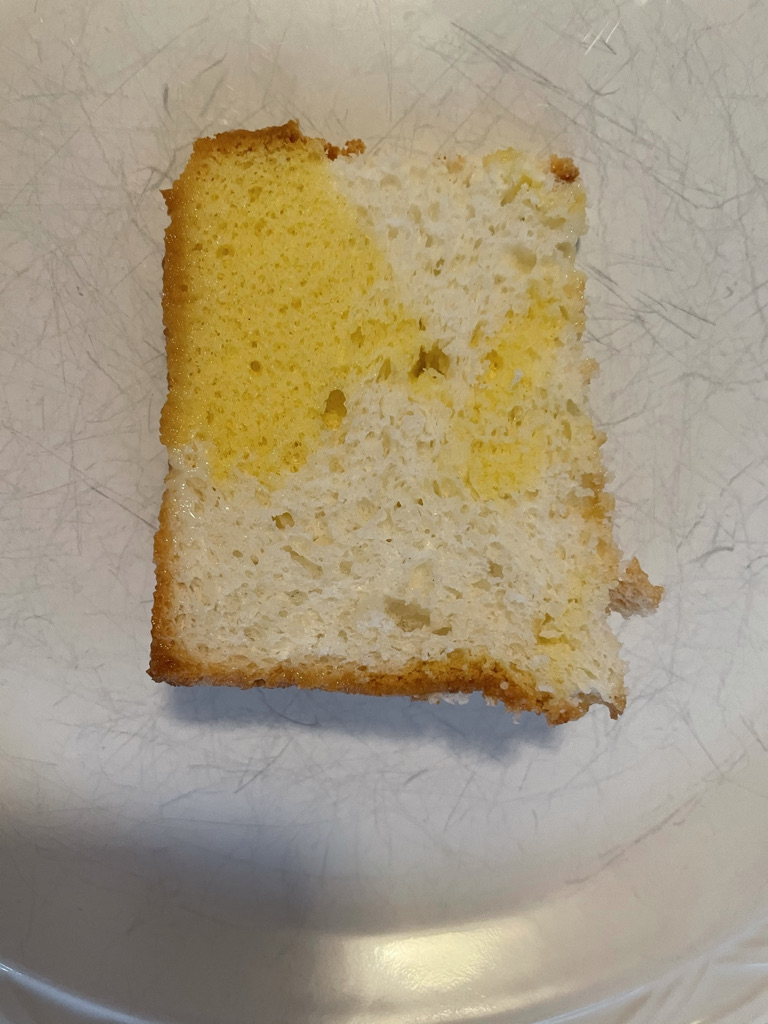
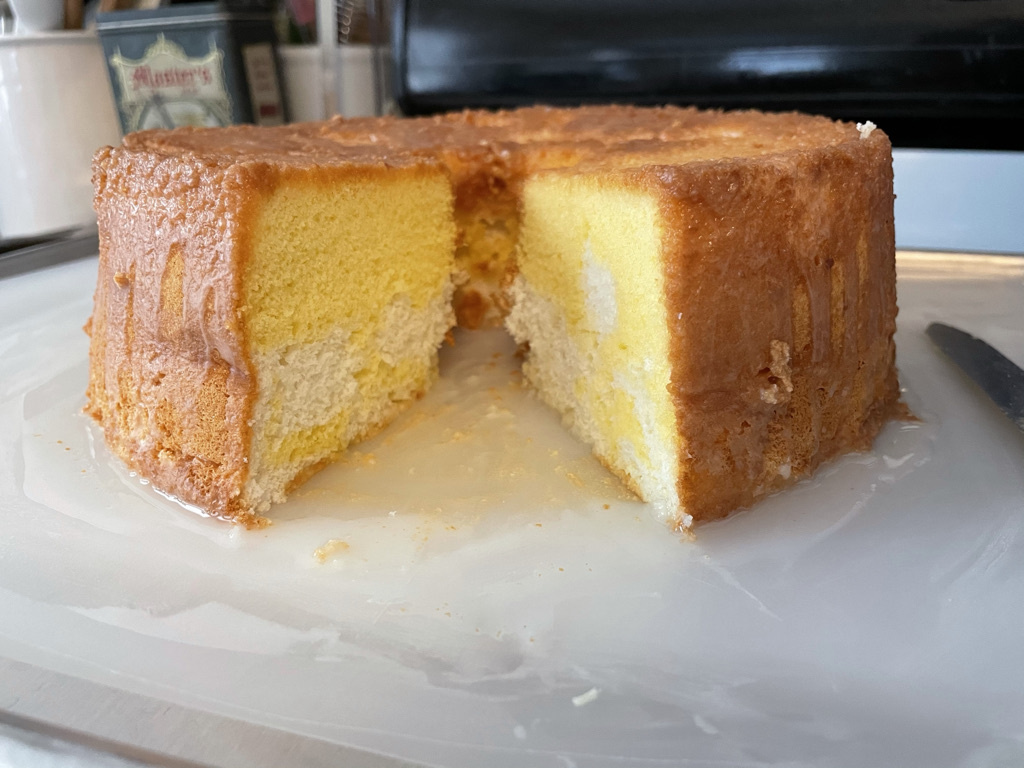
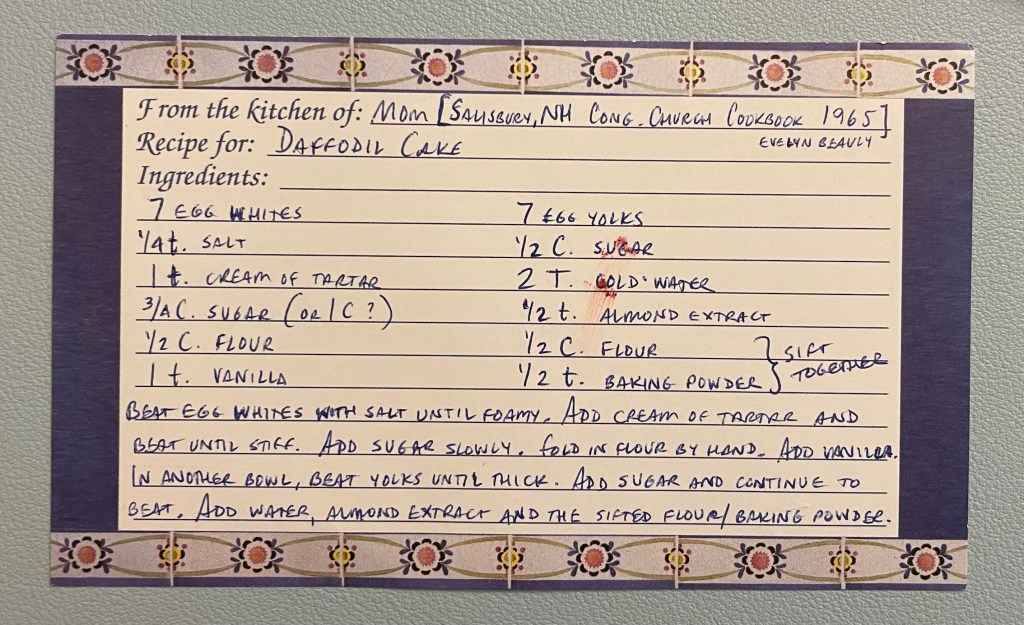
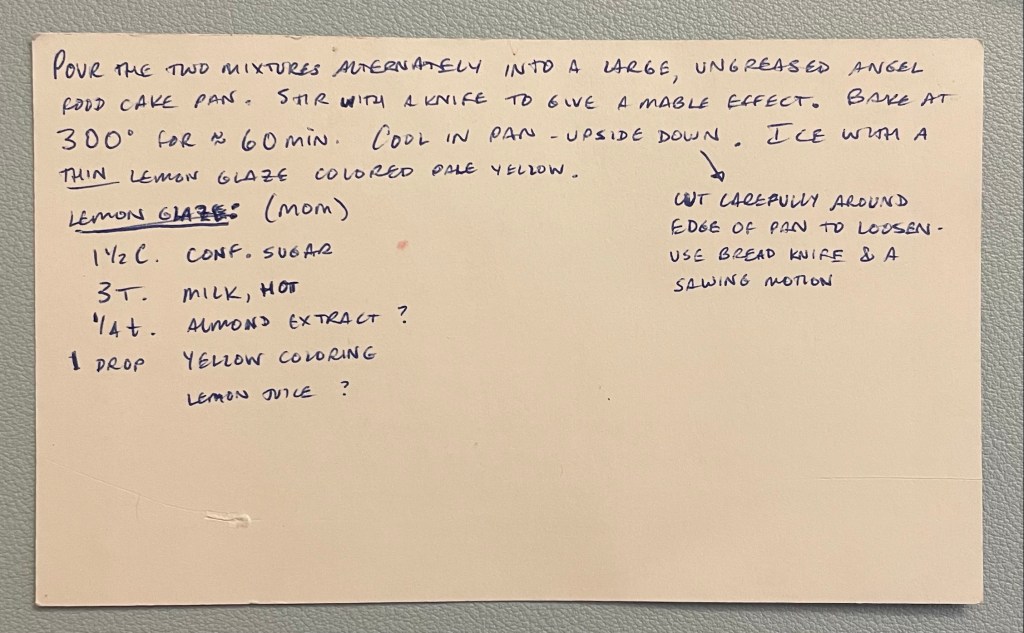
For my birthday, I decided to resurrect a cake from my mother’s standard rotation. Daffodil Cake (many variations exist on the interwebs) is a marbled combination of an Angel Food Cake and a Chiffon Cake, topped with a lemony glaze. It’s very, very SPRINGTIME, and just the right thing for the occasion.
I very often feel great sympathy for the contestants on the Great British Baking Show. I don’t now how they are able to do what they do under such insanely short timeframes. And, I can’t imagine how stressful it must be to have the cameras capturing EVERY thing that they do. Millions of our judgy eyeballs scrutinizing everything!
This cake reminded me of GBBS for a couple of reasons:
- I recall some technical challenge where the contestants were not instructed to invert an Angel Food Cake for cooling and it was a test to see who already knew (I knew, thanks mom!).
- My Daffodil Cake developed a slight “waist”, and I’m sure that was criticized on someone’s GBBS cake at some point. Perhaps I took the cake out of the pan too soon? Or perhaps the structure of this cake can’t quite manage the volume of glaze that it took in?
I am not an expert cake-baker. I have had only middling results in the past with cakes. That might need to be another project for me during this weird sabbatical. I’d like to master the various types of “sponge” that I’ve seen on GBBS, and really understand what makes cakes come out wonderfully.
Here’s mom’s Daffodil Cake recipe (copied by me, many years ago), in which she credits Evelyn Beauly in the Salisbury, NH Congregational Church Cookbook, 1965:
-

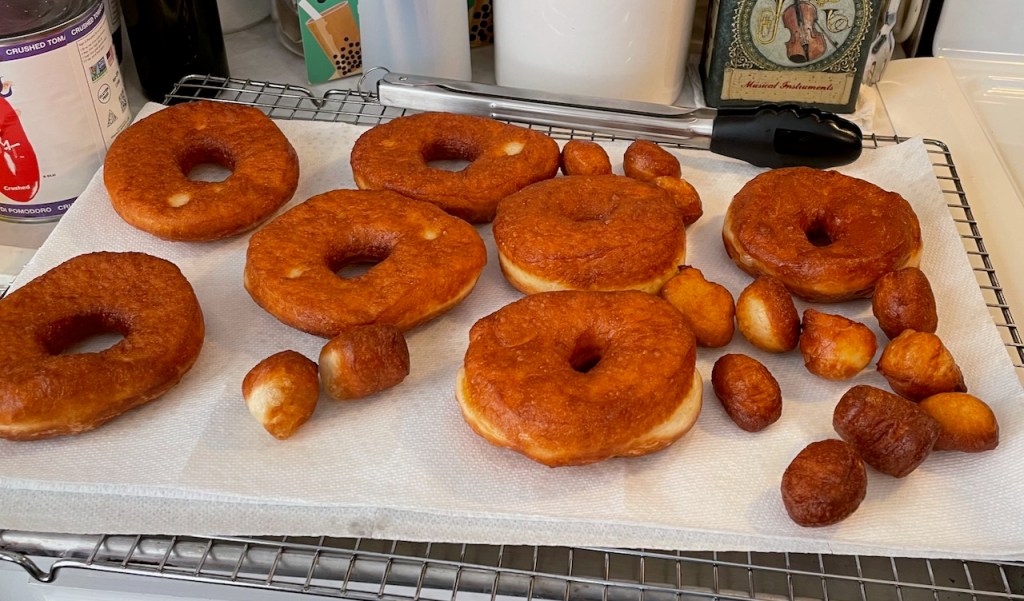
This was another project that was inspired by Cook’s Illustrated. The photos in that article practically give off an aroma of fresh-baked, light and fluffy doughnuts. I couldn’t not make these, especially after finding that deep-frying the kettle potato chips wasn’t so scary.
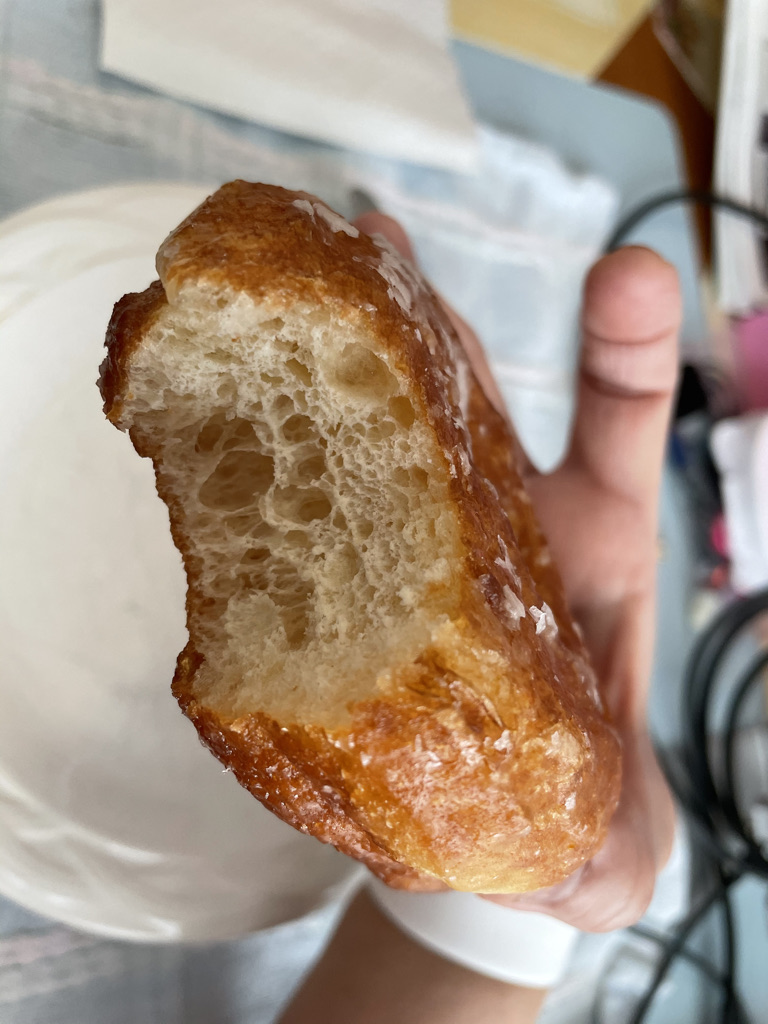
Some of them were a great success (like the one that I show here with a humongous bite taken out of it), but some were flat and unexciting. I’m slowly getting more accustomed to working with yeast – whether the bought kind or the sourdough kind. Here’s what I’m learning: If the doughnut looks flat and unexciting before going into the hot oil, then it will be flat and unexciting when it comes out of the hot oil. The frying/baking won’t make it be magically fluffy if it wasn’t already there.
In hindsight I wish that I had let some of the doughnuts proof longer. Some were good to go, but many were not. I’m realizing that the “when is something proofed (proved?) enough?” question is pretty much the meaning of life with yeast-risen things.
I had lots of leftover glaze, and meant to get back to this project right away, but it’s been eight months now and it hasn’t happened. [Sigh.]
-
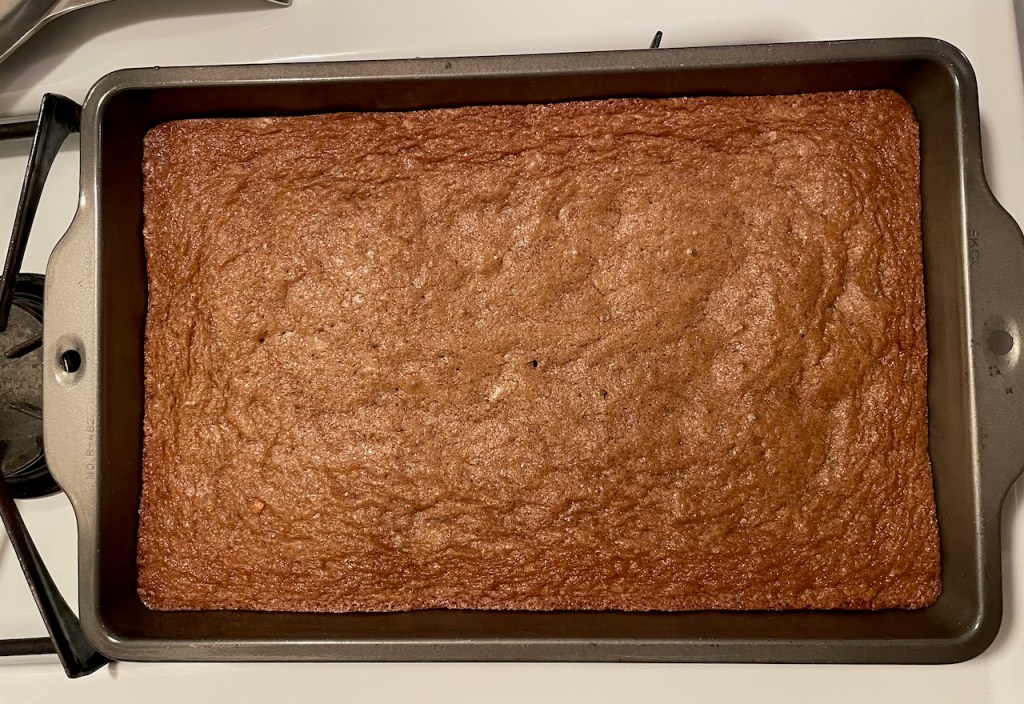
This is a nostalgia ride for me, inspired in part by Aaron sending me a photo of a batch that he made. This recipe comes directly from my old copy of the Betty Crocker Cookbook. I have looked at versions of this recipe posted online, and none of them match what my cookbook has in it. If you want this recipe, just ask.
I throw in butterscotch morsels rather than nuts (ewww, definitely no nuts in this!). I also browned the butter rather than just melting it. ‘Cause… brown butter… you know. This recipe is easy and delicious.
I wonder if it would be an enhancement to sprinkle a tiny bit of coarse salt on top; an experiment to try next time.
-

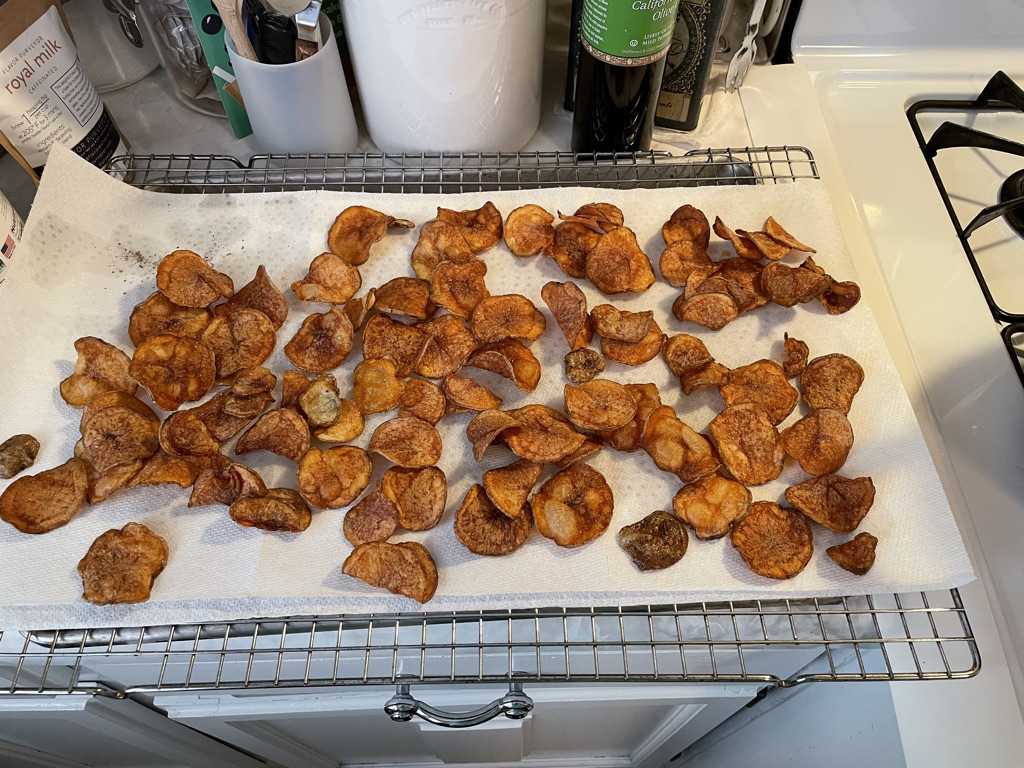
This was from another Cook’s Illustrated article. Sometimes I read their magazine (and Milk Street, the Christopher Kimball spin-off) and I end up just dreaming about the recipes for weeks. This one really stuck with me, and I decided to go for it. I don’t have experience with deep-frying, but this wasn’t too scary! The amazing ThermoWorks ChefAlarm was a comforting source of accurate temperature data.
For all my baking of sweet things, it might surprise you to know that my weakness is actually salty stuff. Salty potato products are at the top of my list of favorite things. It was delightful to have these crunchy, homemade kettle chips!
P.S. I almost bought a new mandoline, and I did a bunch of research, but I didn’t pull the trigger. I have a simple one that my mom gave me decades ago, and it works just fine. I also almost bought a slice-resistant glove, and now I’m not sure why I didn’t. Hmmmm… [add to cart]
-
My Tartine bread project has spanned most of 2021. There have been many loaves produced: some quite successful and some rather less so. All of it has been edible and yummy, but it’s been both fascinating and frustrating to try to master this particular thing. One of the issues that still puzzles me to some extent is how to know when the sourdough has proofed enough and not too much. It seems like something that could be described and explained in words, pictures, and/or video, and many have tried, but it still feels elusive to me.
I wrote earlier that I feel the particular qualities of a certain starter will have a big effect on the length of time that proving can take. To learn more about my three starters, I learned how to do time-lapse photography and took a 24-hour time-lapse video (20 seconds) showing when the starters peak, and showing the time and temperature each step of the way.
The three starters are:
- TOP: Ken’s sourdough starter from Alaska
- MIDDLE: A starter I created using the “pineapple juice method” (h/t Debra Wink in the Fresh Loaf blog community)
- BOTTOM: A starter I created just from thin air, using all-purpose flour
During the spring when I made this video, I was in the habit of feeding the three starters once per day. Their behavior was relatively consistent each day, though the temperature in my house varies more it did in this video. Anyway, Ken’s sourdough peaks about 12 hours after being activated/fed.
-
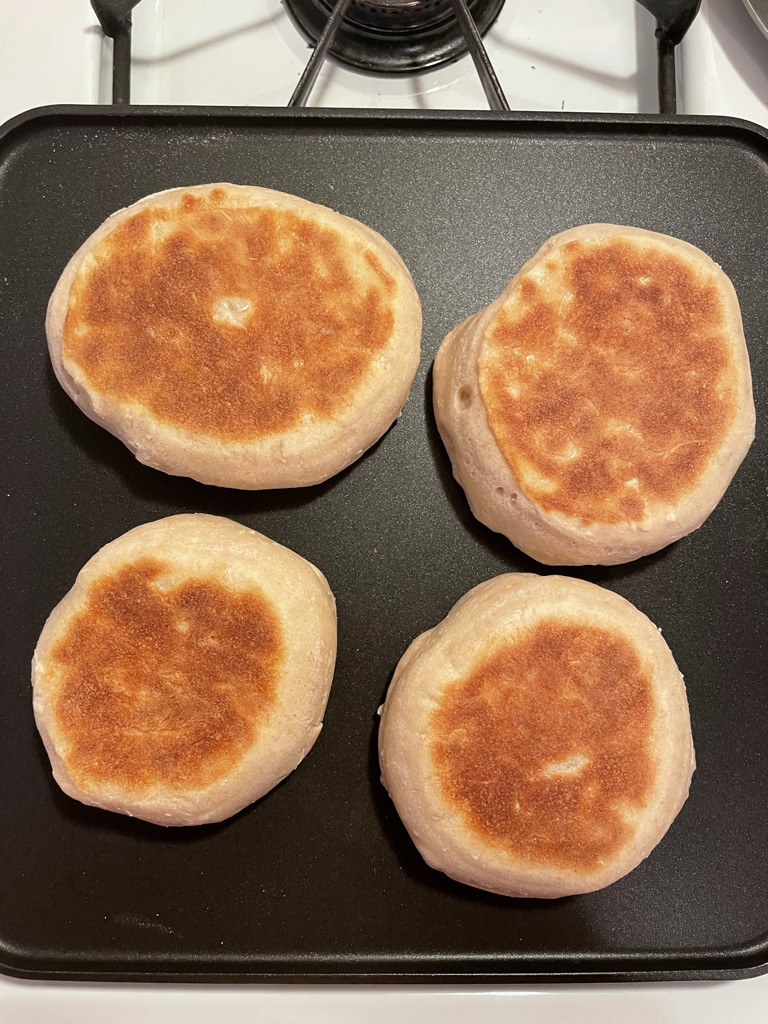
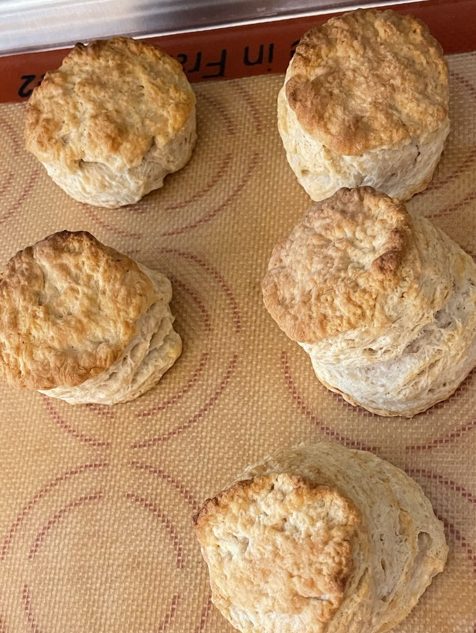
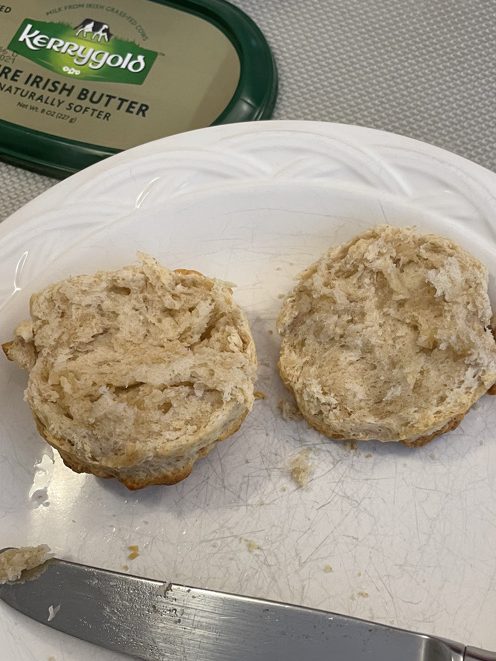
There was a time at the beginning of my Tartine bread project when I had too much sourdough discard and I was determined not to just throw it out. I found the Leavenly website to be an excellent source of positive support and wonderful discard recipes. Here are my results from their Sourdough English Muffin recipe and their Sourdough Biscuits recipe. So. Much. Yumminess. — BUT: No. More. Room. In. My. Freezer.
I eventually got better at planning my sourdough remains such that I had just the amount I needed to keep the starter going. I also don’t feed my starter every day anymore. I did for a while at the beginning, and this did train my starter into rising more quickly, but it doesn’t seem absolutely necessary, and it’s a big time (and materials) sink.
But, I have to say, these discard recipes make me miss having the discards!
-
And so it begins:
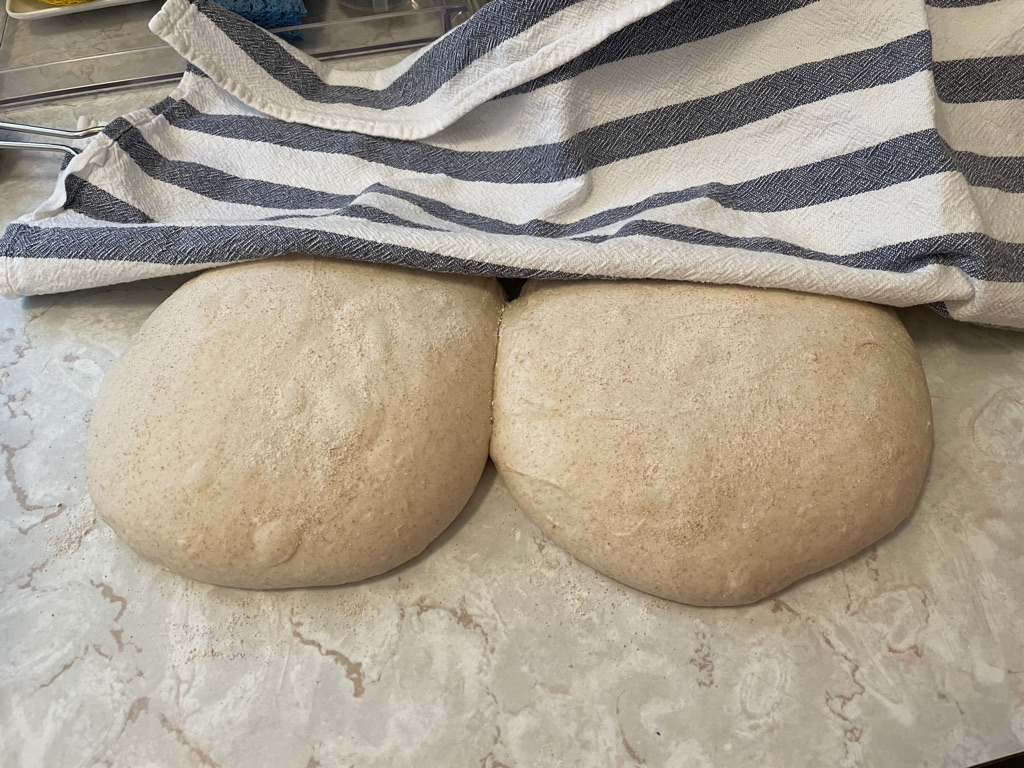
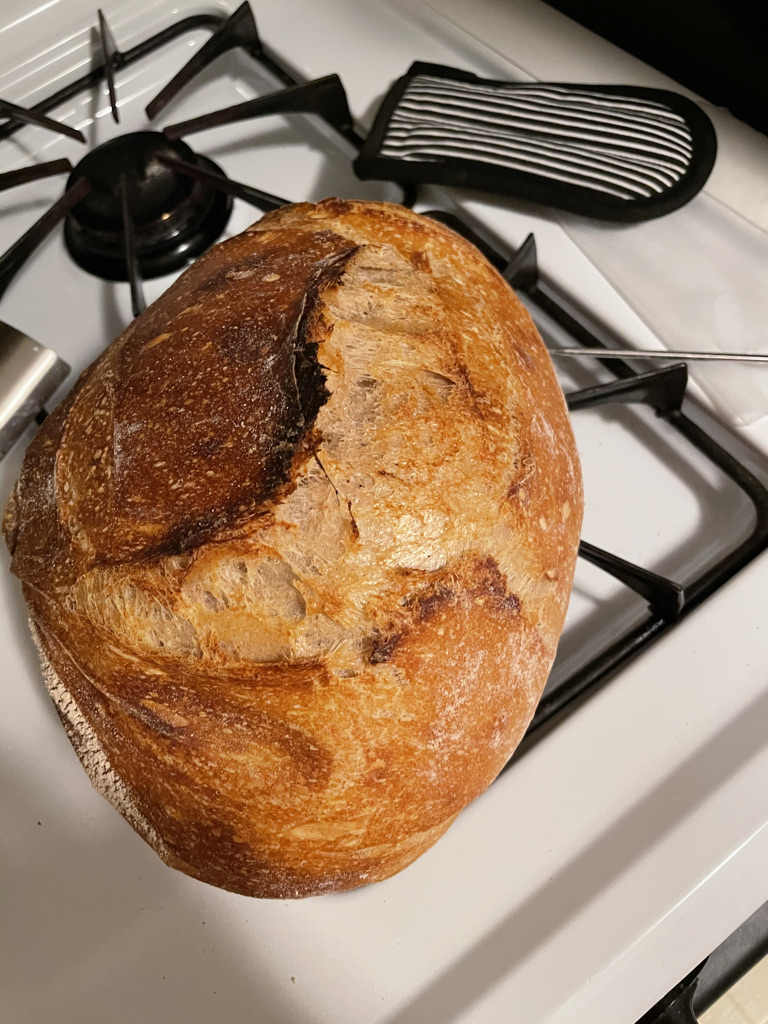
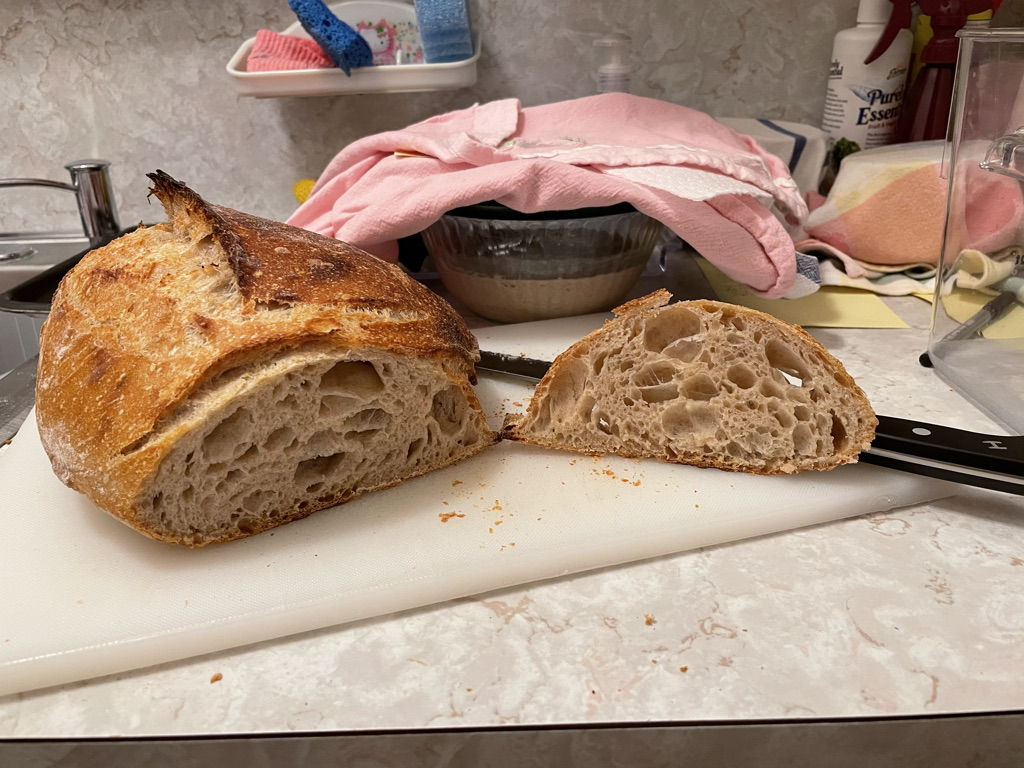
In 2015, my dear friend, Ken, gave me a sourdough starter that he and his wife, Peggy, received on the occasion of their wedding, nearly 60 years prior. There was one time, during Ken’s medical residency, that he let the sourdough die out, but he was able to re-acquire it from his original source. The actual lineage of the starter can be traced back to Alaska.
Ken also gave me some recipes and an article from the New York Times about making sourdough in a dutch oven. I wasn’t at all experienced with bread-baking, so I just followed the recipes as best as I could. The results were delicious and made me very happy, but then I tasted what sourdough bread could really be like, and that set me off in pursuit of the magic.
The culprit was a piece of bread that came with a pandemic take-out order from Cambridge’s Giulia Restaurant. I didn’t know bread could be like this! It was crusty on the outside, but tender and airy on the inside. The interior was light, but not at all squishy; it had lovely, big holes. Of course, the rest of the meal was incredible, but I couldn’t stop thinking about the bread.
For this particular quest, it doesn’t take much time on google to find oneself at the altar of Chad Robertson of Tartine Bakery and his wonderful book, Tartine Bread. I drank up every bit of wisdom, lore, and poetry that Chad had to offer, bought some stuff (flour, for starters), and got to work.
Coincidentally, my other habit (binge streaming anything and everything) happened to merge with the baking one when I watched Jon Favreau’s charming movie “Chef” and his related documentary series “Chef Show“. Amazingly, one of the Chef Show episodes features Chad Robertson, and he gives Jon a lesson about how to form the loaves. I’ve watched those few minutes of that episode many, many times.
I think, in hindsight, that I was quite lucky in my first attempt (photos above). To some extent, I feel that I have never quite obtained the same openness that I got in that first loaf, but I’m getting there. Weirdly, that very first loaf experienced what I thought was a catastrophic problem when it stuck like crazy to the bowl it was proofed in. When I went to turn it onto the baking dish the loaf basically got pulled apart into a stringy mess. I had to rip it off of the proofing bowl and stuff it into the dutch oven. It was a massacre. But, look at the sharp and dramatic ear! Look at the air holes! It’s otherwise a tremendous success. I don’t know what this teaches me, but it has hovered over me for the past year.
The number of variables and the extent to which hands-on familiarity and knowledge make or break the results, made the sourdough quest exactly the kind of obsession, er, project that I needed. I surfed many internet resources and tried many different ideas and techniques. I successfully started two different sourdoughs – but my favorite is still the Alaskan one from Ken.
For anyone looking for Chad Robertson’s Tartine Bread recipe and method, I highly recommend reading his book. It’s completely worth it (and would be even if it weren’t relatively inexpensive and short!). The New York Times did an article about Chad, Tartine, and this bread (including the recipe), but I think it’s best coming directly from the source. As a “believer”, I would say that, wouldn’t I?
Some hundred loaves later, here’s where I’m at:
- The varying advice and “sure thing” blogs and videos all seem somewhat oversimplified regarding the variable of the behavior of your particular sourdough organism. Different sourdoughs, in my opinion, will behave differently, and one sourdough will behave differently in different circumstances (weather, mostly).
- So, this means – as Chad writes – that one needs to become experienced and expert in knowing when a dough is ready for the next stage of the process. Simple timings and steps won’t really tell you when to stop proofing or when you’ve developed enough gluten. It seems that true experts know how the dough looks, smells, and feels when it’s “right”. For myself, I’m getting better, but I don’t feel confident.
- I still consider Chad’s recipe and instructions to be ideal. I see no need to vary from them, and all my attempts to follow other recipes were all definite downgrades. I am a believer.
- I have been convinced (by trailrunner on the excellent FreshLoaf blog community) that the baking vessel does not have to be a super-heavy cast iron dutch oven. Dealing with a pre-heated, heavy, cast iron pan is perilous. It turns out that using much-lighter (and much cheaper!) GraniteWare produces the same results as cast iron! I also tried a plain aluminum lidded pan and got really bad results, so this doesn’t seem to work with just any old covered pan.
- Doing too much streching-and-folding yields a loaf with a dense, gummier inside – I think regardless of the proving duration or readiness. There was a time when I thought that building more gluten would help generate more airiness, but I think this was exactly the wrong idea. There needs to be enough gluten to support the air bubbles, but it’s the proofing (and the sourdough critters) that make the air bubbles.
- Every single time I tried to chill the dough immediately before baking, I had just terribly tough and gummy results. I honestly don’t understand how this works for anyone. If I refrigerate during the final proof, I have to let the dough come completely to room temperature and continue proofing at room temp before baking.
- Some people seem to prefer bread that has fewer air holes, so I did end up giving away several loaves once my enthusiasm for the research exceeded my eating and freezer capacities. There was a point early on in this project when my freezer door couldn’t be opened without loaves of sourdough falling on me.
Eating fresh-from-the-oven sourdough bread is heavenly. A thin swipe of Kerrygold butter and a light layer of Bonne Maman raspberry preserves (not too much to mask the flavor of the bread)… mmmmmmm
-
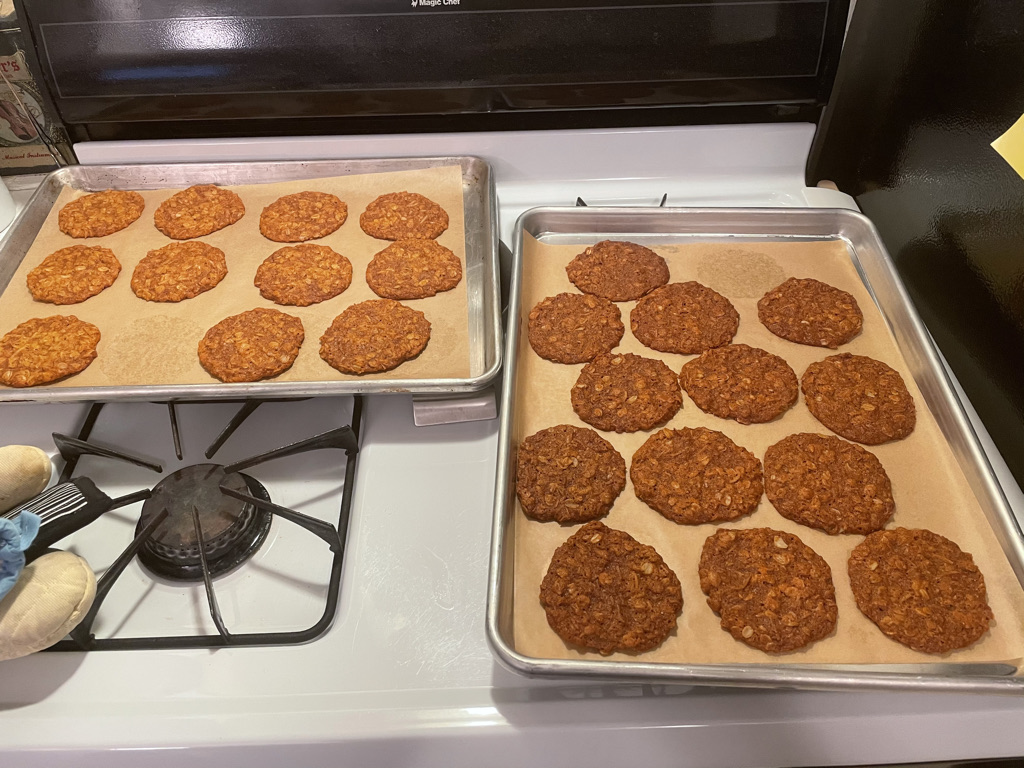
I salivated over this Cook’s Illustrated article and recipe for weeks before I was able to gather the necessary ingredients (was there a pandemic run on coconut for some reason??). I had a very hard time stopping myself from just chain-eating these. They are very, very addictive!
You can see in the photo that the two trays baked for different lengths of time. The left-hand tray (12 minutes) is more blonde and the cookies were more chewy. The right-hand tray (14 minutes) is more caramelized and the cookies were more crunchy and “toothsome”. I think the mouth feel of the chewy cookie was much better, so for me it’s important not to overbake these.
It’s safe to say that I have a tendency to “strongly” bake things (I just learned that there’s a French pastry term for this: “bein cuit”). I like deep brown pastry, for example. But, there are cases where this is not a helpful inclination, and I think this cookie is an example. I mean, I don’t apply “bien cuit” to the Ikeda Christmas Cookies, though I do let them get brown on the edges where some recipes might call for taking them out prior to any browning (to preserve the color of the Candy Canes, for example).
Anyway, the goal of deep browning definitely does not apply to everything, and cookies are probably a categorical example.
[I have so much coconut leftover… ]
-
Subscribe
Subscribed
Already have a WordPress.com account? Log in now.
 FlayRah